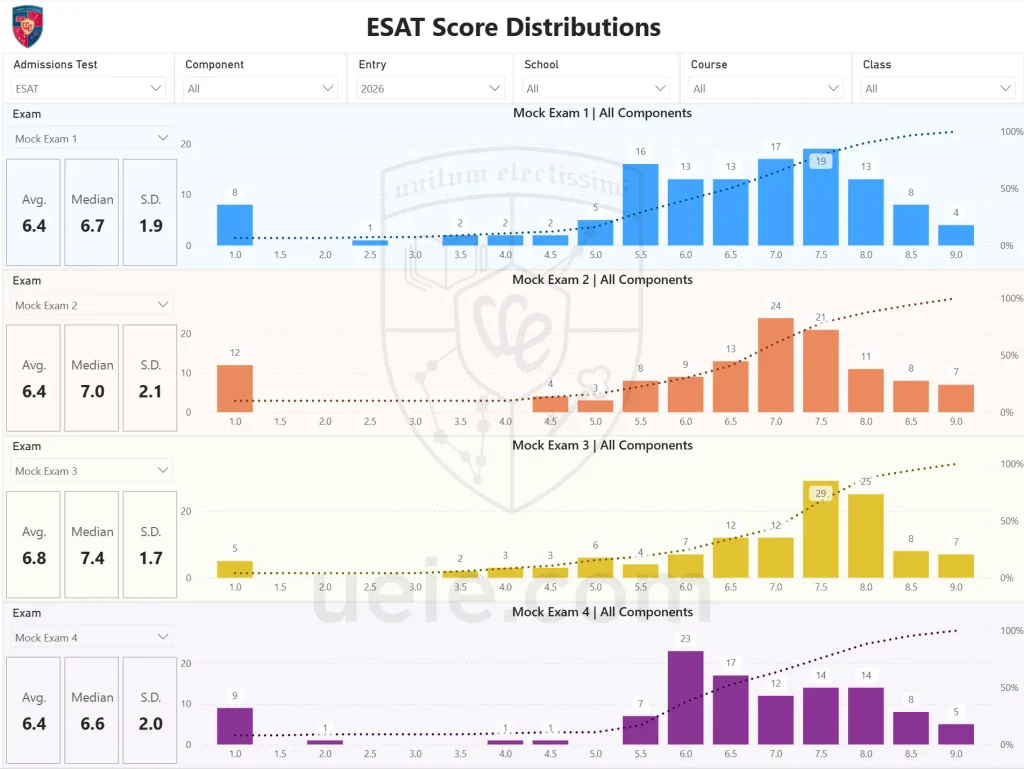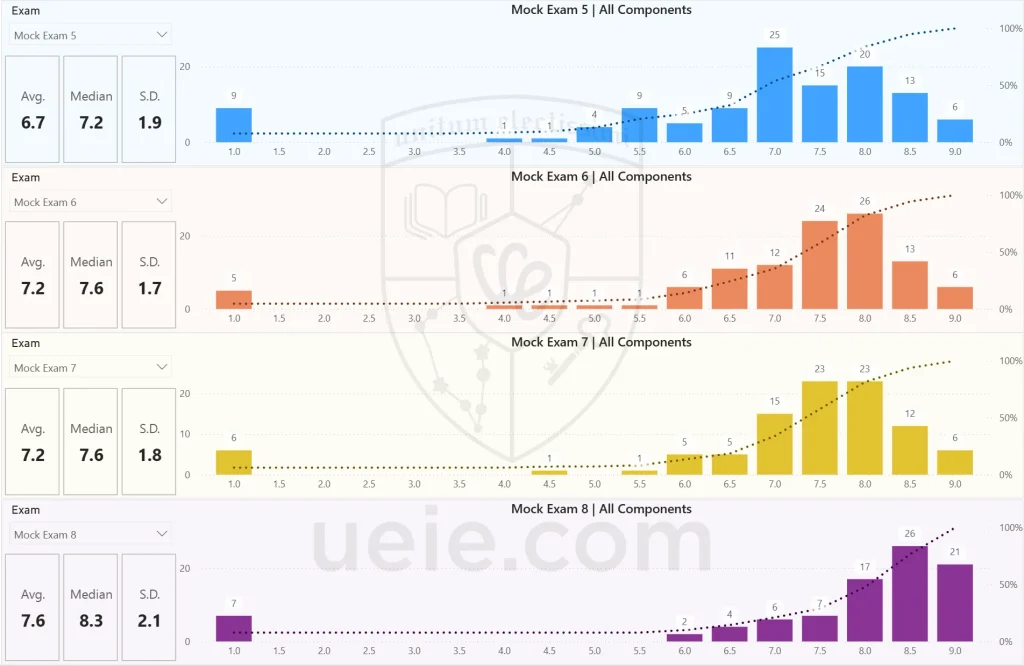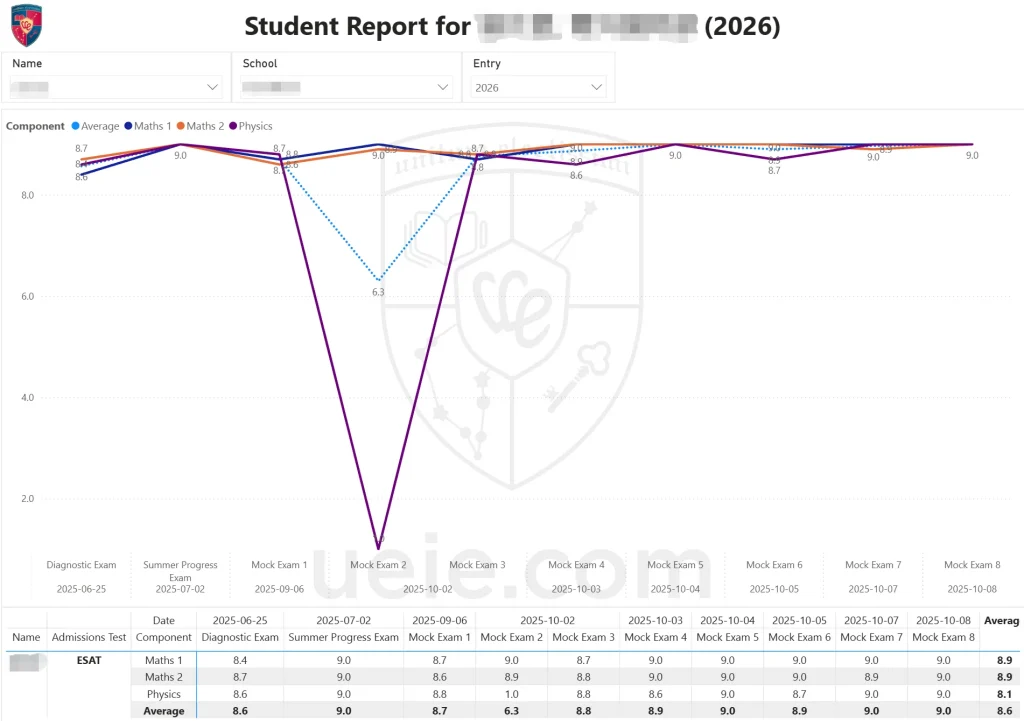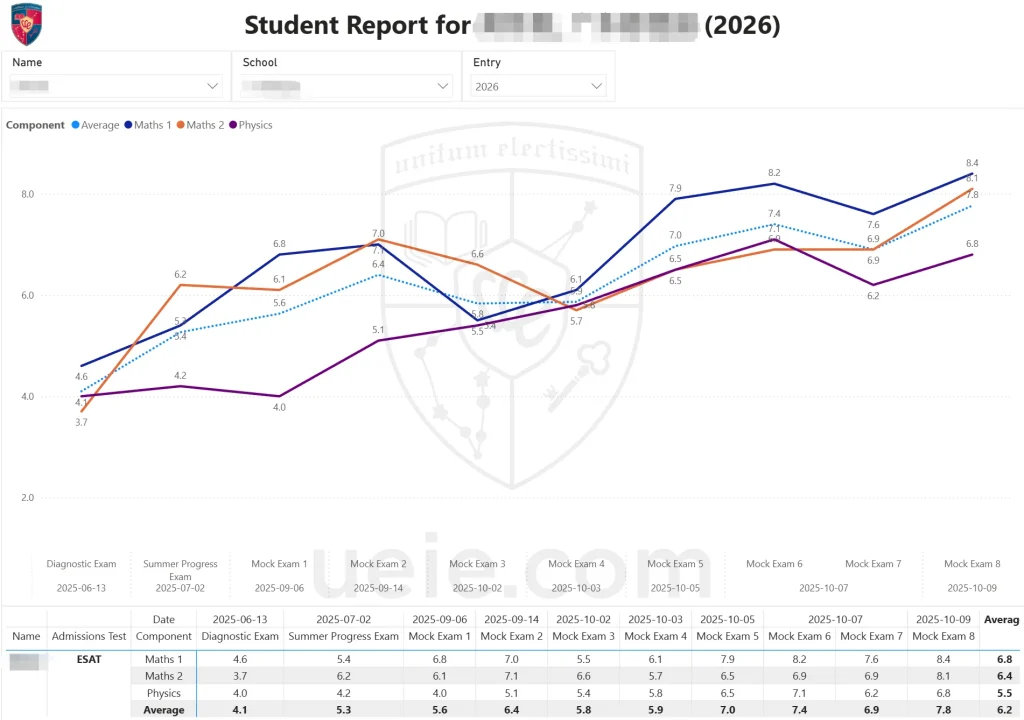

Tag: Physics Course

  • The Efficient ESAT Preparation Guide

    The Efficient ESAT Preparation Guide

    The-Efficient-ESAT-Preparation-Guide-Video-Poster

    Acknowledgements

    Profound gratitude is extended to Joy, our esteemed chemistry specialist, and Sara, our distinguished biology specialist, for their invaluable contributions to the chemistry and biology sections of this ESAT preparation guide.

    With the University of Oxford fully introducing the ESAT (Engineering and Science Admissions Test) for engineering, physics, and other degrees in the 2027 application cycle, it has officially converged with the University of Cambridge and Imperial College London regarding STEM admissions tests. The candidate pool is set to expand significantly, and the admission threshold for top-tier universities will inevitably rise.

    In the Comprehensive ESAT Guide, I provided an in-depth analysis of the exam’s requirements, format, and scoring mechanisms. This guide, however, distils my years of practical experience coaching students for similar admissions tests and related competitions. It aims to provide you with a systematic and highly efficient ESAT preparation strategy, allowing you to comfortably cross this admissions threshold with utmost academic rigour.

    I. Know Yourself and Your Enemy: Admission Data, Score Distribution, and Target Positioning

    Before embarking on your ESAT preparation journey, setting goals based purely on intuition is a major pitfall. We must use objective data to pinpoint your true standing in this highly competitive arena.

    1. Clarify Your Choice of Subject Modules

    You need to confirm not only whether your target degree requires the ESAT, but also the specific combination of modules needed. Below are recommendations for high-frequency module combinations when applying to multiple G5 universities simultaneously (e.g., “Cambridge + Imperial + UCL”) (Note: You cannot apply to both Oxford and Cambridge in the same cycle):


    Major CategoryUniversity Combination for ApplicationRecommended Module Selection

    Engineering

    (excluding Chemical Engineering,
    Mechanical Engineering)

    Cambridge + Imperial College + UCL

    1st ESAT sitting in October:
    Maths 1 + Maths 2 + Physics

    Cambridge + Imperial College
    Oxford + Imperial College + UCL
    Oxford + Imperial College
    Imperial College + UCL

    1st ESAT sitting in October or 2nd ESAT sitting in January:
    Maths 1 + Maths 2 + Physics

    Chemical
    Engineering
    Cambridge + Imperial College

    1st ESAT sitting in October:
    Maths 1 + Maths 2 + Chemistry

    Oxford + Imperial College

    Module Conflict, Unable to Select:

    Oxford requires candidates to take Maths 1 + Maths 2 + Physics, whereas Imperial College requires Maths 1 + Maths 2 + Chemistry. However, each candidate is permitted to select only three modules within a single test sitting; furthermore, candidates who sit for the first ESAT in October are ineligible to sit for the second ESAT the following January.

    Mechanical EngineeringCambridge + Imperial College + UCL 

    1st ESAT sitting in October:
    Maths 1 + Maths 2 + Physics

    2nd TARA sitting in January

    Oxford + Imperial College + UCL
    Imperial College + UCL
    PhysicsCambridge + Imperial College 

    1st ESAT sitting in October:
    Maths 1 + Maths 2 + Physics

    Oxford + Imperial College

    Biology &

    Life Sciences

    Cambridge + Imperial College

    1st ESAT sitting in October:
    Maths 1 + Chemistry + Biology

    Oxford + Imperial College

    2. Analyse Admission Data and the True “Safety Line”

    Synthesising historical data, the offer rates for Engineering and Physics (Natural Sciences) degrees at Oxford and Cambridge typically fluctuate between 10%-25%. This means that if you want to hold the initiative in your application, your admissions test score must be firmly rooted within the top 25% globally.

    The text below details the admission numbers and distributions for Oxbridge engineering and sciences.
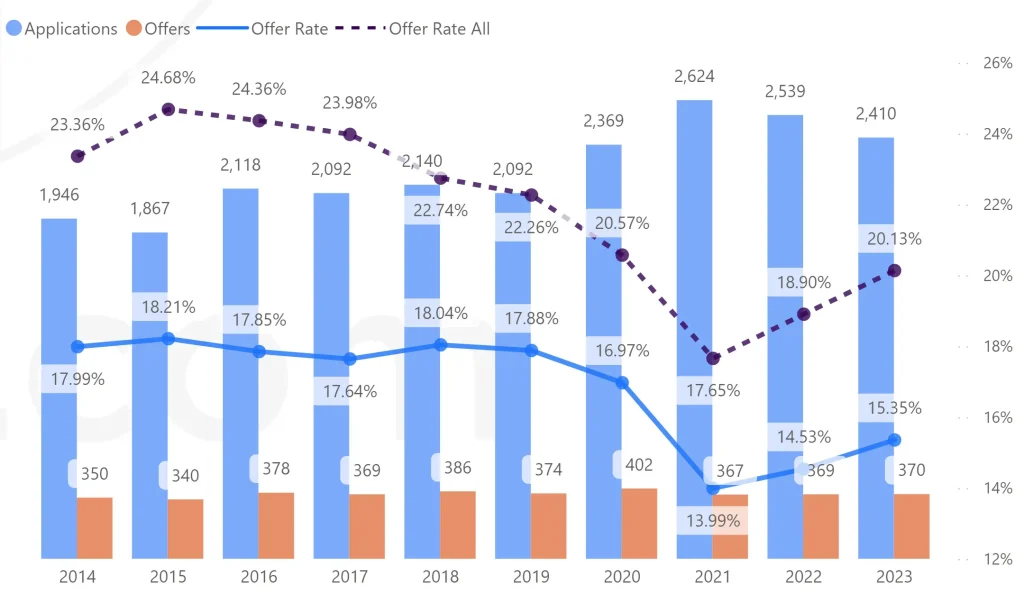
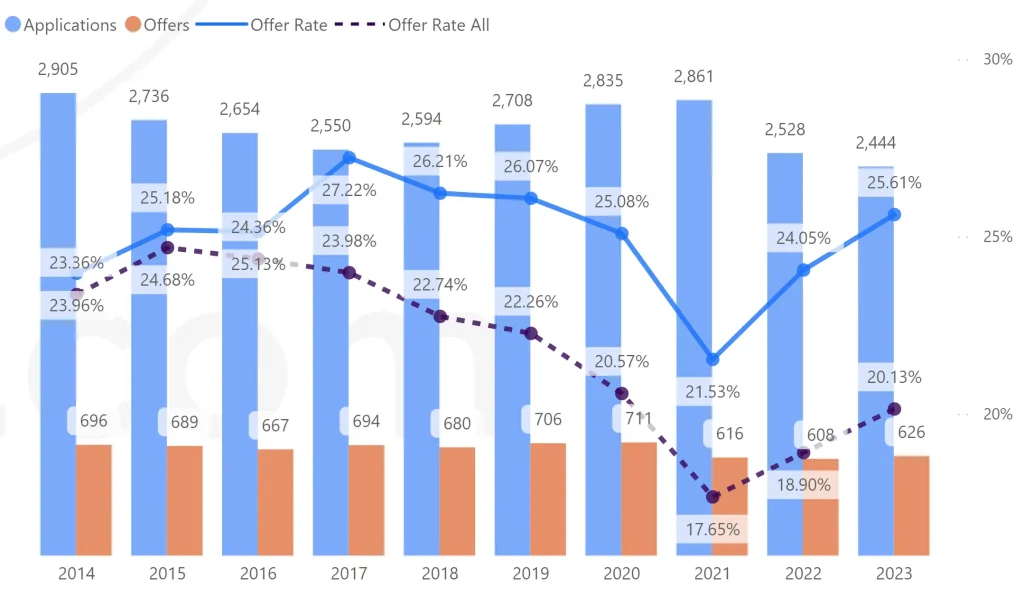
    剑桥大学工程专业招生数据2014-2023申请季

    Engineering Admissions Data at Cambridge during 2014–2023 Application Cycles
    (Plotted by UEIE based on official data)
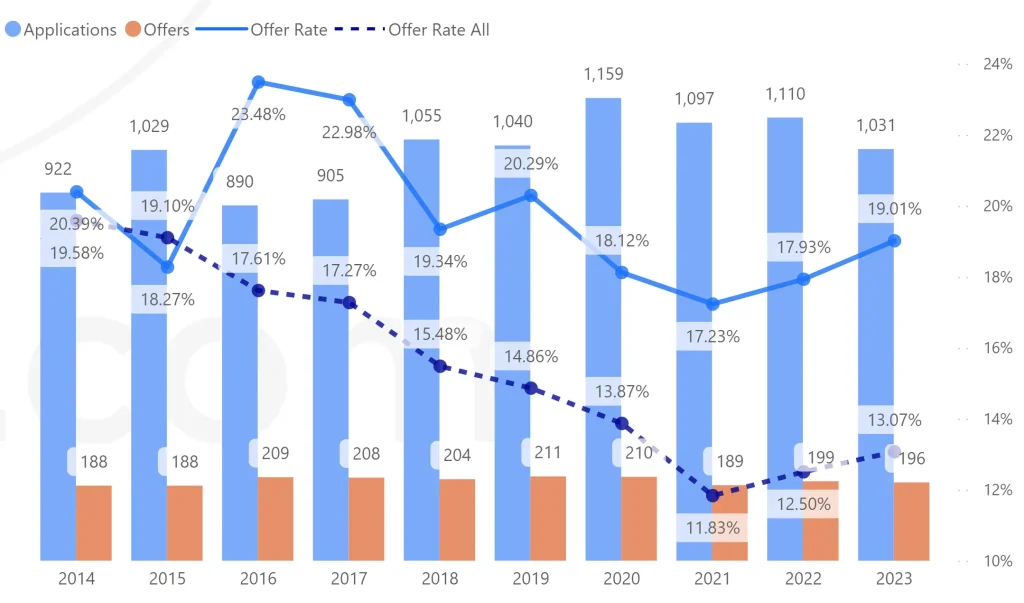
    剑桥大学自然科学专业招生数据2014-2023申请季

    Natural Sciences Admissions Data at Cambridge during 2014–2023 Application Cycles
    (Plotted by UEIE based on official data)
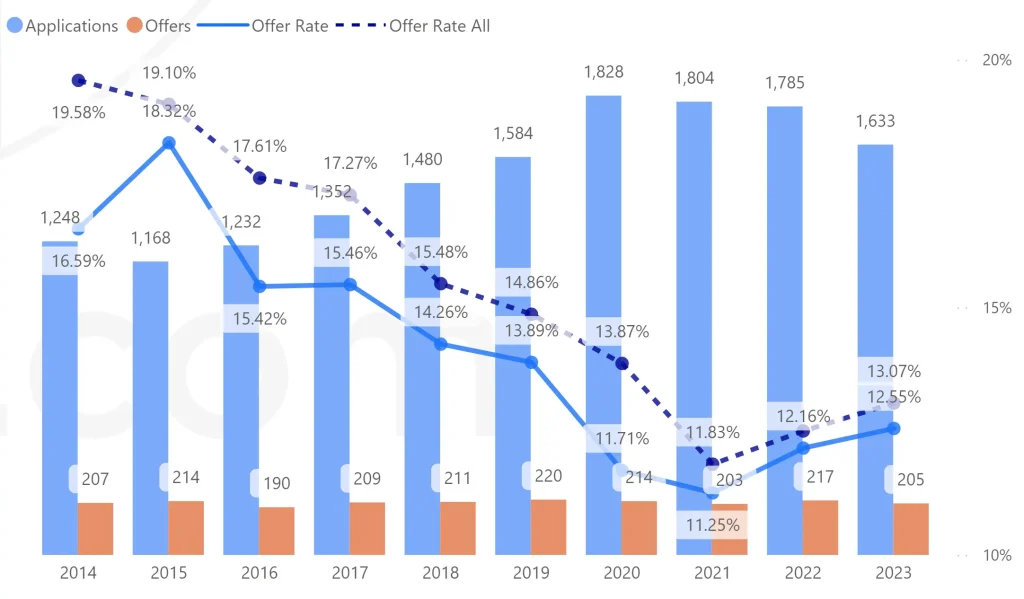
    Engineering Science Admissions Data at Oxford during 2014–2023 Application Cycles
    (Plotted by UEIE based on official data)
    牛津大学物理专业招生数据2014-2023申请季

    Physics Admissions Data at Oxford during 2014–2023 Application Cycles
    (Plotted by UEIE based on official data)

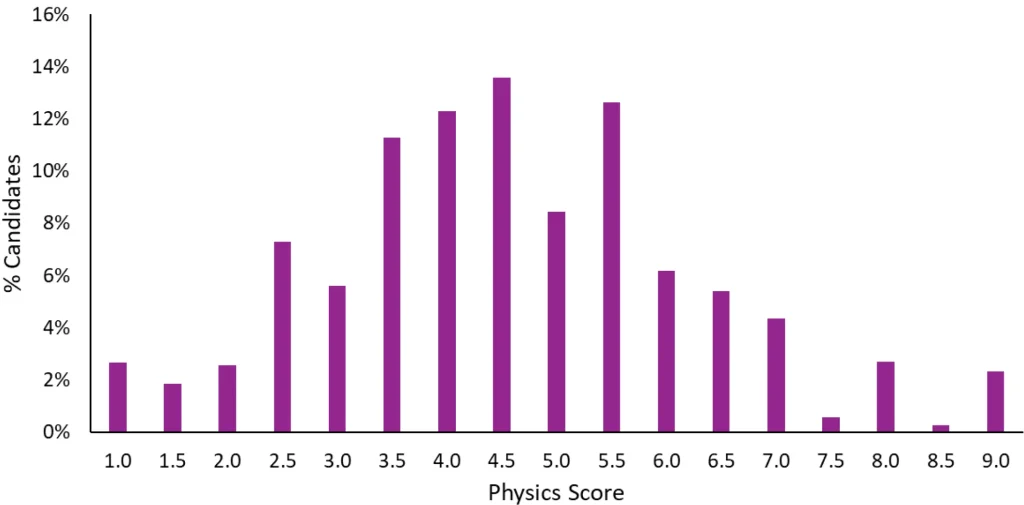
    According to the official October 2025 score distribution data released by UAT-UK: the top 10% of global candidates achieved a score of 7.0, while the median was anchored at 4.5. Based on the distribution charts, the score range for the top 25% lies approximately between 5.6-6.0.

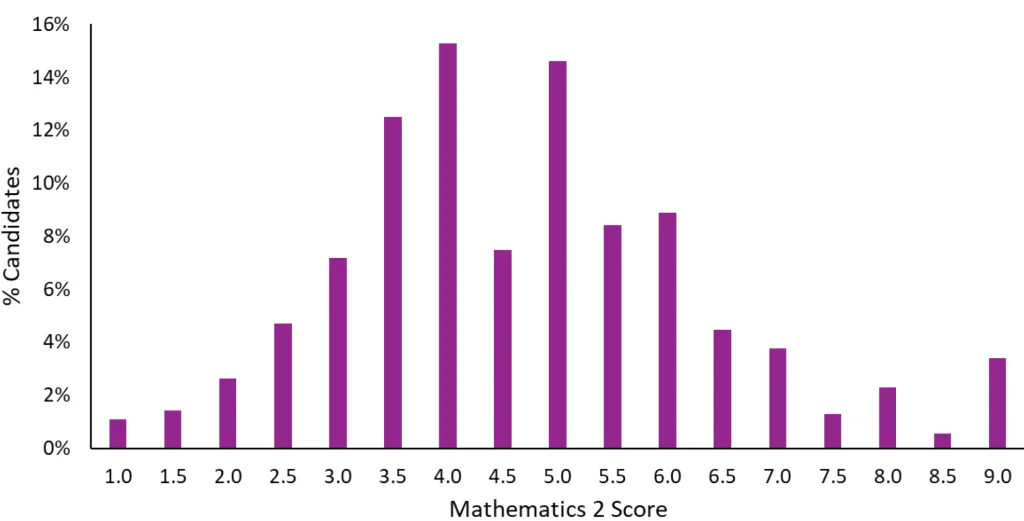
    Global Score Distribution for the Five ESAT Modules — October 2025
    (Screenshot from the Official UAT-UK Report)

    However, this is merely a “passing line” from a global average perspective; for highly competitive Chinese candidates, this score is far from safe.

    Comparison of ESAT Module Scores: Chinese vs. UK Candidates (2024/25 Application Cycle)

    ModuleChinese Candidates
    (Top 10%)
    Chinese Candidates
    (Top 25%)
    UK Candidates
    (Top 10%)
    UK Candidates
    (Top 25%)
    Maths 18.5
    7.15.64.8
    Maths 28.26.8
    5.75.0
    Physics8.06.86.0
    5.0
    Chemistry8.26.86.2
    5.2
    Biology7.66.47.0
    5.4

    * Source: UAT-UK Official Report

    As clearly illustrated in the table above, there is a staggering, asymmetric gap between the scores of candidates from the two countries. Taking Mathematics 1—the foundational bedrock of all disciplines—as an example, the discrepancy between the top 25% in China and the UK is an astonishing 2.3 points. The top 10% threshold for Chinese candidates has been driven up to 8.5. Consequently, the “safety line” for Chinese candidates must be significantly adjusted upwards; striving for zero margin of error in the Mathematics 1 module is the absolute foundation for standing your ground.

    3. Diagnostic Exam and Target Anchoring

    Why perform an assessment?

    Because the ESAT is a computer-based test, taking a diagnostic exam (mock test) before officially starting your preparation is particularly crucial. This will help you:

    • Experience the real exam environment
      Familiarise yourself with the online testing platform’s interface and question presentation, alongside the intense time pressure of completing 27 multiple-choice questions within 40 minutes per module. This may expose weaknesses in your mental arithmetic without a calculator.
    • Assess your current standing in each subject
      Form a baseline judgment of your knowledge mastery, problem-solving speed, and accuracy in the compulsory Mathematics 1 and your two elective modules, identifying the primary gaps between your current level and the exam requirements.

    How to choose assessment tools?

    Past ESAT papers have never been publicly released. Currently, the official UAT-UK body has only published specimen papers and practice questions, but the difficulty of these specimen papers is significantly lower, making it impossible to accurately assess your true level. To address this, our UEIE research and development team has developed a set of Free ESAT Diagnostic Exam, complete with an online computer-based testing system that replicates 99% of the official interface.

    Aligned with the latest ESAT syllabus, this diagnostic exam is designed to evaluate the core knowledge and abilities required for the ESAT more effectively. According to authentic feedback from past students, the difficulty of this paper is slightly higher than that of the 2024 and 2025 past questions. However, this does not prevent us from deriving an objective and reasonable score conversion curve based on global candidate data, thereby helping applicants better determine their position among worldwide peers.

    Click the link below to learn more about the diagnostic exam and complete them online:

    Of course, you can also use past ENGAA/NSAA papers for ESAT preparation. However, while these past papers can verify your mastery of the relevant knowledge, they cannot fully simulate the online testing format, interface, and computer-based timing rules of the ESAT. Furthermore, you must pay close attention to syllabus alignment.

    What is the self-assessment process?

    • Strictly time each module independently for 40 minutes, and complete your chosen combination of modules consecutively.
    • Complete the test on a computer with a strict ban on calculators, using only pen and paper for rough working.
    • Check your answers against the solutions or system scoring to objectively evaluate your performance in each module (ideally converting it into a reported score between 1.0-9.0).
    • Critically analyse the reasons behind your mistakes: Are they due to missing knowledge points? Clear misconceptions? Calculation errors? Misinterpretations in reading comprehension? Poor time allocation? Or a lack of test-taking techniques?
    • Record the weak areas in each subject to serve as the primary focus for your subsequent ESAT preparation.

    4. Setting a Scientific Target for ESAT Preparation

    Equipped with an awareness of your target requirements and your own starting point, the next step is to set a score anchor that suits you. You can refer to the competitiveness ladder model below to establish a reasonable ESAT preparation target based on your diagnostic exam score.

    Report Score Global Ranking Tier Admission Prediction
    8.5 Top ~3% Grandmaster Extremely high probability of Oxbridge admission, allowing you to secure for admission based on academic results alone.
    8.0 Top ~5% Master Above average probability of Oxbridge admission, with distinct advantages.
    7.5 Top ~7% Diamond Relatively low probability of Oxbridge admission, but high chances for Imperial College London.
    7.0 Top ~10% Platinum Still stand a chance of Oxbridge admission, for those who are exceptionally lucky or deliver a truly outstanding performance in the interview.
    5.5 Top ~25% Gold Basic G5 competitiveness, most likely to get interview offer for Oxbridge admission.
    4.5 Top ~50% Silver Moderate competitiveness, at a relative disadvantage among applicants to top-tier universities.

    *The analysis presented above reflects the experienced academic perspectives of Mr. Xie Tao and does not constitute an official guarantee of university admission.

    It is worth noting that your score anchor should be challenging enough to unlock your potential, yet realistic enough to avoid unnecessary anxiety.

    II. Required Knowledge Base for ESAT Preparation

    Having clarified your goals, the second step is to take stock of your academic arsenal. Accurately grasping the requirements of the ESAT syllabus and seamlessly integrating them with your existing curriculum is the key to efficient test preparation.

    1. Scope of the Examination Syllabus

    • Knowledge Foundation
      The ESAT syllabus is broad, drawing primarily from the core knowledge of UK A-Level (or equivalent qualification) Mathematics, Physics, Chemistry, and Biology. It assumes candidates already possess a solid GCSE (or equivalent level) foundation in the respective subjects.
    • Exclusion of Further Content
      The syllabus does not include A-Level Further Mathematics or any Physics, Chemistry, or Biology content that extends beyond the standard A-Level scope.

    2. Overview of Core Content across Subject Modules

    The following outlines the primary areas of knowledge covered by each module:

    • Mathematics 1
      Basic arithmetic and number theory concepts, units, ratios and proportions, algebra (including equations, inequalities, polynomials), planar and coordinate geometry, basic statistics and probability. (Roughly corresponds to GCSE and parts of A-Level Mathematics content)
    • Mathematics 2
      Advanced algebra and functions (including polynomials, modulus functions, mappings), sequences and series, coordinate geometry (including parametric equations, foundational conic sections), trigonometry (including compound angles, double angles, trigonometric equations/inequalities), exponential and logarithmic functions, calculus (differentiation, integration for area/volume), and the application of calculus to curve sketching. (Roughly corresponds to AS-Level Mathematics and parts of A2 Pure Mathematics content)
    • Physics
      Electricity (circuits, electric fields), foundational magnetism, kinematics, Newton’s laws, energy and momentum, circular motion, moments, foundational thermal physics, properties of matter, waves (including basic optics), atomic physics and radioactivity. (Roughly corresponds to AS-Level and parts of A2 Physics core content)
    • Chemistry
      Atomic structure and periodicity, stoichiometry and equations, redox reactions, chemical bonding and structure, states of matter and particle theory, main group chemistry, separation techniques, acids, bases and salts, reaction rates, foundational chemical thermodynamics, foundational electrochemistry, core organic chemistry, metals and their reactivity, air and water, and foundational chemical analysis. (Roughly corresponds to AS-Level and parts of A2 Chemistry core content)
    • Biology
      Cell structure and function, biological molecules, enzymes, cellular transport, cell division and inheritance, DNA and gene technology, variation and evolution, animal physiology (respiration, circulation, digestion, nervous and endocrine systems, etc.), plant physiology, and ecosystems. (Roughly corresponds to AS-Level and parts of A2 Biology core content)

    3. Knowledge Integration and Recommendations for Different Curricula

    Natural knowledge gaps exist across different educational curricula. It is imperative to conduct a thorough, line-by-line comparison against the ESAT syllabus before your preparation:

    ESAT Module

    A-Level

    AP

    IB

    Chinese High School Curriculum

    Mathematics 2

    Strictly circumscribed by the A-Level Mathematics syllabus.

    Calculus AB/BC addresses calculus; supplementary revision of non-calculus elements from Pre-Calculus, such as algebra, functions, trigonometry, and coordinate geometry, is requisite.

    DP Mathematics SL (Analysis and Approaches / Applications and Interpretation) generally encompasses the requisite topics; HL knowledge is not deemed essential.

    High school mathematics (New Textbook: Compulsory + Selective Compulsory) covers most knowledge; foundational calculus must be covered via electives or self-study.

    Physics

    Typically necessitates prospective study of certain A2 components (e.g., thermal physics, wave phenomena, modern physics). Specific topics previously encountered at GCSE/IGCSE level will be assessed according to A2 standards.

    Physics C (Mechanics + Electricity & Magnetism) or a synthesis of Physics 1 and 2 affords extensive coverage, yet meticulous cross-referencing with the syllabus is imperative; supplementation may be required (e.g., waves, thermal physics, modern physics, elementary astronomy).

    DP Physics HL Core provides substantial coverage; proactive study of pertinent HL physics topics stipulated by the syllabus is advisable (Optional topics are not required); particular attention should be devoted to enhancing calculus-based physics calculation proficiency.

    The physics elective combination (e.g., the physics track in the “3+1+2” system) covers most mechanics and electricity knowledge. Waves, thermal physics, modern physics, and calculus-based calculations are relatively weak and require targeted reinforcement.

    Chemistry

    Subsequent to AS completion, further A2 content requires supplementation, notably in domains such as the structure of matter, chemical principles (kinetics, equilibrium, energetics), and core organic chemistry.

    AP Chemistry generally furnishes sound coverage of ESAT topics; nonetheless, a granular, item-by-item verification against the syllabus details is strongly recommended.

    DP Chemistry SL addresses a broad spectrum of topics, but relevant HL topics concerning structure, principles, organic chemistry, etc., necessitate supplementation in alignment with the syllabus. Diligence regarding the pace of study is crucial.

    Completing high school chemistry (New Textbook: Compulsory + Selective Compulsory) covers most test points, but parts of organic chemistry and experimental analysis need to be supplemented. Concurrently, reinforce relevant English technical terms.

    Biology

    AS-level knowledge accounts for most content, but due attention must be paid to the breadth and depth stipulated by the syllabus. Particular emphasis should be placed on fortifying experimental analysis skills and the application of mathematical principles within a biological context.

    AP Biology provides comprehensive coverage, but dedicated focus should be directed towards the cultivation of experimental analysis skills and mathematical application capabilities, as the emphasis herein may subtly diverge from that of the ESAT.

    DP Biology HL offers extensive coverage; a strengthening of physiological knowledge is required, alongside an enhancement of experimental analysis capabilities and mathematical reasoning in the context of biological problem-solving. Prudent management of the study pace is essential.

    After completing high school biology (New Textbook: Compulsory + Selective Compulsory), you primarily need to strengthen scientific inquiry (experimental analysis) capabilities and adapt to reading comprehension and technical vocabulary in an English environment.

    4. An Objective View on Competition Experience

    If you have experience preparing for top-tier Olympiads such as the BPhO or UKChO, this will undoubtedly provide tremendous support regarding logical rigour, stress resilience, and problem-solving flexibility. However, please remember that the ESAT is not an Olympiad. Do not get bogged down in excessively complex derivations that go beyond the syllabus. During your preparation, you must rein your mindset back into the foundational ESAT syllabus, translating the acuity cultivated through competitions into an optimal multiple-choice strategy geared towards an average pace of “one and a half minutes per question”.

    III. ESAT Preparation Strategies and Timeline Planning: Core Capability Remodelling and Advancement Pathways

    Mastering the examination syllabus is merely securing your entry ticket. In the real exam hall, what ultimately decides victory or defeat is rarely whether you know how to do a question, but whether you can do it correctly and swiftly under extreme pressure. This demands that we shift our focus during ESAT preparation away from pure knowledge acquisition and towards remodelling core test-taking capabilities.

    1 Strategies for Enhancing Core ESAT Capabilities

    To survive the extreme intensity of averaging less than 1.5 minutes per question, you must achieve the following:

    • Deeply understand core concepts and apply knowledge flexibly
      You cannot settle for superficial memorisation of formulae and definitions. Instead, you must thoroughly understand the physical, chemical, or biological principles—or the mathematical logic—behind each knowledge point, alongside its operational boundaries. Furthermore, you should be able to connect seemingly isolated concepts and apply them flexibly within the novel contexts presented in questions, swiftly constructing correct problem-solving models or approaches. This forms the foundation for quickly identifying what a question is testing and eliminating distractor options.
    • Wean yourself off calculator dependency and rebuild your mental arithmetic instincts
      Calculators are strictly prohibited throughout the entire ESAT. Students accustomed to relying on tools within the A-Level or AP systems must deliberately train their mental and written calculation skills. Thoroughly transforming common formulae, algebraic manipulations, equation solving, and order-of-magnitude estimations into second nature is the only way to avoid running out of cognitive processing capacity in the exam room.
    • Extreme decision-making under 90 seconds and the “philosophy of skipping questions”
      You must handle 27 multiple-choice questions within 40 minutes. Under such oppressive pressure, stubbornly fixating on a single question is a fatal error. You must possess sharp, rapid decision-making skills: quickly extract core information from the stem, and decisively employ techniques like dimensional analysis, substituting special values, or analysing extreme cases to narrow down the options. The moment you get stuck, immediately mark the question and skip it—preserving your total number of correct answers is the core principle of achieving a top score.

    2. Core Factors Influencing the ESAT Preparation Cycle

    The duration of your ESAT preparation primarily depends on:

    • Target Score
      Aiming for top score bands in each module demands more refined polishing.
    • Starting Level
      Your current mastery of relevant subjects, calculation speed and accuracy, and adaptation to the online multiple-choice format.
    • Number of Preparation Subjects
      The total number of ESAT modules needed for your preparation (typically three).
    • Weekly Effective Study Time
      How many hours you can consistently dedicate to focused, highly efficient ESAT preparation.
    • Learning Efficiency
      The rate at which you absorb knowledge and master new skills.

    3. The June-to-October Golden Preparation Timeline for ESAT

    The timeline outlined below is suitable for the majority of candidates, though you may adjust it to establish a pragmatic ESAT preparation timeframe tailored to your personal circumstances.

    Jun–Jul


    Clear
    Blind Spots

    √ Familiarise with the Syllabus; Organise Knowledge


    Systematically and comprehensively organise all knowledge points on the syllabus by category and topic. You must not only remember formulae but also understand their derivation, basic principles, and common question patterns, while beginning to accumulate problem-solving techniques.

    Jul–Aug


    Increase Speed 

    √ Intensive Practice; Internalise Knowledge


    This is the watershed! Relying solely on lessons will not achieve internalisation. This must be coupled with high-quality practice, and the difficulty of the questions must be moderate: slogging through overly difficult problems wastes time and damages confidence, while simple questions fail to identify gaps. Furthermore, to cope with CBT pressure, all practice must be completed under timed conditions.

    Sep–Oct


    Pursue Precision

    √ Full Mock Exams; Develop Instincts


    In a highly simulated computer-based environment, become familiar with the countdown rhythm and optimise time management and question-skipping strategies. Through high-quality mock training, develop an instinctive response to various “trap” questions, ultimately improving accuracy under extreme time pressure.

    4. Common ESAT Preparation Pitfalls and Strategies

    In the course of coaching students for the ESAT preparation, I have observed several widespread pitfalls that severely undermine preparation efficiency and final outcomes. Proactively identifying and avoiding them will allow you to achieve twice the result with half the effort.

    Pitfall 1: Starting Too Late, Lacking or Having Inadequate Planning

    • Manifestation & Consequences
      Underestimating the workload of multi-subject ESAT preparation (typically three modules) and the demands placed on various skills (especially speed), leading to delayed preparation right before the exam; or having unclear planning, failing to allocate time reasonably across different ESAT modules and preparation stages.
    • Strategy
      Fully recognise the complexity and long-term nature of ESAT preparation and kick off early. Devise a detailed, staged preparation plan tailored to the specific characteristics of each module, and execute it rigorously.

    Pitfall 2: Overlooking Online Characteristics, Detaching Practice from Reality

    • Manifestation & Consequences
      Relying primarily on paper-based materials for ESAT preparation, lacking sufficient practice on online platforms. Candidates remain unfamiliar with reading, answering, flagging, and navigating in an online environment, and fail to target their calculation speed and techniques without a calculator. This leads to clumsy operation, trailing behind the clock, and frequent calculation blunders in the actual exam hall.
    • Strategy
      The mid-to-late stages of ESAT preparation must pivot heavily towards online practice and simulations. Frequently utilise official practice tools alongside high-quality online mock exams (such as UEIE mock exams); treat non-calculator operations as a dedicated skill to be trained deliberately and continuously.

    Pitfall 3: Underestimating Multiple-Choice Questions, Lacking Strategies and Techniques

    • Manifestation & Consequences
      Dismissing multiple-choice questions as simple, thereby disregarding strategic methods and techniques; lacking an awareness of time management, with a pacing far slower than the required average of 1.5 minutes per question; and lacking proficiency in analysing options, eliminating distractors, or making strategic guesses.
    • Strategy
      Treat multiple-choice exam techniques as an essential component of your studies. Conduct extensive timed multiple-choice drills to cultivate a sense of pace and precision. Repeatedly rehearse time allocation and answering strategies during mock exams.

    Pitfall 4: Chaotic Use of Resources, Lagging Information

    • Manifestation & Consequences
      Blindly grinding through questions, particularly using old ENGAA/NSAA papers without discrimination, while overlooking differences in syllabus matching and formatting; failing to follow the latest announcements and official resource releases on the UAT-UK website; hoarding vast amounts of materials without utilising them deeply.
    • Strategy
      Anchor your core focus around the official syllabus and official practice resources; use past papers critically; select high-quality supplementary resources (such as the UEIE Self-Study Kit, Isaac Physics, etc.); and regularly check the official website to secure the latest updates.

    Pitfall 5: Unbalanced Mindset, Stress Overload

    • Manifestation & Consequences
      Experiencing excessive anxiety over multi-subject ESAT preparation and high-speed pacing requirements; falling into self-doubt or even giving up when mock results are underwhelming or when encountering a bottleneck; suffering from extreme pre-exam nerves that impair performance.
    • Strategy
      Set realistic goals and accept challenges and setbacks; focus on the process and incremental progress; learn to relax and recalibrate, balancing work and rest; build self-confidence, and trust the value of your hard work.

    IV. Efficient Utilisation of ESAT Preparation Resources

    Having mapped out the timeline and pitfall-avoidance strategies, the final piece of the puzzle in implementing your ESAT preparation is leveraging high-quality resources to fill the vacuum left by the absence of official past papers. Faced with an admissions test that offers an exceptionally low margin for error, blindly grinding through questions will only yield half the result for twice the effort. What you need is a scientific ESAT preparation scheme that directly targets the pain points of computer-based testing.

    1. Official Cornerstone Resources

    You can access the most essential foundational ESAT preparation materials on the official UAT-UK website:

    • The latest version of the ESAT examination syllabus.
    • Official specimen papers and practice materials.
    • Examination guides and FAQs.
    • Past papers of the ESAT’s predecessors, the ENGAA and NSAA exams (2016–2023).

    2. UEIE’s Exclusive “Learn-Practise-Test” All-In-One Matrix

    Meticulously crafted by our research and development team, the UEIE ESAT On-Demand Prep Suite undergoes rigorous annual revisions based on the latest exam trends, perfectly encompassing the core closed-loop of scientific preparation:

     Say goodbye to fragmented learning. Let top tutors guide you through a systematic review of core tested points. The courses strictly maintain academic rigour, deeply breaking down anti-routine, highly efficient problem-solving techniques.

     A question bank scientifically stratified by topic and difficulty. Through a vast volume of high-quality, targeted, and timed drills, it helps you completely wean off calculators and build muscle memory for extreme mental arithmetic and rapid decision-making.

    Developed with immense effort, these online mock tests replicate 99% of the official computer-based testing environment. They restore the genuine exam interface and the high-pressure countdown experience, ensuring you firmly occupy a top tier in actual combat.

    3. Advanced Learning and Systematic Planning

    Beyond the on-demand suite, if you require supervision from master tutors and personalised module diagnostics, UEIE also offers systematic group classes on a rolling basis throughout the year. For students getting ready for the ESAT preparation, we have mapped out a structured teaching and reinforcement closed loop to ensure that under high-intensity academic training, candidates’ foundational knowledge base remains rock-solid.
    Conclusion

    The ESAT is an exceptionally objective touchstone. It filters away superficial packaging, identifying only those scientific minds that can maintain mathematical and logical fluency under extreme pressure. Having clarified your score positioning and mastered the timeline and study methodologies, the single most critical step forward is immediate action.

    May this ESAT preparation guide help you pinpoint your coordinates within this brand-new standardised testing system, serving as a steadfast signpost as you scale the peaks of Oxford, Cambridge, and the G5.
  • How to Register for ESAT/TMUA/TARA 2026: A Step-by-Step Guide

    How to Register for ESAT/TMUA/TARA 2026: A Step-by-Step Guide

    How-to-Register-for-ESAT-TMUA-TARA-Video-Poster

    The undergraduate selection mechanisms for top-tier British universities are undergoing major transformations. Students aiming to apply for elite G5 universities such as the University of Cambridge, the University of Oxford, Imperial College London, and University College London (UCL) should note that the ESAT, TMUA, and TARA have now become crucial in determining whether an application will be accepted.

    These three computer-based assessment projects serve distinct purposes, precisely targeting different academic disciplines:

    • ESAT focuses on engineering and natural sciences disciplines;
    • TMUA targets mathematics, computer science, and economics-related courses;
    • TARA covers human sciences, humanities, and social sciences courses at Oxford (Economics and Management, History, Human Sciences, PPE, Psychology) as well as Computer Science and Mechanical Engineering at UCL.

    Faced with these vital admissions tests, many students and parents still have various questions regarding how to register, when to apply, and how to select subject combinations for each test window. To address this, we have integrated the official registration guides for ESAT, TMUA, and TARA to provide you with a professional, systematic, and clear comprehensive registration guide, helping you smoothly take the first critical step in your elite university application.

    I. Organisation and Administration of ESAT/TMUA/TARA

    In terms of organisational structure and administrative execution, these three admissions tests share the same highly professional and rigorous official framework:

    Since 2024, the TMUA and ESAT have been centrally managed by UAT-UK (University Admissions Tests – UK), a non-profit organisation that specialises in coordinating admissions tests for British universities. Subsequently, in 2025, the newly introduced TARA was officially integrated into this management framework. As the authoritative body dedicated to coordinating university admissions tests in the UK, UAT-UK currently oversees and implements these three core computer-based tests.

    On the practical test delivery level, the execution of all three admissions tests is uniformly managed by Pearson VUE, the certification and licensing division of the world-renowned learning company, the Pearson Group. Relying on its vast network of over 5,500 test centres spanning across more than 180 countries and regions, Pearson VUE provides professional, standardised, and fair assessment services for academic and admissions institutions worldwide. This provides a solid operational foundation and strong institutional credibility for the administration of all three tests.

    II. Key Dates for the Upcoming ESAT/TMUA/TARA Registration & Sittings

    The ESAT, TMUA, and TARA are uniformly scheduled across two registration opportunities with assessment sittings within the academic year (the October sitting and the January sitting of the following year). The pertinent dates are outlined below:

    1. October 2026 Sitting

    1st June 2026Account Creation Opens
    20th July 2026ESAT/TMUA/TARA Registration Opens
    28th September 2026ESAT/TMUA/TARA Registration Closes
    12th-16th October 2026

    Test Dates

    • For candidates sitting in China, Hong Kong and Macau:
      TMUA is only available on October 12-13;
      TARA is only available on October 14;
      ESAT is only available on October 15-16.
    • Candidates sitting in other countries and regions can choose any date between 4–8th January.
    16th November 2026
    TARA Results Released

    2. January 2027 Sitting

    Not applicable for Cambridge or Oxford applicants unless you are applying to a mature college with a January admissions deadline at Cambridge, or an Oxford Foundation Year programme also with a January deadline.

    5th October 2026Account Creation Opens
    26th October 2026ESAT/TMUA/TARA Registration Opens
    21st December 2026ESAT/TMUA/TARA Registration Closes
    4th-8th January 2027

    Test Dates

    • For candidates sitting in China, Hong Kong and Macau:
      ESAT is only available on January 6;
      TARA is only available on January 7;
      TMUA is only available on January 8.
    • Candidates sitting in other countries and regions can choose any date between 4–8th January.
    8th February 2027TARA Results Released

    III. ESAT/TMUA/TARA Registration Procedure

    1. Create a UAT-UK Account

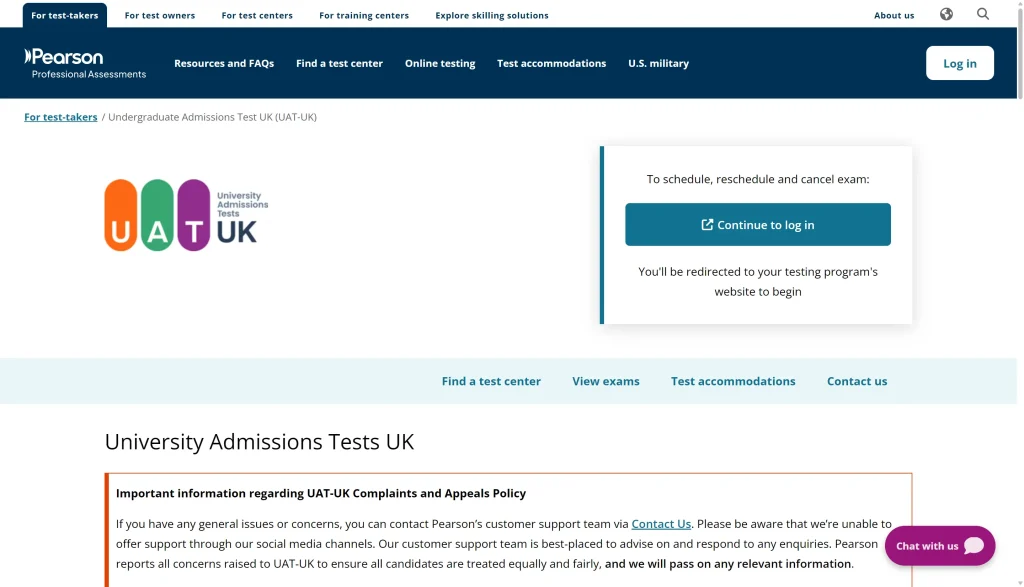
    Pearson-VUE-login

    Screenshot from the official Pearson VUE website

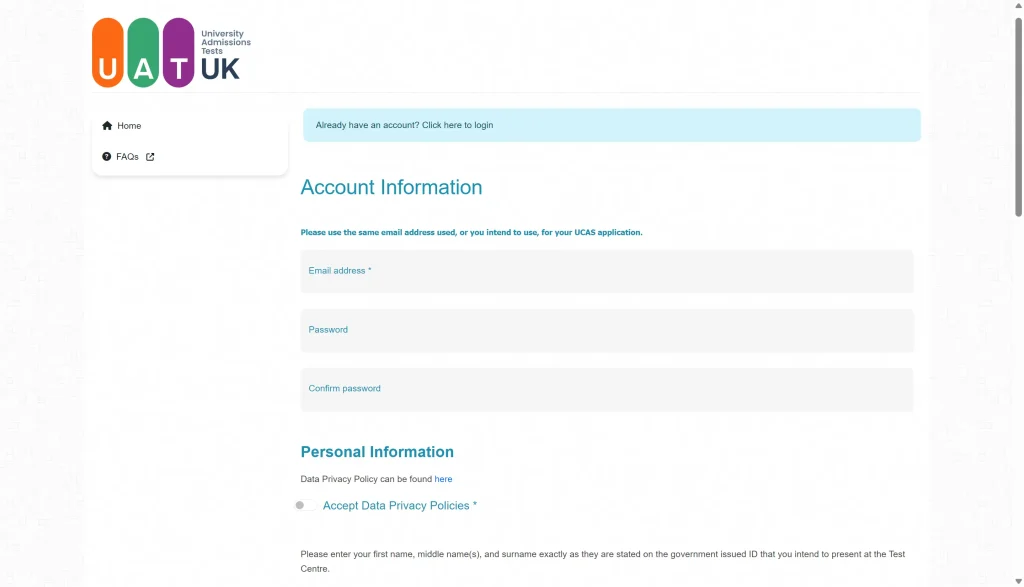
    UAT-UK-register

    Screenshot from the official UAT-UK website

    • It is imperative that the name used for UAT-UK account registration precisely matches the name on the candidate’s identification document. Discrepancies may prevent the candidate from sitting the examination. Candidates should also ensure their name matches their UCAS application name.
    • After creating an account, Pearson VUE will email candidates. This email enables them to confirm details and account settings. Candidates should receive it within 24 hours. This email will also include a temporary password for the candidate’s account.
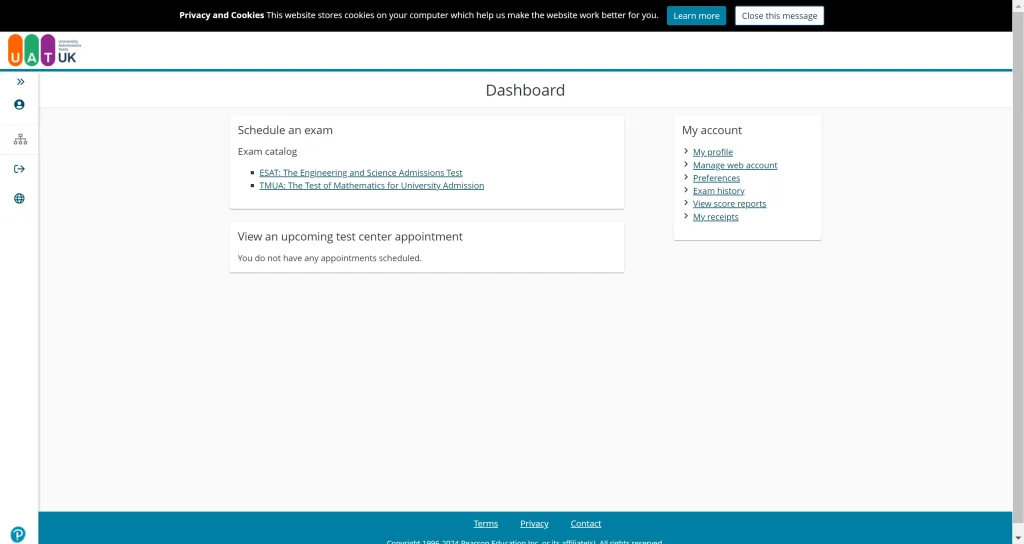
    • Upon receipt of the account confirmation email, candidates may log in using the temporary password, subsequently change their password, and locate their UAT-UK ID (format: UATUK######) in the top left-hand corner of the page navigation bar.

    2. ESAT/TMUA/TARA Booking Registration

    • Log in to your UAT-UK account on the official Pearson VUE website and select the corresponding test on the page to make an appointment.

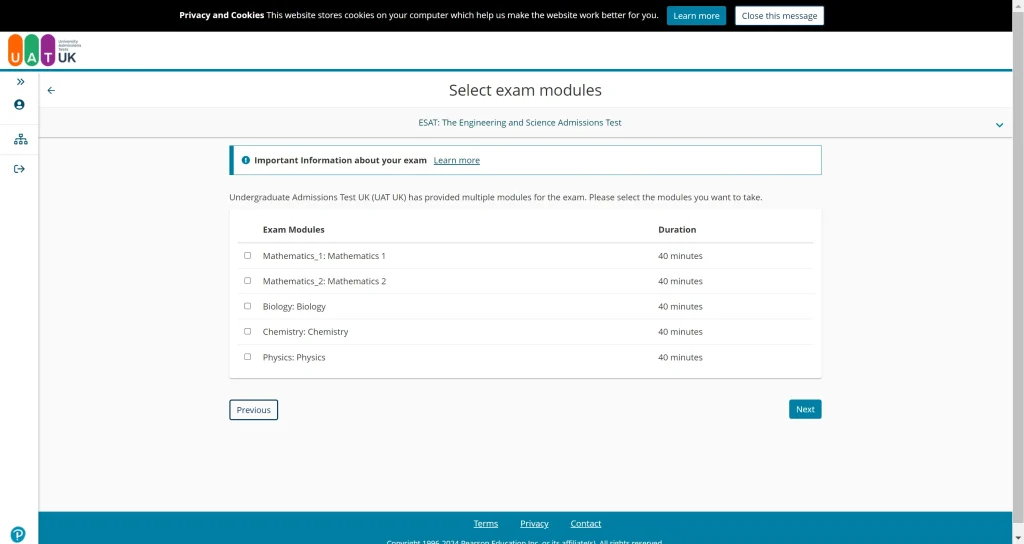
    ESAT & TMUA Registration Guide - Book a test - 2

    • Regarding elective modules:

    The ESAT comprises of five different modules
    Typically, all candidates are required to sit the Mathematics 1 module. In addition to this, candidates will generally need to select two further modules from Mathematics 2, Physics, Chemistry, and Biology, in accordance with the requirements of their chosen university and specific programme of study. It is imperative that candidates meticulously consult the official admissions webpage of their prospective institution to confirm the precise subject combination stipulated for their intended course. Selecting an appropriate combination of subjects is likely to strengthen your university application.

    The TMUA consists of two compulsory modules
    Paper I and Paper II. All candidates must complete both sections; there are no optional modules to select.

    The TARA consists of three compulsory modules
    Critical Thinking, Problem Solving, and the Writing Task. All candidates must complete all three sections; there are no optional modules to select.

    ESAT Registration Guide - Select the tests - 3

    • Provide personal information pertinent to the examination. The system denotes compulsory fields with an asterisk (*).
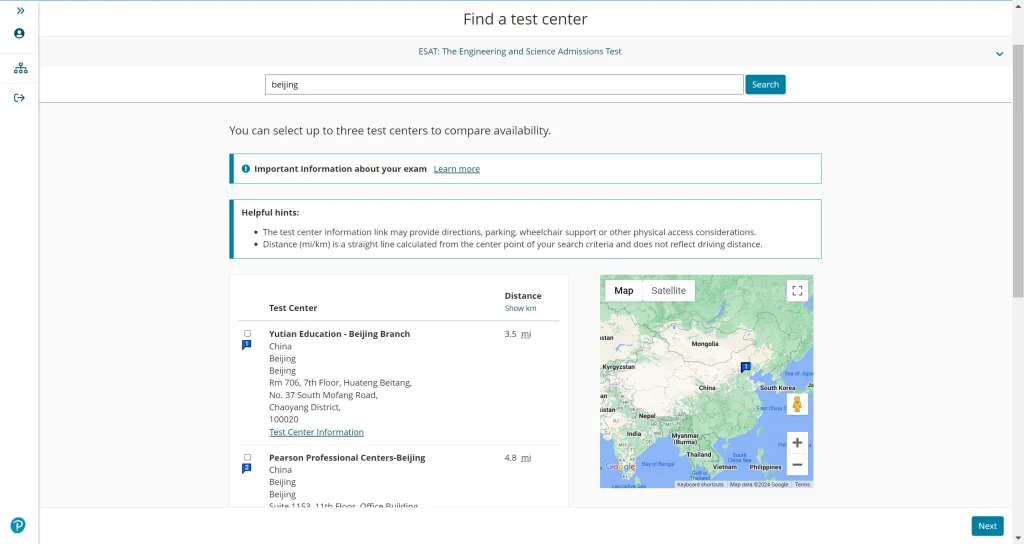
    • Candidates can locate their nearest test centre via the Pearson VUE website to complete their ESAT/TMUA/TARA registration. Please note that sought-after test centres have limited places, especially as the registration deadline approaches. We strongly advise booking well in advance.

    ESAT & TMUA Registration Guide - Choose the test centre - 5

    3. Post-Registration and Pre-Test Steps

    • Retain Confirmation Letter:
      It is strongly recommended that candidates save or print the test confirmation letter issued by Pearson VUE once registration and payment are complete. This document usually serves as proof of entry for the examination.
    • Familiarise Yourself with Test Centre Regulations:
      Candidates are advised to visit the Pearson VUE website or contact their test centre before the examination to apprise themselves of specific test centre rules and regulations.
    • Official Contact Details:
      For any queries, candidates may contact the Pearson VUE candidate services helpline on 866 892 4788 (toll-free) or liaise with official customer service through the customer service centre on the Pearson VUE website.

    4. Test Fees

    • For candidates applying the ESAT, TMUA, or TARA registration outside the UK and the Republic of Ireland (including mainland China), the fee is generally £133.
    • For candidates applying the ESAT, TMUA, or TARA registration within the UK and the Republic of Ireland, the fee is £78.

    IV. Access Arrangements

    Candidates requiring access arrangements are advised to register for the examination at the earliest opportunity. Registering later may diminish the likelihood of securing arrangements at the preferred date and test centre. UAT-UK may take up to ten working days to process applications for access arrangements. Furthermore, the deadline for applying for access arrangements is typically in advance of the standard registration deadline. It is essential to check and submit such applications with ample time.

    All applications for access arrangements must be substantiated by evidence from a medical practitioner or specialist teacher, clearly detailing the candidate’s disability, medical condition, or other relevant circumstances.

    Types of access arrangements that necessitate application and approval include:

    • 25% extra time
    • Supervised rest breaks
    • Separate invigilation (rooming)
    • Use of a coloured reading overlay or bookmark
    • A reader or scribe
    • Other (please supply specific details of any aids or modifications required)

    V. Cancelling ESAT/TMUA/TARA Registration

    1. Candidates may cancel or amend their examination booking up to 48 hours prior to the scheduled test without penalty.
    2. Cancellations or amendments must be effected by logging into the Pearson VUE website account or by contacting customer services for assistance.
    3. Should a candidate fail to cancel or amend their booking in good time, or fail to attend the examination, the examination fee will be forfeit.
    4. It is important to appreciate that the ESAT, TMUA, and TARA are conducted over only 1-2 days for candidates sitting in China, Hong Kong and Macau. The feasibility of successfully rescheduling a test date is dependent upon availability at the selected test centre.
    5. The precise cancellation and amendment policy will be as per the terms and conditions stipulated by Pearson VUE at the point of booking.

    VI. Concluding Thoughts

    Whether it is the TMUA which emphasises mathematical logic and economic thinking, the ESAT which assesses core STEM capabilities, or the TARA which comprehensively evaluates academic reasoning and critical analysis, these three admissions tests have jointly built the “golden passport” for rushing towards top-tier Cambridge, Oxford, and G5 elite courses. As the new test season draws closer, grasping the latest updates in advance and familiarising yourself with the complete ESAT/TMUA/TARA online registration process is the foundation for ensuring that your application journey proceeds smoothly.

    We hope that every student aspiring to enter a top-tier academic institution can make full use of this guide, starting from the ESAT/TMUA/TARA registration details, to be fully prepared to successfully step into your ideal palace of learning. To help everyone achieve highly efficient preparation, we have also launched in-depth analysis schemes for each of the three examinations. You can click the corresponding links below to obtain a full range of preparation guides, timelines, and score-maximising strategies to effectively enhance your admissions test results:

  • Oxford Physics & Cambridge Natural Sciences Admissions Guide

    Oxford Physics & Cambridge Natural Sciences Admissions Guide

    Introduction

    In STEM applications for Oxbridge and the G5, the pathways of Oxford Physics and Cambridge Natural Sciences admissions have always attracted the world’s finest scientific minds. Students choosing this route usually hold straight A*s and a standard portfolio of medals from top Olympiads like the BPhO and UKChO. Their solid academic foundations give them the confidence to handle intense pressure and rigorous challenges.

    However, with premier universities such as Oxford, Cambridge, and Imperial College London fully adopting the ESAT, a new pain point has emerged: When top contenders across engineering, physics, and natural sciences are evaluated using the exact same “yardstick” for admissions, many applicants lack an objective reference frame to determine what score guarantees a secure spot within their specific subject pool.

    Without precise positioning, even the strongest candidates can easily suffer from strategic misjudgements in their preparation pace. Combining the latest official Oxbridge admissions macro-data and the ESAT report released by UAT-UK, this article aims to establish an objective benchmark for students striving to reach the pinnacle of science. By clarifying the true scales of selection, we will help you find your exact bearings, enabling you to give it your all with absolute confidence in the upcoming final sprint.

    I. The Reality of the Admissions Funnel: Understanding Your Subject Competition Pool

    Although the ESAT is a massive standardised test, Oxford and Cambridge still conduct independent screening strictly based on specific courses when issuing interview invitations and final offers. Therefore, before obsessing over admissions test scores, we must first understand the true competitive landscape of our chosen subjects from a historical macro-perspective.

    The following two charts show the admissions trends for Oxford Physics and Cambridge Natural Sciences, compiled by UEIE based on official data over the past decade (2014–2023):

    牛津大学物理专业招生数据2014-2023申请季

    Physics Admissions Data at Oxford during 2014–2023 Application Cycles
    (Plotted by UEIE based on official data)

    剑桥大学自然科学专业招生数据2014-2023申请季

    Natural Sciences Admissions Data at Cambridge during 2014–2023 Application Cycles
    (Plotted by UEIE based on official data)

    These charts clearly reveal a continuous tightening of thresholds for pure science courses:

    Oxford Physics Over the past decade, application numbers for Oxford Physics have remained consistently high, but the offer rate has vibrated downwards from 18.32% in 2015 to just 13.07% in 2023. The overall shortlisting rate stands at a mere 33.32%.
    Cambridge Natural Sciences As one of Cambridge’s largest courses, it has accumulated over 26,000 applications in the past ten years. Under the pressure of such a massive volume, the university must maintain exceptionally high academic standards to sustain its overall acceptance rate of around 25%.

    To give you a more intuitive sense of how these standards operate during the actual admissions process, I have built the dynamic chart below, “Comparison of Oxford Physics and Cambridge Natural Sciences Admissions Funnels”, based on the underlying data from the latest 2023/24 application cycle. You can try selecting different subjects on both sides and toggle the gender dimension (All / Women / Men) to view the real rejection ratios:

    University Admissions Funnel
    Chart designed by Xie Tao @ueie.com
    Success Rate A
    Success Rate B
    Comparison
    COURSE A
    COURSE B

    From the 10-year trends and the latest funnel diagrams, we can objectively extract the key admissions patterns for Oxford Physics and Cambridge Natural Sciences:

    1. The 30% Shortlisting Threshold for Oxford Physics

    Looking at the aggregate data for Oxford Physics, out of 4,579 applicants holding straight A*s, only 1,419 ultimately received interview invitations, representing a shortlisting rate of around 31%. This means that despite everyone possessing glittering profiles, nearly 70% of candidates are knocked out in the first round. The core criterion determining this top third is the admissions test score (which was the PAT prior to 2026). Furthermore, highly niche, interdisciplinary courses demanding both humanities and sciences proficiency, such as Oxford Physics and Philosophy, see an overall acceptance rate as low as 8.3%.

    2. The "Hidden Bifurcation" in Cambridge Natural Sciences

    The gender distribution for Cambridge Natural Sciences in the 2023/24 cycle appeared remarkably balanced (1,284 male applicants and 1,160 female applicants), with the acceptance rate holding steady at around 25%. However, when cross-referenced with the option-selection profiles published by the ESAT board, a profound internal division emerges: 59% of candidates choosing the Biology module are female, whereas a staggering 74% of candidates selecting the Physics module are male. This indicates that the vast majority of the massive male applicant pool in Natural Sciences is concentrated in the Physical Sciences stream. If you are applying for the physics pathway, your standalone competition pool will be packed with an exceptionally high concentration of top-tier male mathematical and physical talents.

    II. Re-evaluating Scores Under a Shared Yardstick: Where is Your "Safe Zone"?

    Next, let us look at how the standardised benchmark, the ESAT, impacts preparation positioning.

    1. Global Macro-Perspective: The Average Quagmire vs Extreme Polarisation

    Although applicants for Oxford Physics or Cambridge Natural Sciences do not directly compete for admissions against Engineering applicants, the scores for each ESAT module are ranked together globally. According to the official UAT-UK report, out of nearly 12,000 candidates worldwide, a staggering 72% (8,564 students) opted for the exact same combination: Mathematics 1 + Mathematics 2 + Physics. Consequently, many students look to the official score distributions when benchmarking their targets, as shown below.

    Global Score Distribution for ESAT Maths 1, Maths 2, and Physics — October 2025
    (Screenshot from the Official UAT-UK Report)

    By carefully examining these three official distribution charts, several distinct characteristics become apparent:

    • Clustering in the Common Score Range
       Whether in Mathematics 1, Mathematics 2, or Physics, a vast number of candidates score between 4.0 and 5.0, forming the prominent main peak of a normal distribution.
    • Steep Decline in the Right-Hand Long Tail
      From 6.0 onwards, the proportion of candidates achieving these scores drops sharply. This indicates that scores above 6.0 begin to demonstrate strong differentiation power.
    • The “Uptick” at the Full Marks Range
      At the extreme right edge of the chart (the 9.0 perfect score band), there is a noticeable rebound. This reveals a small, elite cohort of top-tier candidates with exceptional mathematical and physical abilities who distance themselves significantly from the general crowd.

    2. Re-evaluating Your Competitive Coordinates: The 8.0 Benchmark for Chinese Applicants

    We have compiled the Comparison of ESAT Scores between UK and Chinese Candidates from the official UAT-UK report:

    Comparison of ESAT Module Scores: Chinese vs. UK Candidates (2024/25 Application Cycle)

    Module Country or Region Number of Candidates Average Score 25th Percentile 50th Percentile 75th Percentile 90th Percentile
    Maths 1 UK 6031 3.93 3.1 3.9 4.8 5.6
    China 2568 5.91 4.7 5.8 7.1 8.5
    Maths 2 UK 4929 4.07 3.1 4.1 5.0 5.7
    China 2197 5.68 4.5 5.6 6.8 8.2
    Physics UK 4657 4.15 3.2 4.1 5.0 6.0
    China 1961 5.58 4.5 5.6 6.8 8.0

    * Source: UAT-UK Official Report

    Synthesising the distribution charts and tabular data, Chinese applicants must face a hard truth: the global macro average carries very little reference value.

    The ESAT is marked out of 9.0, with the global median anchored at 4.5. However, Chinese candidates perform exceptionally well; the mean score for Mathematics 1 has already reached 5.91, while the top 10% (90th percentile) threshold has been pushed up to soaring heights: 8.5 in Mathematics 1, 8.2 in Mathematics 2, and 8.0 in Physics. This cohort scoring 8.0 or even 9.0 forms the backbone of the “uptick” phenomenon on the far right of the chart.

    Applicants chasing for admissions at Oxford Physics or the Physics orientaion in Cambridge Natural Sciences essentially sit at the absolute apex of this STEM track. In this fiercely competitive, independent subject pool, your admissions test scores must not only vastly exceed the global average but should ideally approach the top 10% extreme of Chinese candidates. Therefore, set your targets objectively: an 8.0 is not an impossibly high score, but rather the baseline benchmark required to secure one of those top 30% interview shortlists and subsequent admissions in Oxford Physics or Cambridge Natural Sciences disciplines.

    III. The Two Touchstones of the ESAT: Extreme Time Management and Pure Mathematical Intuition

    Having established the score benchmarks for your specific subject pool, many candidates with extensive competition backgrounds might wonder: given that the ESAT syllabus does not exceed the high school scope, why is scoring above 8.0 still so difficult among this elite scientific cohort?

    By examining two key chart datasets regarding “percent of unreached item” and “scaled score by first language” from the official UAT-UK report, we can clearly identify the two most common blind spots science students encounter when preparing for this computer-based test.

    1. Extreme Time Management: The Barrier Between Academic Depth and Problem-Solving Efficiency

    As a highly standardised computer-based test, the ESAT does not merely test academic depth; it is a brutal test of time management and efficiency. Each module requires candidates to tackle 27 multiple-choice questions in 40 minutes, meaning the average time allocated for reading, analysing, and answering each question is under a minute and a half (approximately 88 seconds).

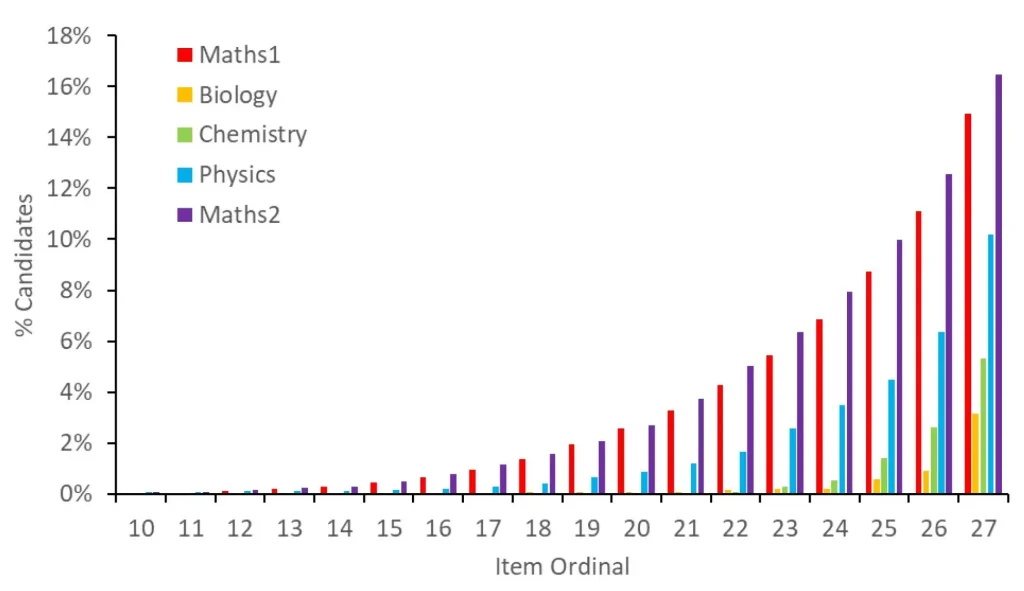
    ESAT各模块按题号顺序未作答考生百分比

    Percentage of Candidates Failing to Reach Questions by Item Ordinal Across ESAT Modules
    (2024/25 Application Season)

    Observing the official trend chart above, the red bars representing Mathematics 1 and the purple bars representing Mathematics 2 display an incredibly sharp upward surge after question 20. This visually captures how a vast number of outstanding candidates lost their rhythm under the pressure of intense question volume. The underlying official data further confirms this reality:

    • Time Depletion in Mathematics 2
      A staggering 52% (more than half) of candidates experienced “running out of time or being forced to blind-guess and submit within the final 5 seconds (Unreached/Low Time)” in this module.
    • The Squeeze in Mathematics 1 and Physics
      In Mathematics 1, a compulsory module for all science applicants, 46% of candidates failed to comfortably finish all questions; meanwhile, the proportion of candidates facing time exhaustion in the Physics module reached 31%.

    These cold figures expose an undeniable truth: having solid academic foundations does not automatically translate to a high score in a computer-based test. Many students applying for Physics or Natural Sciences are accustomed to long, deep formula derivations in high-level competitions like the BPhO or UKChO. However, when confronting the ESAT, adhering to standard, step-by-step problem-solving habits leaves them highly vulnerable to facing a wall of unread questions in the final minutes. Only by transforming deep academic strength into intuitive reflexes and decisive prioritisation under high pressure can you smoothly surmount this temporal barrier.

    2. Stripping Away the Linguistic Shell: No Excuses in Pure Mathematical and Physical Duels

    When hitting a wall in admissions tests, many domestic students tend to blame it on a “heavy English reading load, where long and complex sentences slowed down speed.” However, the official statistical macro-data completely eliminates this confounding variable.

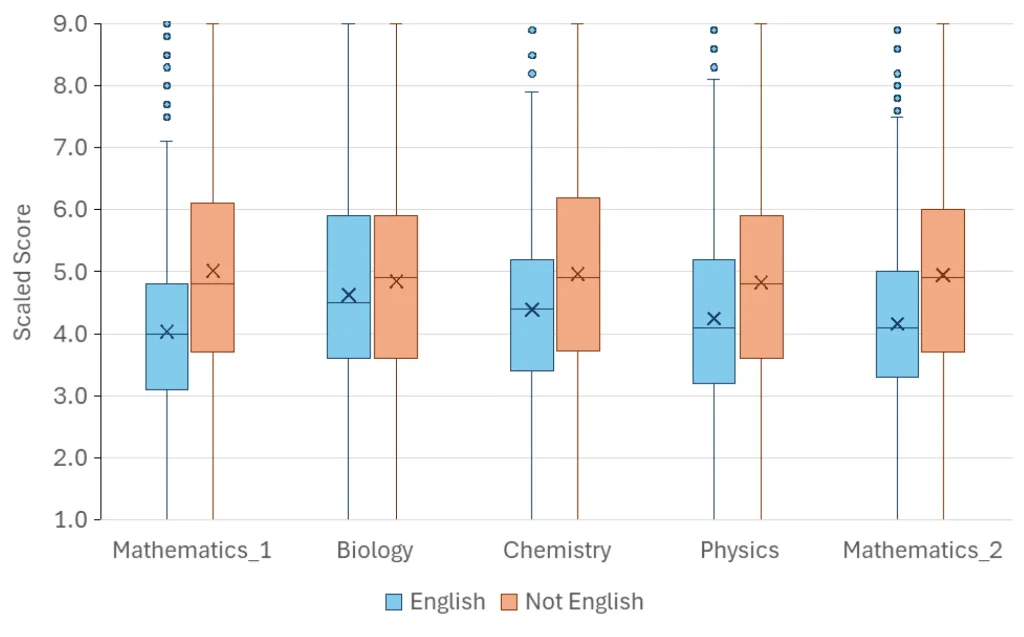
    按母语划分的成绩分布对比英语-vs-其他

    Comparison of Score Distribution by First Language: English vs Others
    (Screenshot from the Official UAT-UK ESAT Report Released in September 2025)

    Examining the box and whisker plot above closely, we observe a counter-intuitive phenomenon: across all five modules compared, the orange boxes (Non-English native speakers) have overall medians and interquartile ranges that are significantly higher than the light blue boxes (English native speakers). This implies that candidates whose first language is not English comprehensively outperform native British candidates on the global stage.

    The official report explicitly notes that the ESAT is a typical “low language load” test.

    This objective reality reminds us that in this high-level clash of scientific minds, there are no excuses to be made regarding language disadvantages. It purely and directly measures the genuine sharpness deep within a candidate’s brain regarding algebra, calculus, and mechanical frameworks. If you cannot break into the high-score tier during mock exams, you must honestly attribute it to internal factors: fundamentally, it comes down to a lack of fluency in core knowledge points or shortcomings in computational thinking.

    IV. The Essence of the Academic Interview: What Kind of "Scientific Brain" is Oxbridge Seeking?

    Having cleared the ~30% shortlisting line of the admissions test, successful candidates finally find themselves sitting across from Oxbridge professors.

    At this stage, the focus of the interview shifts completely away from standardised “problem-solving speed” toward unearthing an individual’s deep academic potential. The official admissions guides for Oxford Physics and Cambridge Natural Sciences clearly state that the core of the interview is not about how much advanced, out-of-syllabus knowledge you have memorised, but rather your physical intuition, ability to abstract and simplify, and mathematical facility.

    Aligned with the official selection rationale of both universities’ science faculties, the “ideal brain” in the eyes of professors manifests primarily in three dimensions:

    1. Physical Intuition: Extracting Core Laws from Complex Phenomena

    Unlike engineering interviews, which like to test practical tasks such as “designing a dam or a bridge”, interviews for Oxford Physics and Cambridge Natural Sciences admissions often dive in from a seemingly ordinary natural phenomenon or a highly abstract model.

    A classic sample question released by the University of Oxford’s Department of Physics is: “If the Earth were hollow and you jumped into a hole drilled straight through the centre, what would your motion look like?” Cambridge Natural Sciences interviewers frequently ask candidates to perform a live estimation of “how much energy is required to boil the entire ocean (Fermi estimation)”.

    Professors do not need you to blurt out a precise numerical answer immediately. What they are genuinely observing is your “physical intuition”—whether you can swiftly strip away irrelevant distractions from the question, accurately map this unfamiliar scenario onto fundamental laws you know well (such as Newton’s law of universal gravitation, conservation of energy, or simple harmonic motion), and formulate a minimalist initial physical model.

    2. Thinking at Limits: Deconstructing Physical Changes Graphically via Mathematics

    In pure science interviews, “sketching graphs” is an extreme test that almost every candidate will face. A professor might write a complex function on the whiteboard (such as $y=e^{-x}\sin x$) or ask you to plot the potential energy curve between diatomic molecules. The core of this assessment lies in your thinking at limits.

    Professors want to see if, without relying on a calculator, you can keenly determine how the physical system collapses or diverges as the variable approaches zero ($x\to 0$) or infinity ($x \to \infty$). In the eyes of elite scientists, true mathematical and physical fluency means seamlessly translating calculus formulae into physical imagery in your mind.

    3. Tutorial in Action: Embracing the Unknown and Thinking Aloud

    The underlying essence of an Oxbridge interview is a miniature Tutorial or Supervision (the distinctive small-group teaching system unique to Oxford and Cambridge). The official guides explicitly state that the interview aims to test how you are dealing with unfamiliar concepts.

    As you derive force equations or balance complex chemical reactions on the whiteboard, the professor will deliberately introduce variables you have never encountered before (for instance: “What if there is a non-uniform magnetic field in this space that varies with time?”). Under such immense pressure, getting stuck is an absolute normality for candidates—and it is precisely the starting point crafted by the professors.

    At this juncture, the metric that determines success or failure is your teachability. When the professor offers a hint, can you swiftly grasp the pointer, overturn your flawed assumptions from thirty seconds prior, and “think aloud”? Candidates who do not fear making mistakes in the face of high uncertainty, maintain rigorous logic, and display excellent self-correction capabilities are exactly the research apprentices Oxbridge is most eager to recruit.

    Conclusion: Measuring Your Sprinting Pace with Objective Data

    In this article, we have journeyed from the ~30% shortlisting threshold for admissions at Oxford Physics and the “hidden bifurcation” in Cambridge Natural Sciences, to the baseline benchmark of 8.0+ for Chinese applicants in the global ESAT landscape, and finally to the fundamental assessment of physical intuition and thinking at limits during academic interviews.

    Discerning the true metrics of this mechanism allows us to abandon mindless, repetitive drilling and instead allocate our precious time precisely where it matters most. Admissions to Oxford Physics and Cambridge Natural Sciences has never been a pure battle of physical stamina; it is a comprehensive game of scientific intuition, problem-solving efficiency, and high-pressure resilience.

    Every strategy must be built upon an objective awareness of your current state. Rather than seeking a false sense of security in an endless sea of questions, it is far better to understand your own hand first and locate the true coordinates for your journey forward.

    To discover how to internalise threshold-crossing knowledge into rapid problem-solving instincts under the brand-new unified exam system, and how to scientifically plan your revision schedule over the coming months, we highly recommend cross-reading this practical guide:

    In that article, you can access highly realistic, computer-based diagnostic exams exclusively developed by UEIE teaching and research team. Use an exceptionally objective data diagnosis to pinpoint your current true combat effectiveness and take your first step toward scientific advancement.

  • Comprehensive ESAT Guide

    Comprehensive ESAT Guide

    Comprehensive ESAT Guide - Video Poster

    I. What is the ESAT?

    ESAT stands for the Engineering and Science Admissions Test. It is managed and operated by UAT-UK (University Admissions Tests – UK), a non-profit organisation jointly established by the University of Cambridge and Imperial College London. The test is conducted as an online computer-based exam at Pearson VUE certified test centres worldwide.

    • Core Objective
      ESAT is designed as an in-depth examination of a student’s academic potential to apply mathematical and scientific knowledge for complex problem solving.
    • Applicability
      For the 2027 application cycle, specific Science and Engineering majors at the four top UK universities— The University of Cambridge, The Univeristy of Oxford, Imperial College London, and UCL—have explicitly required applicants to provide ESAT scores.

    II. Latest Updates of ESAT (2027 Application Cycle)

    Since its debut in 2024, the ESAT remains a relatively young assessment. While the core testing model remains stable this year, there have been significant adjustments in admissions policy and administrative arrangements:

    Oxford Formally Adopts ESAT (in place of PAT)

    This is the most significant policy change for the 2027 cycle. Oxford University has officially announced that ESAT will replace the long-standing PAT (Physics Aptitude Test) for Engineering Science, Physics, and related interdisciplinary courses. (For an in-depth analysis, please see: Navigating Oxford’s 2027 Admissions Tests Reform)

    Core Testing Method Remains Unchanged

    As for the focus of your exam preparation, you can rest assured. ESAT continues its “hardcore” mode: online computer-based testing, modular multiple-choice questions, and a total ban on calculators. There are no major adjustments to the official syllabus, paper structure, or scoring standards.

    Earlier Registration, Extended Test Window

    The test window has been extended this year, but the test booking opens significantly earlier, and fees have been adjusted. (For the specific registration timeline and operational guidelines, please refer specifically to Part V of this article.)

    III. What are the Format and Procedures of the ESAT?

    Test ModeOnline computer-based test.
    Test LocationPearson VUE certified test centres worldwide.
    Subjects

    5 independent modules in total:

    • Mathematics 1
    • Mathematics 2
    • Physics
    • Chemistry
    • Biology

    ConstitutionEach module contains 27 multiple-choice questions.
    TimingEach module is timed independently at 40 minutes; unused time does not carry over to the next module.
    Scoring Method+1 point for a correct answer; no penalty for wrong answers.
    Perfect score for each module is 27, which is converted to a reported score of 1.0 to 9.0.
    Auxiliary ToolsNo calculators or dictionaries allowed. Erasable booklets and pens are provided at the centre.

    IV. Who Would Have to Take the ESAT?

    1. Universities and Courses Requiring ESAT

    Different courses at various universities have varying requirements regarding the selection of modules. Mathematics 1 is compulsory. Candidates must then choose one or two additional modules from Mathematics 2, Physics, Chemistry, and Biology. The specific requirements for the ESAT modules for each course are listed in the table below:

    UniversityCourse(s)ESAT Module Requirements
    The University of Cambridge
    EngineeringMaths 1 + Maths 2 + Physics

    Chemical Engineering and Biotechnology


    Natural Sciences


    Veterinary Medicine

    Maths 1 + Any two other modules
    The University of Oxford

    Biomedical Engineering, Chemical Engineering, Civil Engineering, Electrical Engineering, Mechanical Engineering, Information Engineering


    Physics, Physics and Philosophy

    Maths 1 + Maths 2 + Physics
    Biomedical SciencesMaths 1 + Any two other modules
    Imperial College London

    Aeronautical Engineering, Chemical Engineering, Civil Engineering, Electrical & Electronic Engineering, Electronic and Information Engineering, Mechanical Engineering


    Physics, Physics with Theoretical Physics

    Maths 1 + Maths 2 + Physics
    Chemical EngineeringMaths 1 + Maths 2 + Chemistry
    Biochemistry, Biological Sciences, Biotechnology, Ecology and Environmental Biology, MicrobiologyMaths 1 + Chemistry + Biology
    Design EngineeringMaths 1 + Maths 2 (only these two)
    UCL

    Electronic and Electrical Engineering

    Maths 1 + Any two other modules

    2. The Cannikin Law of Joint Application for Multiple Majors

    If you are applying for multiple majors that require ESAT, and one of the majors includes a specific module requirement, you must comply with this mandatory module selection. For example, if Imperial Chemical Engineering requires Chemistry, you must take it even if your other choices do not, or the application may be deemed invalid.

    3. The "TARA Trap" in UCL Mechanical Engineering

    A special reminder for students applying to the Mechanical Engineering program at UCL for 2027 entry: this program has added the TARA requirement, not the ESAT! It means that, to be eligible for the Mechanical Engineering program at UCL as well as other G5 universities simultaneously, applicants must take both the ESAT and the TARA.

    V. Registration Timeline for the ESAT

    There are two ESAT sittings for the 2027 Application Cycle: October 2026 (Sitting 1) and January 2027 (Sitting 2). Most Cambridge and Oxford applicants must take the first sitting at October.

    1. Primary Schedule: October 2026 sitting

    Key Stage
    Date
    Account Registration Opens
    1st June 2026 (3pm BST)
    Test Booking Window

    from 20th July 2026 (3pm BST)

    to 28th September 2026 (6pm BST)

    Test Dates

    Candidates sitting in China, Hong Kong and Macau:

    Only on 12–13th October


    Candidates sitting in other countries and regions:

    Any date between 12–16th October

    Results Release
    16th November 2026 (receive via UAT-UK Account)

    2. Alternative Schedule: January 2027 sitting

    Not applicable for Cambridge or Oxford applicants unless you are applying to a mature college with a January admissions deadline at Cambridge, or an Oxford Foundation Year programme also with a January deadline.

    Key Stage
    Date
    Account Registration Opens
    1st June 2026 (3pm BST)
    Test Booking Window

    from 26th October 2026 (3pm GMT)

    to 21st December 2026 (6pm GMT)

    Test Dates

    Candidates sitting in China, Hong Kong and Macau:

    Only on 6th January 2027


    Candidates sitting in other countries and regions:

    Any date between 4–8th January

    Results Release
    8th February 2027 (receive via UAT-UK Account)

    * UAT-UK will notify candidates by email when their results are available to view in their UAT-UK account. Candidates will also receive a document explaining their results to provide further information on how to interpret their scores.

    3. The Four Key Steps for Registration

    Registration for the ESAT must be completed via the Pearson VUE online platform.

    • Create a UAT-UK Account (Starting from 1st June)
      Register using personal information that exactly matches your identification documents. Note: The email address used to register your UAT-UK account does not need to be the same as the one used for your UCAS account.
    • Secure a Test Slot (Starting from 20th July)
      Confirm your selected ESAT modules within the system, and select a suitable test date and test centre as early as possible (test slots are allocated on a first-come, first-served basis).
    • Pay Test Fees
      Ensure you have a credit or debit card capable of processing international payments ready (e.g., VISA, MasterCard).
    • Confirm Registration Details
      Verify that all details—including modules, date, and location—are accurate before submitting; be sure to check for the confirmation email.

    For a comprehensive, step-by-step tutorial covering specific registration procedures, test centre lookups, payment instructions, and applications for special arrangements, please access our specially compiled ESAT Registration Guide. This guide features complete, detailed, and illustrated instructions with screenshots:

    VI. How high is an ESAT score considered competitive?

    1. Independent Scoring for Each Module

    The official testing body does not calculate a total or average score. After undergoing a complex conversion process, the raw score for each module is reported individually as a band score ranging from 1.0 to 9.0.

    2. Without Admission "Cut-off Score"

    UAT-UK and the various universities have never established rigid “interview thresholds” or “admission cut-offs.” Admissions officers conduct a holistic assessment, taking into account your ESAT scores in conjunction with your predicted A-Level/IB grades, personal statement (PS), and interview performance.

    3. The Competitiveness Tier Model

    Although no official score thresholds exist, based on the in-depth analysis of extensive historical application data for Oxbridge and G5 universities conducted by Mr. Xie Tao and the UEIE R&D team, we have developed the following “Competitiveness Positioning Matrix”—a tool offering highly practical and actionable guidance:

    Report Score Global Ranking Tier Admission Prediction
    8.5 Top ~3% Grandmaster Extremely high probability of Oxbridge admission, allowing you to secure for admission based on academic results alone.
    8.0 Top ~5% Master Above average probability of Oxbridge admission, with distinct advantages.
    7.5 Top ~7% Diamond Relatively low probability of Oxbridge admission, but high chances for Imperial College London.
    7.0 Top ~10% Platinum Still stand a chance of Oxbridge admission, for those who are exceptionally lucky or deliver a truly outstanding performance in the interview.
    5.5 Top ~25% Gold Basic G5 competitiveness, most likely to get interview offer for Oxbridge admission.
    4.5 Top ~50% Silver Moderate competitiveness, at a relative disadvantage among applicants to top-tier universities.

    * The analysis presented above reflects the experienced academic perspectives of Mr. Xie Tao and does not constitute an official guarantee of university admission.

    4. Global Data Benchmarks vs. UEIE’s Actual Performance Results

    To provide a more intuitive sense of the scores mentioned above, presented below are the officially released global score distribution histograms for the five ESAT modules (Mathematics 1, Mathematics 2, Physics, Chemistry, and Biology) from October 2025. From these charts, you can clearly observe the scarcity of scores in the high-scoring range.

    Global Score Distribution for the Five ESAT Modules — October 2025
    (Screenshot from the Official UAT-UK Report)

    So, what kind of level can students reach after undergoing systematic training?

    In the video below, we present the actual scores achieved by UEIE students at the ESAT and TMUA in October 2025, comparing them directly against the global data distribution. You will be able to visually observe the massive statistical advantage—a distinct “data gap”—that results from a systematic approach to test preparation:

    VII. The "Report Score" Algorithm

    1. Dynamic Scoring Mechanism: Why do identical numbers of correct answers result in different scores?

    Rather than relying on a simple “arithmetic mean,” ESAT employs a highly sophisticated IRT (Item Response Theory) model for scoring. UAT-UK utilises big-data iterative calculations that take into account every candidate’s raw score, the overall difficulty of the test paper, and the specific difficulty level of each individual question.

    Since ESAT is a global online computer-based test, different testing centres are assigned distinct—though not entirely identical—test papers as an anti-cheating measure. Consequently, because the difficulty levels of these papers vary, the specific mapping relationship used to convert “raw scores” into “reported scores” also differs.

    The figure below illustrates the mapping relationship between raw scores and reported scores for two test papers of differing difficulty levels (Form A and Form B).

    How Test Forms Affect ESAT Report Scores

    Select a raw score to see how a student’s final report score changes depending on the specific difficulty of the test form they were assigned.

    Chart designed by Xie Tao @ueie.com

    Form A (Slightly Harder)

    0.0

    Form B (Slightly Easier)

    0.0

    For example, suppose both you and a classmate correctly answer 19 questions (out of a total of 27).

    If you were assigned Test Paper A (which is slightly more difficult), your reported score might be 5.7.

    Conversely, if your classmate was assigned Test Paper B (which is slightly easier), their reported score might be only 4.9.

    2. Three Key Takeaways Regarding Scoring

    Based on our reverse engineering of the official scoring algorithm, candidates must keep the following conclusions firmly in mind during the actual exam:

    • The Essence is “Ranking,” Not “Absolute Score”

    In the test sitting at October 2025, the official body strictly defined a score of 4.5 as the 50th percentile benchmark for the entire candidate pool, while a score of 7.0 was firmly anchored to the top 10% of the cohort.

    • “Same Paper, Same Score” Rule

    Within any specific set of test questions, a single raw score corresponds to only one specific reported score. In other words, the system looks solely at the total number of questions you answered correctly; it does not distinguish between whether those correct answers came from difficult questions or easy ones. (Tip: If you get stuck on a difficult question, skip it immediately! Maximising your total count of correct answers is the ultimate strategy for success.)

    • The “Error Tolerance Seesaw” for Papers of Varying Difficulty

    a) The more difficult the test paper, the higher the error tolerance: Even if you answer three questions incorrectly, it remains possible to achieve a perfect score of 9.0.

    b) The easier the test paper, the lower the margin for error: if the paper is very simple, missing just a single question could result in a direct deduction of 8.3 points—a truly brutal reality.

    3. Why is a Score of 7.0 Still "Unsafe" for Chinese Candidates?

    Given that the essence of the IRT algorithm is “global ranking,” a more practical and critical question arises: In the eyes of admissions officers, does a score of 7.0 from different testing regions truly carry equivalent weight?

    The answer is: They are absolutely not equivalent.

    To provide a tangible sense of this reality, I have excerpted the core performance data—officially released by UAT-UK—for candidates from the UK and China across each module of the ESAT:

    Comparison of ESAT Module Scores: Chinese vs. UK Candidates (2024/25 Application Cycle)

    Module Country or Region Number of Candidates Average Score 25th Percentile 50th Percentile 75th Percentile 90th Percentile
    Maths 1 UK 6031 3.93 3.1 3.9 4.8 5.6
    China 2568 5.91 4.7 5.8 7.1 8.5
    Maths 2 UK 4929 4.07 3.1 4.1 5.0 5.7
    China 2197 5.68 4.5 5.6 6.8 8.2
    Physics UK 4657 4.15 3.2 4.1 5.0 6.0
    China 1961 5.58 4.5 5.6 6.8 8.0
    Chemistry UK 1550 4.33 3.4 4.4 5.2 6.2
    China 574 5.60 4.5 5.6 6.8 8.2
    Biology UK 762 4.64 3.6 4.5 5.4 7.0
    China 345 5.06 6.0 5.0 6.4 7.6

    * Source: UAT-UK Official Report

    Hidden behind these figures lie three paradigm-shifting—and brutally harsh—realities regarding the actual competitive landscape:

    • Dimension Reduction Strike: Your “Passing Line” is Someone Else’s “Ceiling”

    Taking Mathematics 1 as an example, the median score for Chinese candidates (5.8) directly surpasses the 90th percentile threshold for UK candidates (5.6). This implies that, within the Chinese testing region, a score of 7.0 offers absolutely no competitive advantage. You must contend with an extremely high “premium for high scores,” firmly anchoring your target at 8.0 points or higher.

    • The Math & Physics Track: A Brutal, “Zero-Tolerance” Meat Grinder

    In the Math and Physics modules, the top 10% of Chinese candidates have collectively broken the 8.0-point barrier! In this arena—where only the elite compete—even a single careless error can cause a candidate’s global ranking to plummet precipitously. Answering correctly is merely the baseline expectation; absolute, zero-error perfection is the only currency that allows you to stand out.

    • The Biology Module: A “Strategic Blue Ocean” for Escaping Hyper-Competition

    Biology is the subject with the narrowest performance gap between China and the UK; the top 10% of candidates from both nations differ by a mere 0.6 points. If you possess a solid foundation in Biology, choosing this module allows you to perfectly sidestep the extreme hyper-competition of the Math and Physics tracks, thereby executing the smartest strategy for competitive differentiation.

    Core Advice for Chinese Candidates

    In an environment characterized by limited admissions quotas, your true competitors are not candidates from across the globe, but rather your fellow Chinese peers—the very group that is relentlessly pushing the 90th percentile benchmark to its absolute limit. On the battlefield of the ESAT, your objective is by no means merely to “cross the finish line,” but rather to achieve “the highest of high scores.”

    A Guide for the Hardcore Academic

    If you have a keen interest in data and algorithms—and wish to delve deeper into how the IRT model achieves standardization—you are recommended to read a comprehensive, purely technical article we have written specifically on this subject: Same Raw Marks, Different Results? Unlocking the Hidden Rules of ESAT/TMUA/TARA Scoring.

    VIII. Why is the ESAT so Difficult?

    Many students who have taken the actual ESAT—or who have attempted the diagnostic tests provided by UEIE—share a remarkably consistent piece of feedback after the fact: “The questions themselves don’t seem particularly difficult, but it’s simply impossible to finish them all!” If only there were ample time, securing a high score would seem effortless.

    This visceral experience precisely exposes the ruthless nature of the ESAT as a “selective assessment for top-tier universities.” It does not test for obscure or bizarre questions; instead, by applying extreme pressure, it screens for elite minds possessing the following three core qualities:

    1. "Time Management and Rapid Decision-Making"—Handling Extreme Pressure

    Each module consists of 27 multiple-choice questions that must be completed within 40 minutes. This means your average response time is a mere 1.5 minutes per question.

    This serves not only as an extreme test of subject mastery and problem-solving speed but, more importantly, as a filter for “rapid decision-making ability.” In the exam hall, you must possess a keen sense of time granularity; when encountering a question you get stuck on, you must have the courage to “strategically abandon” it. It is strictly forbidden to get bogged down on a single question, thereby leaving insufficient time to tackle the simpler questions that follow.

    2. "Fundamental Concepts and Intellectual Maturity"—Moving Beyond Rote Memorization

    The scope of the ESAT is extremely broad, encompassing the entirety of the GCSE (or IGCSE) curriculum as well as the majority of core A Level content.

    • Anti-Formulaic

    Because the time allotted per question is so brief, some questions specifically target blind spots and common points of confusion regarding fundamental concepts; attempting to pass through sheer rote memorization or by relying on “pattern-matching tricks” is simply unfeasible.

    • Flexibility

    For certain questions, attempting to derive the solution using conventional, “by-the-book” methods would make it absolutely impossible to finish within the allotted time. The test demands a high degree of mathematical maturity, requiring candidates to keenly spot shortcuts and flexibly deploy problem-solving techniques drawn from across different chapters.

    3. "Hardcore Mental Math Skills"—Breaking the "Calculator Dependency"

    The use of calculators is strictly prohibited throughout the entire test! For candidates who have spent years studying international curricula such as A Level or AP—and who have consequently developed a deep reliance on calculators—this undoubtedly represents the greatest practical challenge they face.

    The questions within the ESAT are embedded with a significant volume of calculations. To arrive at the correct answer within the allotted time, candidates must—during their regular practice—deliberately cultivate robust mental calculation and estimation skills, while also achieving a level of proficiency with common formulas and physical constants that allows for their retrieval with the automaticity of muscle memory.

    IX. The Ultimate Strategy for ESAT Module Selection

    After familiarising themselves with the strict requirements of various universities, the biggest dilemma many students face is this: “Since I am applying to multiple G5 universities simultaneously, how exactly should I combine my ESAT modules?” (Note: If the specific degree program you are applying for already has explicit “mandatory module” requirements, please follow them directly; there is no need to overthink the matter.)

    1. Debunking a Myth: "Which module makes it easiest to achieve a high score?"

    This is the question that UEIE’s teachers are asked most frequently. Please—stop chasing the pipe dream of finding the “easiest subject” right now!

    As mentioned in Part VII of this article—the “Algorithm” section—the inherent difficulty of any given ESAT module is ultimately neutralized by the IRT-based scaled scoring system. A paper that feels “easy” to you will, by definition, have an extremely low tolerance for error.

    Core Advice

    Select only those modules in which you possess the greatest proficiency and interest—and which align most closely with the academic knowledge base of your intended future major. Leveraging your absolute strengths is the only true path to breaking through the rankings.

    2. A Matrix of High-Frequency Module Combinations for G5 Applicants

    For students applying to multiple G5 universities simultaneously (e.g., Oxford + Cambridge + Imperial College + UCL), we have compiled the following optimal strategies for module selection:

    Major CategoryUniversity Combination for ApplicationRecommended Module Selection

    Engineering

    (excluding Chemical Engineering,
    Mechanical Engineering)

    Cambridge + Imperial College + UCL

    1st ESAT sitting in October:

    Maths 1 + Maths 2 + Physics

    Cambridge + Imperial College
    Oxford + Imperial College + UCL
    Oxford + Imperial College
    Imperial College + UCL

    1st ESAT sitting in October or 2nd ESAT sitting in January:

    Maths 1 + Maths 2 + Physics

    Chemical
    Engineering
    Cambridge + Imperial College

    1st ESAT sitting in October:

    Maths 1 + Maths 2 + Chemistry

    Oxford + Imperial College

    Module Conflict, Unable to Select:

    Oxford requires candidates to take Maths 1 + Maths 2 + Physics, whereas Imperial College requires Maths 1 + Maths 2 + Chemistry. However, each candidate is permitted to select only three modules within a single test sitting; furthermore, candidates who sit for the first ESAT in October are ineligible to sit for the second ESAT the following January.

    Mechanical EngineeringCambridge + Imperial College + UCL1st ESAT sitting in October:
    Maths 1 + Maths 2 + Physics

    2nd TARA sitting in January

    Oxford + Imperial College + UCL
    Imperial College + UCL
    PhysicsCambridge + Imperial College1st ESAT sitting in October:
    Maths 1 + Maths 2 + Physics
    Oxford + Imperial College

    Biology &

    Life Sciences

    Cambridge + Imperial College

    1st ESAT sitting in October:

    Maths 1 + Chemistry + Biology

    Oxford + Imperial College

    X. Efficient Prep Resources & Action Guide

    Faced with the ESAT—a test characterised by an extremely low tolerance for error and a rigorous test of on-the-spot reaction skills—blindly grinding through practice problems will only yield half the results for twice the effort. What you need is a scientifically sound preparation strategy that directly addresses the critical pain points of this computer-based test.

    1. Official Resources

    The first step in test preparation is always to thoroughly master the scope and boundaries defined by the official authorities. You can access the most essential foundational preparation materials on the UAT-UK official website:

    • The latest version of the ESAT syllabus
    • Official sample questions and practice materials
    • Exam guides and Frequently Asked Questions (FAQs)
    • Past papers from the ESAT’s predecessors—the ENGAA and NSAA exams (2016–2023)

    2. UEIE‘s Exclusive ESAT "Learn-Practice-Test" Comprehensive Prep Matrix

    To help ambitious G5 applicants completely break through the algorithmic barriers that lead to “identical scores, disparate fates,” the UEIE Research and Development Team has poured its expertise into creating the UEIE ESAT On-Demand Prep Suite. This resource undergoes rigorous annual revisions based on the latest exam trends, perfectly covering the core closed loop of effective test preparation:

    Say goodbye to fragmented learning. Let UEIE’s top-tier instructors guide you through a systematic review of core exam topics and a deep deconstruction of “anti-pattern” strategies for highly efficient problem-solving.

    A complete question bank in English, scientifically categorized by thematic module and difficulty level. Through a massive volume of high-quality, targeted, and timed exercises, we help you completely wean yourself off calculators and build the “muscle memory” required for lightning-fast mental math and rapid decision-making.

    This is your ultimate toolkit for conquering the ESAT! We have invested immense effort into developing online mock exams that simulate the official computer-based testing environment with 99% accuracy. This allows you to adapt in advance to the extreme, high-pressure environment of “module-specific countdown timers,” ensuring you maintain a top-tier performance level during the actual test.

    3. Advanced Learning & Academic Planning

    In addition to the On-Demand Prep Suite, UEIE offers rolling sessions of ESAT preparation programmes throughout the year. If you require expert guidance from renowned instructors and personalised diagnostic assessments for specific modules, please click the link below to view class details and fee arrangements:

    If you wish to learn how to maximise the utility of the resources mentioned above—including how to formulate a scientific study plan, conduct in-depth reviews of your mistakes, and master time-management tricks for the actual test—we invite you to read the comprehensive guide we have written specifically for you: ESAT Prep Guide.

  • 2025 ESAT Post-Exam Analysis: The Data-Driven Proof Behind “It Felt Like a UEIE Mock”

    2025 ESAT Post-Exam Analysis: The Data-Driven Proof Behind “It Felt Like a UEIE Mock”

    The October 2025 ESAT is all done and dusted. We’ve been hearing all sorts of things from students, but beyond the usual ‘Maths was a nightmare’ and ‘The sciences were a breeze’, pretty much every UEIE student was saying the same thing: ‘Honestly, it felt just like doing one of our mocks!’

    And that’s no fluke. It’s what happens when your predictions are spot-on and you’ve got a platform that’s a 99% match for the real deal. So, what I’m going to do now is a proper deep-dive into the 2025 ESAT, using all the feedback we got straight from our students and our own exclusive mock data. I’ll break down exactly what was on the paper, how we saw it coming, and what you should be doing next.

    I. The October 2025 ESAT: The Lowdown on What Changed (and What Didn't)

    Compared to the first-ever ESAT, this year’s paper felt a lot more… established. The overall structure was the same, but they’ve clearly had a good tinker with the difficulty levels and are getting much fussier about the exact skills they want to see from candidates. After having a proper chat with dozens of our students, we’ve sussed out a few key changes:

    1. Trend One: Maths 1 has become the new 'separator'.

    This year, Maths 1 was miles harder. It wasn’t just about ticking off syllabus points anymore; it was a proper grilling of your abstract thinking, how you build a logical argument, and your raw calculation skills. What’s behind this? Simple: the G5 unis are putting up a massive ‘hard filter’ for applicants. They’re making it crystal clear they only want students who can really think mathematically. This was a massive headache for anyone applying for stuff like Biology or Chemistry, but frankly an advantage for the Physics and Engineering hopefuls with solid maths foundations.

    2. Trend Two: The sciences went back to basics. It was about efficiency, not difficulty.

    The Physics, Chemistry, and Biology questions looked deceptively simple. But really, they were a sharp test of whether you actually grasped the ‘first principles’. The examiners basically stripped out all the horrible, fiddly calculations to see if you had a gut feeling for the core concepts and could knock up a correct physical or chemical model in no time.

    3. Trend Three: 'Trap questions' are here to stay. Being meticulous is non-negotiable.

    Another huge feature this year was the spike in ‘easy-to-mess-up’ questions. They set little traps all over the place – in the boundary conditions, sneaky unit conversions, or just really subtle wording in the options. This wasn’t just testing what you know, but how obsessively you read the question and how disciplined you are. That’s pretty much the number one rule for any top-level research, to be fair.

    4. Trend Four: The hidden 'race against time' is a test of execution under pressure.

    At its heart, the entire exam was just one long, high-intensity pressure test. It’s not enough to ‘know’ the answer; you have to find it ‘fast’ and get it ‘right’. This double-whammy of testing your processing speed and your nerve is just a normal day at the office when you’re studying or researching STEM at a top level. The ESAT is just making you prove you can handle it before you even get in.

    II. From Nailing the Prediction to Proving It in the Exam: How Our Mocks Were a Dead Ringer for the Real Thing

    The assessment trends analysed above were a challenge for the average candidate, but for UEIE students, they were familiar scenarios rehearsed repeatedly in mock training.

    The feedback we kept hearing again and again—”It literally felt like I was just doing another UEIE mock”—wasn’t a fluke. It just proves our whole philosophy is right: prep isn’t about blindly hammering through a massive question bank. It’s about a high-fidelity simulation of the actual exam, all based on data analysis. Here’s a bit of what our students told us, showing just how closely our training lined up with the real thing.

    1. We absolutely nailed the core problem-solving methods

    Our main goal with the mocks isn’t to ‘spot’ an exact question. It’s to perfectly replicate the types of models and logical steps the examiners love to use. After the exam, loads of students told us that many of the nasty-looking calculations in Maths 1 and 2 could actually be sidestepped with clever tricks – and the core methods for doing that were identical to what we’d hammered home in our final sprint mocks.

    2. We simulated the exam environment and pressure perfectly

    Proper prep has to include simulating the environment and the ‘pressure’. We design our mocks to be an exact match for the real thing: same number of questions, same difficulty curve, and a 99% identical exam setup (right down to the interface and timers). The whole point is to train your brain to keep working under pressure and manage your time. And it worked. Students told us that because they were so used to the intensity of our mocks, when they got into the real exam, they just stayed calm and stuck to the plan.

    3. We strategically covered the obscure, low-frequency topics

    The fight for the top marks always comes down to who’s mastered the obscure, easily-forgotten topics. Our teaching system scans the entire knowledge map and uses data analysis to pinpoint those ‘game-changer’ topics—the ones that rarely come up but are a massive differentiator when they do. This year, a few students got hit with random questions on things like stretching y in an equation, 180° function rotation about an arbitrary point, Young’s Modulus, the density of water between 0-4°C, and vacuum refraction in glass… and every single one was stuff we had strategically covered in our pre-exam intensive training.

    III. From 'Gut Feeling' to Hard Science: Proving It with Our Mock Exam Data

    If student feedback provides qualitative observation, then our back-end mock exam data provides rigorous, visual, quantitative validation.

    Here’s why the UEIE prep system is so ridiculously effective: it’s all driven by two main engines. Think of it as a macro-level ‘group evolution’ and a micro-level ‘individual diagnostic. This setup makes sure that every ounce of effort a student puts in goes exactly where it’ll make the biggest difference.

    1. The 'Macro' View: Watching the Entire Cohort Level Up

    Getting a good ESAT score isn’t just about a few star pupils winning; it’s about lifting the entire group. Our ESAT Score Distribution Graph (check it out below) shows this in black and white.

    2025 ESAT Post-Exam Analysis
    2025 ESAT Post-Exam Analysis
    UEIE's Eight ESAT Mock Exam Score Distribution & Averages
    (Mocks 1-8, Sept-Oct 2025)

    Just look at the journey from Mock 1 to Mock 8. You can clearly see:

    • The whole pack kept moving up: The average (median) score for our students started at a decent 6.7 and steadily climbed to a seriously strong 8.3 by the end.
    • The top-scorer bracket just exploded: On that last mock—the one we made the toughest to be just like the real thing—pretty much everyone was clustered in that top 8.0-9.0 range.

    This is the proof that out training system works. It is systematically pulls up the baseline for everyone and gets the whole cohort sitting comfortably in the G5 admissions zone. We’re not just relying one a few geniuses to make us look good.

    2. The 'Micro' Diagnostic: Plotting a Unique Growth Path for Every Student

    The whole group gets better because each individual gets better. Our Student Personal Report system basically plots a unique journey for every single student. It’s like ‘surgical precision’ for finding and fixing weaknesses.

    Here are two classic examples of how it works.

    A Textbook Case of 'Excellence and Stability'

    2025 ESAT Post-Exam Analysis
    Typical Student (A) – Mock History
    (Studying from June - Oct 2025)

    This student’s score line was basically flat… right near the top. They barely dropped a mark. This just proves their knowledge was already rock-solid. For them, our mocks were the perfect way to stay sharp and plug any tiny, lingering gaps. That kind of consistency under pressure is what raw talent looks like, and it shows the absolute peak our students can hit.

    The Perfect Example of 'Value Added'

    2025 ESAT Post-Exam Analysis
    Typical Student (B) – Mock History

    This student started out at a 4.1 average. By sticking with the eight mocks, getting constant feedback, and doing the targeted training, they finished on a 7.8. That steep upward curve is the best proof you’ll ever see that the hard graft can be measured, and that you can literally watch yourself improve.

    IV. The Endgame: From a Top Score to Nailing the Interview

    Right, let’s be clear: a brilliant ESAT score isn’t a golden ticket. It just gets you a seat at the table for the final round.

    The exam and the interview are testing two completely different skill sets. The exam is all about whether you can find the ‘right answer’ inside a fixed set of rules. The interview—especially for big-hitters like Oxbridge and Imperial—is about finding out if you can build an argument when you’re in totally unknown territory. The interviewers aren’t looking for a perfectly trained ‘problem-solving robot’. They want to find a future colleague—someone who can think straight under pressure, shows massive academic curiosity, and has a rigorously logical mind.

    And guess what? We’ve taken the exact same hardcore, systematic approach we used to deconstruct the ESAT exam, and we’ve applied it to deconstructing the interview.

    That’s why UEIE is officially launching our interview coaching programme. Our goal is dead simple: to take the massive advantage you built for the written exam and turn it into an unshakeable, winning performance in that interview room.

    We’ve built the whole thing around three core modules:

    1. 1-to-1, High-Fidelity Mock Interviews

    These are led by tutors with serious, senior-level interview experience from Oxbridge and Imperial. We perfectly replicate the pressure and academic depth of the real thing, giving you proper, hands-on combat practice.

    2. Logical Framework & Verbal Expression Training

    We don’t feed you ‘model answers’. We train you how to build and communicate your thought process, clearly, even when you’re under the cosh. This is the toolkit that will let you handle any curveball question they throw at you with total confidence.

    3. Pushing Your Horizons to the Academic Frontier

    We’ll get you discussing cutting-edge topics that go way beyond the A-Level syllabus. This is all about helping you build your own unique academic perspective, so you can walk in there and show them you’ve got real passion and huge potential for the subject.

    Act Now

    To guarantee the highest quality of coaching, our interview preparation places are strictly limited and available only to students who have previously purchased UEIE courses or study materials. Past experience shows that these places are typically booked up in a very short time.

  • ESAT & TMUA Sprint Playbook

    ESAT & TMUA Sprint Playbook

    In early September 2025, with just one month remaining until key admissions exams like the ESAT and TMUA, we conducted our third stage of benchmark exams. This serves not only as an assessment of past efforts but also as our most valuable strategic roadmap for the final push.

    This report provides an in-depth analysis of the exam data, helping you to clearly see your progress, pinpoint areas for improvement, and formulate the most effective preparation strategy for the final thirty days. Remember, every moment of reflection now is an investment in a successful outcome.

    I. About the Exams

    1. Exam Details

    ProgramStage 1:
    Diagnostic Exam
    Stage 2:
    Summer Progress Exam
    Stage 3:
    Benchmark Exam
    Exam TypeESAT & TMUA
    Question SourceOriginal Mock Exams
    Exam FormatTime-limited Online Exam
    Exam Difficulty★★★★★★★☆★★★★
    Exam DatesFeb-Jun, 2025Jul-Aug, 2025Early Sep, 2025
    Exam Scope

    Open to the public globally*

    Internal Exam

    Internal Exam

    No. of Participants150+50-6060-70

    * The exam was open to participants of all nationalities and ages, with the majority coming from over 30 countries and regions, including mainland China, the UK, India, and Hong Kong.

    ** The difficulty level was benchmarked against the October 2024 ESAT and TMUA examinations: ★★★

    2. Exam Papers and Score Conversion

    To ensure fairness and validity, all exams used highly realistic, custom-written questions, with no past paper content. The time limits were identical to the actual exams, and the computer-based exam interface replicates the official platform with over 99% accuracy.

    Links to all exam papers and their score conversion tables can be found below. Please note that access to most papers, excluding the diagnostic exam, requires authorisation.

    Exam Stage
    Exam Papers (and Links)Score Conversion Table
    Conversion Table Version Used
    Diagnostic Exam
    TMUA Diagnostic ExamPaper 1
    Paper 2
    2025.06.30
    ESAT Diagnostic ExamMaths 1
    Maths 2
    Physics
    Chemistry
    Biology
    Summer Progress Exam
    TMUA Summer Progress ExamPaper 1
    Paper 2
    2025.08.30
    ESAT Summer Progress ExamMaths 1
    Maths 2
    Physics
    Chemistry
    Biology
    Benchmark ExamTMUA Mock Exam 1Paper 1
    Paper 2
    2025.09.08

    ESAT Mock Exam 1

    Maths 1
    Maths 2
    Physics
    Chemistry
    Biology

    3. Explanation of the Score Conversion Table

    To ensure that a student’s score accurately reflects their relative standing among global candidates, UEIE academic team applies its deep professional experience and a unique algorithmic model to conduct a curve-fitting analysis of the exam data. This process generates a unique score conversion curve for each exam paper, from which the corresponding score conversion table is derived.

    Please note that as we continuously acquire new performance data, the conversion curve for each exam is dynamically optimised. Consequently, minor differences may be observed in tables viewed at different times.

    Furthermore, although the difficulty level varies between exams, our conversion model has minimised the impact of this variable on the final score to a negligible level.

    4. A Brief Guide to the Reported Score

    The percentage score is converted into a Reported Score on a scale of 1.0 to 9.0, with 9.0 being the maximum mark.

    The number of correct answers needed for a certain score varies by paper and is detailed in each conversion table.

    The table below shows the general correlation between Reported Scores and global candidate rankings.

    Reported Score
    Approximate Global Ranking
    8.5Top 3%
    8.0Top 5%
    7.5Top 10%
    7.0Top 15%
    6.5Top 20%
    6.0Top 25%
    5.0Top 50%

    (The data in the table represents the personal opinion of Xie Tao.)

    II. Performance Data and Statistics

    To simplify this analysis, the Reported Scores for students across the ESAT and TMUA exams have been combined.

    • For TMUA, the average of the two papers is used.
    • For ESAT, the average of the three sections is used.
    • The average Reported Scores of all students from each exam onstitute the raw data.

    1. Performance Trend Over Time

    MetricDiagnostic ExamSummer Progress Exam
    Benchmark Exam
    Mean Score
    5.376.376.78
    Median5.46.46.9
    Standard Deviation
    1.510.970.89

    2. Performance Histograms from Each Exam Stage

    ESAT & TMUA Sprint Playbook
    Diagnostic Exam Scores
    (February - June 2025)
    ESAT & TMUA Sprint Playbook
    Summer Exam Scores
    (July - August 2025)
    ESAT & TMUA Sprint Playbook
    Benchmark Exam Scores
    (Early September 2025)

    III. Our Progress: Growth Demonstrated by Data

    Comparing the data across the three exam stages reveals encouraging signs of progress:

    • Significant improvement in overall performance: Both the mean and median scores show a steady upward trend, with the mean score rising from 5.37 to 6.78. This proves the effectiveness of the systematic revision and training from the first two stages.
    • The performance gap is narrowing: A steady decrease in the standard deviation (from 1.51 to 0.89) shows that the gap between students is closing. Higher-performing students are consolidating their strengths, while others are working hard to catch up, creating a positive and competitive atmosphere.

    IV. Priorities for the Home Straight: Eight Key Areas to Conquer

    While this improvement is commendable, we must address the common challenges revealed in this exam. Think of these not as “problems,” but as your clearest opportunities to boost your score.

    1. Knowledge Retention: Forgetting recently learned topics, particularly in TMUA Paper 2 and the ESAT science sections.
    2. Conceptual Ambiguity: Imprecise understanding of fundamental concepts and definitions, leading to lost marks on “trick” questions.
    3. Calculator Dependency: Reduced speed and proficiency in manual calculation due to long-term reliance on calculators.
    4. Reading Speed Bottlenecks: Slow processing of technical English and long questions, which impacts problem-solving efficiency.
    5. Sub-optimal Strategies: Using conventional methods to solve problems when faster, more elegant techniques would save valuable time.
    6. Reduced Practice Time: Summer activities and personal statements have squeezed practice time, leaving students feeling out of touch.
    7. Stamina and Endurance: A noticeable decline in concentration and energy during longer exams (over 1.5 hours).
    8. Mindset and Focus Under Pressure: Performance being affected by technical issues, simple errors, or seeing an interim score update.

    V. To Our Students: Execute Your Final Push Plan

    To address these key areas, execute the following strategies with focus and precision over the final month:

    Consolidate Knowledge (For points 1 & 2)

    Action: Don’t just review your mistakes—dissect them. Group errors by topic for deeper reflection. Write out key definitions and formulae and place them where you’ll see them every day.

    Practise Deliberately (For points 3 & 4)

    Action: Take the “Calculator Detox” challenge. From now on, do all calculations with pen and paper. For reading, set a timer and practise reading technical texts or long-form questions every day to improve your speed.

    Optimise Your Technique (For points 5 & 6)

    Action: Time is your most valuable asset. Commit to a fixed practice schedule. When practising, don’t just aim for the right answer—strive for the “optimal solution.” Master the smart techniques taught in class.

    Simulate Exam Conditions (For points 7 & 8)

    Action: Physical and mental stamina are critical. Use the 7 upcoming mock exams as your training ground. Adhere strictly to official timings and conditions. Remember: the purpose of a mock is to expose weaknesses. Every setback now is designed to ensure a smooth performance on exam day.

    VI. To Our Parents: Providing the Strongest Support

    In this final sprint, your support is your child’s greatest asset. We sincerely recommend that you:

    • Focus on reassurance, not scores: Mock scores are part of the process. Help your child focus on the “why” behind their results and the “how” of their improvement plan. Your trust is the cornerstone of their confidence.
    • Manage the logistics: A consistent routine, nutritious meals, and a quiet study environment are the foundation of effective preparation.
    • Provide emotional support: Pay attention to your child’s emotional state. When they feel anxious, listen more and lecture less. A walk or a relaxed chat can be more effective than any motivational speech.
    • Work in partnership with us: Trust the school, the teachers, and your child. Maintain communication with us so that, together, we can help them succeed.

    VII. Conclusion: Trust the Process, Embrace the Challenge

    This final month is for consolidating knowledge, refining skills, and, crucially, mastering your mindset. We hope this analysis helps clarify the path ahead. Please trust that every ounce of effort you have put in has forged the strength you possess today.

  • ESAT vs PAT Comparison: Strategies for Engineering & Science Test Prep

    ESAT vs PAT Comparison: Strategies for Engineering & Science Test Prep

    I. ESAT vs PAT: How to Choose Your Key to Top Science and Engineering Universities?

    For students and parents preparing applications for engineering or science courses at Oxford, Cambridge, and Imperial College London, the names PAT (Oxford Physics Aptitude Test) and ESAT (Engineering and Science Admissions Test) will likely ring a bell. These are crucial ‘acid tests’ used by these top-tier institutions to select applicants for their science and engineering disciplines.

    A common question naturally arises, particularly for those students and parents aiming for engineering or physics programmes at both Oxford and Cambridge/Imperial College: Given that both are science and engineering-related examinations, how significant are the differences between ESAT and PAT? If my child needs to prepare for both, is there an efficient way to combine their preparation? Or are they entirely distinct, requiring separate and independent study?

    Admittedly, not all science applicants will need to tackle both examinations. For instance, those applying for courses in chemistry or biology-related fields (ESAT is required for Chemical Engineering and Biotechnology, biological streams of Natural Sciences, and Veterinary Medicine at Cambridge) or materials science (PAT is required for Oxford) typically only need to prepare for one.

    This article will delve into the core similarities and differences between the ESAT and PAT examinations. Our aim is to clarify the landscape for all students and parents interested in ESAT and PAT. Specifically for those needing to prepare for both – students applying for engineering or physics – we will focus on analysing the ‘correlation’ and ‘differences’ in their preparation, offering an effective combined strategy. For students who only need to take one examination, this comparison will also provide a deeper understanding of the unique aspects of the exam they face, thereby enabling more targeted preparation.

    II. ESAT vs PAT: A Table for Understanding Core Information

    First, let’s condense the key information about ESAT and PAT into a table. This will allow you to quickly grasp their overall structure and core differences.

    Dimension ESAT Oxford PAT
    Managing Body UAT-UK University of Oxford
    Exam Administrator Pearson VUE Pearson VUE
    Answering Format Online computer-based Online computer-based
    Paper Structure

    Total of 5 modules, typically choose 3:

      • Mathematics 1
      • Mathematics 2
      • Physics
      • Chemistry
      • Biology
    Unified paper: Mathematics + Physics
    Question Types and Volume 81 multiple-choice questions (3 modules, 27 questions/module) 40 multiple-choice questions
    Examination Duration 2 hours in total (3 modules, 40 minutes/module) 2 hours
    Knowledge Base A Level + GCSE Mathematics / Physics / Chemistry / Biology (depending on selected modules) A Level + GCSE Mathematics + Physics
    Further Mathematics Not required Not required
    Scoring Method Standardised score: 1.0-9.0 (after raw score conversion) Raw score: 0-100
    Calculator Not permitted Online calculator provided (personal calculators forbidden)
    Dictionary and Formula Sheet Not permitted Not permitted
    Required by University/Department
    • Cambridge: Engineering, Natural Sciences, Chemical Engineering and Biotechnology, Veterinary Medicine
    • Imperial College London: Department of Aeronautics, Department of Chemical Engineering, Department of Civil and Environmental Engineering, Dyson School of Design Engineering, Department of Electrical and Electronic Engineering, Department of Mechanical1 Engineering, Department of Physics
    • UCL: Electronic and Electrical Engineering
    • Oxford: Physics, Physics and Philosophy, Engineering, Materials Science

    Summary

    As the table above illustrates, both ESAT and PAT are online, multiple-choice examinations administered by Pearson VUE, aimed at applicants for top university science and engineering courses, and neither requires knowledge of Further Mathematics. However, they differ in the breadth of subjects covered (ESAT is broader), whether they are modular (ESAT is), calculator policies, and the final presentation of scores (standardised score vs. raw score).

    III. Analysis of Similarities and Differences: Feasibility and Key Points for Combined Preparation

    Having grasped the core information, let’s now delve into the feasibility of preparing for ESAT and PAT concurrently, highlighting key areas that demand particular attention.

    1. Where does the 'Feasibility' of Combined Preparation Lie?

    For students aiming to tackle both examinations (specifically those selecting the Mathematics 2 + Physics modules for ESAT), a combined preparation strategy is indeed feasible. This is primarily due to the following commonalities:

    Overlapping Mathematical and Physics Knowledge

    The content required for ESAT’s Mathematics 1, Mathematics 2, and Physics modules significantly overlaps with the A-Level/GCSE Mathematics and Physics knowledge needed for PAT. This means that when revising core topics such as functions, mechanics, electricity, and basic calculus, you can effectively ‘kill two birds with one stone.’

    Shared Skillset

    Both examinations place considerable emphasis on a student’s logical-mathematical reasoning, their ability to apply scientific principles to solve practical problems, and their capacity to maintain clear thinking and accuracy under pressure. Honing these core scientific literacies will benefit performance in both tests.

    Similar Format

    Both are online multiple-choice examinations administered via the Pearson VUE platform. Familiarity with the computer-based testing environment, on-screen reading, and multiple-choice answering techniques is transferable between the two.

    2. What are the 'Points to Note' for Combined Preparation?

    Despite these commonalities, it’s crucial not to treat ESAT and PAT as interchangeable. You must clearly recognise and specifically address the following key distinctions:

    ESAT's Modularity and Breadth

    ESAT is structured into five modules: Mathematics, Physics, Chemistry, and Biology. Students must select and prepare for three of these, guided by their university application requirements. This implies a potentially broader knowledge base (particularly if Chemistry or Biology is chosen). Furthermore, during the exam, students will need to swiftly switch between different subject mindsets and manage their time effectively within the independent 40-minute slots allocated to each module.

    PAT's Integration of Physics and Mathematics, and Depth

    While PAT only tests Physics and Mathematics, it strongly emphasises their deep integration in problem-solving. Questions may be more comprehensively and ingeniously designed, potentially demanding a more profound understanding of physical concepts and a more versatile application of mathematical tools.

    Fundamental Difference in Calculator Policy

    This is a critical distinction requiring careful attention:

    • ESAT does not permit calculator use. Preparation must therefore involve significant effort in training mental arithmetic, manual calculation, estimation, unit conversion, and the fluent recall of formulae and constants.
    • PAT, conversely, provides an online calculator. During preparation, students cannot rely on their familiar personal calculators. Instead, they must invest time in becoming proficient with the specific online tool provided. This includes learning to judge when to use it for complex calculations and when manual calculation or estimation might be more efficient. The training for these two distinct calculation approaches and skillsets is fundamentally different.

    Differing Emphasis on Speed

    ESAT allocates 40 minutes for 27 questions per module, averaging roughly 1.5 minutes per question. This demands exceptionally rapid knowledge retrieval and reaction speed. PAT, while also multiple-choice and with a total duration of 2 hours for 40 questions (averaging about 3 minutes per question), might appear slightly more relaxed. However, its questions may require more time for thorough reading, comprehension, modelling, and calculation (especially when using the online calculator). Consequently, it places equally high demands on depth of thought and problem-solving efficiency.

    IV. Effective Strategy: Devising Your ESAT and PAT Preparation Plan

    Having clarified the similarities and differences, we can now formulate an effective preparation strategy, particularly for students requiring combined preparation.

    1. From Where Does 'Effectiveness' Originate? When is it Applicable?

    The ‘effectiveness’ of combined preparation primarily stems from integrating common foundations. It is especially applicable to students whose application pathways cover related courses at Oxford and Cambridge/Imperial College, and who select the Mathematics and Physics modules for ESAT. Consolidating the revision of core mathematical and physical knowledge can effectively save time. However, please remember that the realisation of this efficiency must be predicated on precise, differentiated training.

    2. Practical Advice: How to Approach Combined Preparation?

    Step One: Confirm Modules and Self-Assess

    Firstly, confirm that your chosen course requires or allows the selection of ESAT’s Mathematics 2 and Physics modules! This is the prerequisite for combined preparation. Secondly, objectively assess your proficiency in Mathematics, Physics (and other ESAT elective subjects), and your abilities both with and without calculator assistance.

    Step Two: Consolidate Common Foundations

    Systematically revise and consolidate the overlapping A Level Mathematics and Physics core knowledge points. Focus on conceptual understanding and mastery of fundamental principles.

    Step Three: Differentiated Specialist Training

    ESAT Specialist Training

    • Undertake rigorous, high-intensity timed multiple-choice practice without a calculator. Focus on training speed, accuracy, and rapid knowledge retrieval skills.
    • Practise adapting to module switching to simulate continuous examination conditions.

    PAT Specialist Training

    • Frequently use the official online practice platform to master the functions and limitations of the online calculator, and to identify the most efficient usage strategies.
    • Engage in targeted practice of multiple-choice questions that integrate Physics and Mathematics and demand depth of thought.
    • Critically use PAT past papers (note formatting differences prior to 2024), focusing on learning question approaches and the application of physical models.

    Step Four: Simulate and Adjust

    Periodically undertake full online mock examinations for ESAT (according to module combinations) and PAT, strictly adhering to time and calculator rules.

    Based on mock examination results, analyse areas of weakness and promptly adjust revision priorities and training strategies.

    Recommended Preparation Time

    Considering the breadth of knowledge involved and the training of two different skill sets (particularly regarding calculators), it is advisable to allocate at least 5 months for systematic preparation. It is crucial to start early and ensure consistent, sustained effort.

    Official Resources are Fundamental

    The official ESAT and PAT websites, syllabuses, sample questions, and online practice platforms are fundamental resources that must be fully utilised.

    Platforms such as Isaac Physics are beneficial for enhancing general mathematical and physical abilities.

    Considering the unique nature of combined preparation, selecting courses and materials specifically designed for the characteristics of both ESAT and PAT will be significantly more effective. For example, the ESAT + PAT On-Demand Prep Suite and ESAT + PAT Live Classes offered by UEIE.

    Key Recommended Resources

    The greatest value of such resources lies in their optimised learning paths and training content, already structured according to the similarities and differences between the two examinations. They can clearly guide students on what to learn first, what to practise next, and how to practise most efficiently, thereby avoiding the potential waste of time and energy that can result from students figuring things out themselves. For those pursuing efficient preparation, this is a very wise choice.

    3. Key Advice for Parents/Students

    Combined preparation for ESAT and PAT is feasible, particularly for students primarily targeting engineering and physics disciplines. However, it is by no means an easy undertaking. The key to success lies in acknowledging and effectively addressing the core differences, especially calculator policies and examination style/structure. Planning must be meticulous, and training must be highly targeted; one cannot simply apply ‘one method for two examinations’.

    V. Conclusion: Precise Analysis, Effective Preparation

    In summary, ESAT and PAT, as gateways to science and engineering courses at their respective top universities, exhibit significant differences in terms of scope, structure, style, and particularly calculator policy, despite both being online multiple-choice examinations. Through the analysis in this article, we hope to have helped you clarify their core similarities and differences.

    For applicants, whether focusing on one examination or needing to tackle both, the key to success lies in precisely understanding the requirements of the target examination, planning scientifically, and undertaking targeted, effective preparation.

    Want to learn more? Please see:

  • How to Register for ESAT

    How to Register for ESAT

    For students aspiring to read engineering or natural sciences at the University of Cambridge, the University of Oxford or Imperial College London, the Engineering and Science Admissions Test (ESAT) result is a key determinant of their ultimate success in gaining admission. However, many students and their parents are unacquainted with the particulars of ESAT registration, such as the procedures for enrolment, the pertinent timelines, and the appropriate examination session for which to register. This article will, therefore, provide a detailed exposition and guidance on the various processes and facets of ESAT registration, aiming to elucidate these matters and resolve any uncertainties.

    I. ESAT Organisation and Administration

    Since 2024, the ESAT has been centrally managed by UAT-UK (University Admissions Tests – UK), a not-for-profit organisation. UAT-UK focuses on university admissions tests in the United Kingdom and currently oversees three computer-based testing programmes: ESAT, TMUA and TARA. Pearson VUE delivers these tests. It is the certification and licensure arm of Pearson, an internationally recognized learning company. With a vast network of over 5,500 test centres across more than 180 countries and territories, Pearson VUE provides professional assessment services to academic and admissions bodies globally.

    II. Key Dates for the Upcoming ESAT Sittings

    The ESAT has two test sittings, scheduled for October 2026 and January 2027. The pertinent dates are outlined below:

    1. October 2026 ESAT Sitting

    1st June 2026 Account Creation Opens
    20th July 2026 ESAT Registration Opens
    28th September 2026 ESAT Registration Closes
    12th-16th October 2026 ESAT Test Dates*
    16th November 2026 ESAT Results Released

    * Only on 12-13th October 2026 for candidates sitting in China, Hong Kong and Macau.

    2. January 2027 ESAT Sitting

    Not applicable for Cambridge or Oxford applicants unless you are applying to a mature college with a January admissions deadline at Cambridge, or an Oxford Foundation Year programme also with a January deadline.

    5th October 2026 Account Creation Opens
    26th October 2026 ESAT Registration Opens
    21st December 2026 ESAT Registration Closes
    4th-8th January 2027 ESAT Test Dates*
    8th February 2027 ESAT Results Released

    * Only on 6th January 2027 for candidates sitting in China, Hong Kong and Macau.

    III. ESAT Registration Procedure

    1. Create a UAT-UK Account

    ESAT & TMUA Registration Guide - Creat your account - 1

    • It is imperative that the name used for UAT-UK account registration precisely matches the name on the candidate’s identification document. Discrepancies may prevent the candidate from sitting the examination. Candidates should also ensure their name matches their UCAS application name.
    • After creating an account, Pearson VUE will email candidates. This email enables them to confirm details and account settings. Candidates should receive it within 24 hours. This email will also include a temporary password for the candidate’s account.
    • Upon receipt of the account confirmation email, candidates may log in using the temporary password, subsequently change their password, and locate their UAT-UK ID (format: UATUK######) in the top left-hand corner of the page navigation bar.

    2. Test Booking

    • Log in to your UAT-UK account on the official Pearson VUE website and select the option to book the ESAT examination.

    ESAT & TMUA Registration Guide - Book a test - 2

    • The ESAT comprises of five sections. Typically, all candidates are required to sit the Mathematics 1 module. In addition to this, candidates will generally need to select two further modules from Mathematics 2, Physics, Chemistry, and Biology, in accordance with the requirements of their chosen university and specific programme of study. It is imperative that candidates meticulously consult the official admissions webpage of their prospective institution to confirm the precise subject combination stipulated for their intended course. Selecting an appropriate combination of subjects is likely to strengthen your university application.

    ESAT Registration Guide - Select the tests - 3

    • Provide personal information pertinent to the examination. The system denotes compulsory fields with an asterisk (*).
    • Candidates can locate their nearest test centre via the Pearson VUE website to complete their ESAT registration. Please note that sought-after test centres have limited places, especially as the registration deadline approaches. We strongly advise booking well in advance.

    ESAT & TMUA Registration Guide - Choose the test centre - 5

    3. Post-Registration and Pre-Examination Steps

    • Retain Confirmation Letter:
      It is strongly recommended that candidates save or print the examination confirmation letter issued by Pearson VUE once registration and payment are complete. This document usually serves as proof of entry for the examination.
    • Familiarise Yourself with Test Centre Regulations:
      Candidates are advised to visit the Pearson VUE website or contact their test centre before the examination to apprise themselves of specific test centre rules and regulations.
    • Official Contact Details: For any queries, candidates may contact the Pearson VUE candidate services helpline on 866 892 4788 (toll-free) or liaise with official customer service through the customer service centre on the Pearson VUE website.

    4. Test Fees

    • For candidates sitting the ESAT examination outside the UK and the Republic of Ireland (including mainland China), the fee is generally £133.
    • For candidates sitting the examination within the UK and the Republic of Ireland, the fee is £78.

    IV. Access Arrangements

    Candidates requiring access arrangements are advised to register for the examination at the earliest opportunity. Registering later may diminish the likelihood of securing arrangements at the preferred date and test centre. UAT-UK may take up to ten working days to process applications for access arrangements. Furthermore, the deadline for applying for access arrangements is typically in advance of the standard registration deadline. It is essential to check and submit such applications with ample time.

    All applications for access arrangements must be substantiated by evidence from a medical practitioner or specialist teacher, clearly detailing the candidate’s disability, medical condition, or other relevant circumstances.

    Types of access arrangements that necessitate application and approval include:

    • 25% extra time
    • Supervised rest breaks
    • Separate invigilation (rooming)
    • Use of a coloured reading overlay or bookmark
    • A reader or scribe
    • Other (please supply specific details of any aids or modifications required)

    V. Cancelling ESAT Registration

    1. Candidates may cancel or amend their examination booking up to 48 hours prior to the scheduled test without penalty.
    2. Cancellations or amendments must be effected by logging into the Pearson VUE website account or by contacting customer services for assistance.
    3. Should a candidate fail to cancel or amend their booking in good time, or fail to attend the examination, the examination fee will be forfeit.
    4. It is important to appreciate that the ESAT is conducted over only 1-2 days for candidates sitting in China, Hong Kong and Macau. The feasibility of successfully rescheduling a test date is dependent upon availability at the selected test centre.
    5. The precise cancellation and amendment policy will be as per the terms and conditions stipulated by Pearson VUE at the point of booking.

    VI. Concluding Thoughts

    As the 2026 ESAT draw nearer, it remains of paramount importance for all students intending to apply for engineering and natural sciences programmes at the University of Cambridge, the University of Oxford and Imperial College London to acquaint themselves promptly with the latest test updates and to familiarise themselves thoroughly with the complete ESAT registration procedure. Kindly make full use of this guide to prepare effectively for successful matriculation at your chosen institution.

    Should you wish to explore further aspects of the ESAT, such as a comprehensive overview of test information, guidance on structuring your preparation timeline, and effective study strategies, you may also consult our other articles by clicking the link provided below.