Tag: Exam Prep Guide

  • The Efficient TMUA Preparation Guide

    The Efficient TMUA Preparation Guide

    The-Efficient-TMUA-Preparation-Guide-Video-Poster

    With the recent announcement that Oxford’s Mathematics and Computer Science programmes and Cambridge’s Mathematics department will fully adopt the TMUA as the basis for issuing interview invitations from 2026 onwards, the candidate pool is bound to expand significantly. A new round of intense hyper-competition has officially begun.

    In the Comprehensive TMUA Guide, I previously provided an in-depth analysis of the exam’s requirements, format, and scoring mechanism. This preparation guide distils my years of hands-on teaching experience in Oxbridge and G5 admissions tests. Grounded in first principles, it aims to clear the fog and provide you with an objective, systematic, and highly efficient roadmap for advanced TMUA preparation.

    I. Data Insights: TMUA Score Analysis and Target Setting

    Before embarking on your TMUA preparation, we must use objective data to pinpoint your true standing in this highly competitive arena.

    1. Analysing Admissions Data and the Real “Safe Line”

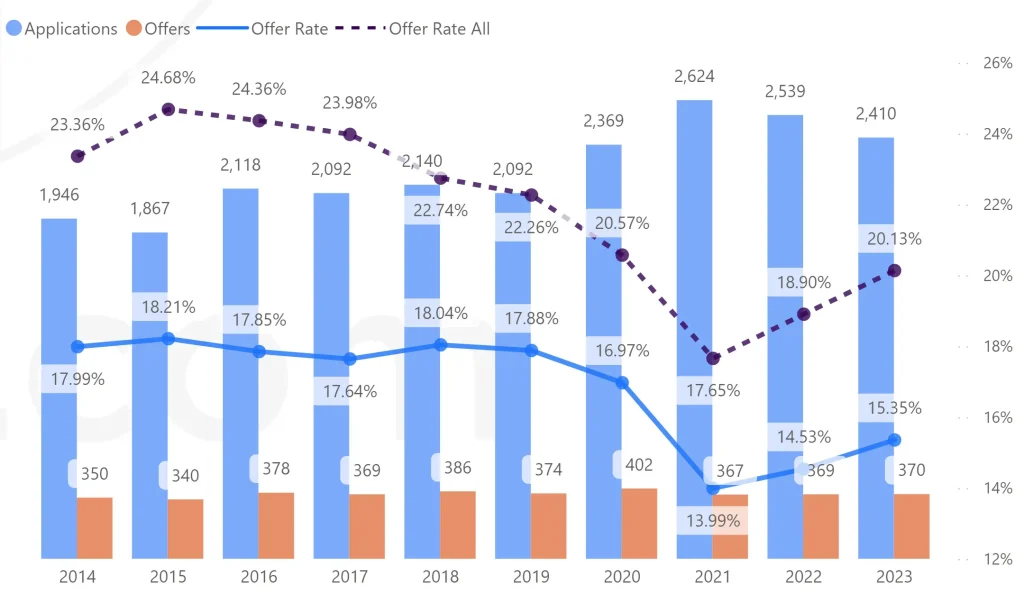
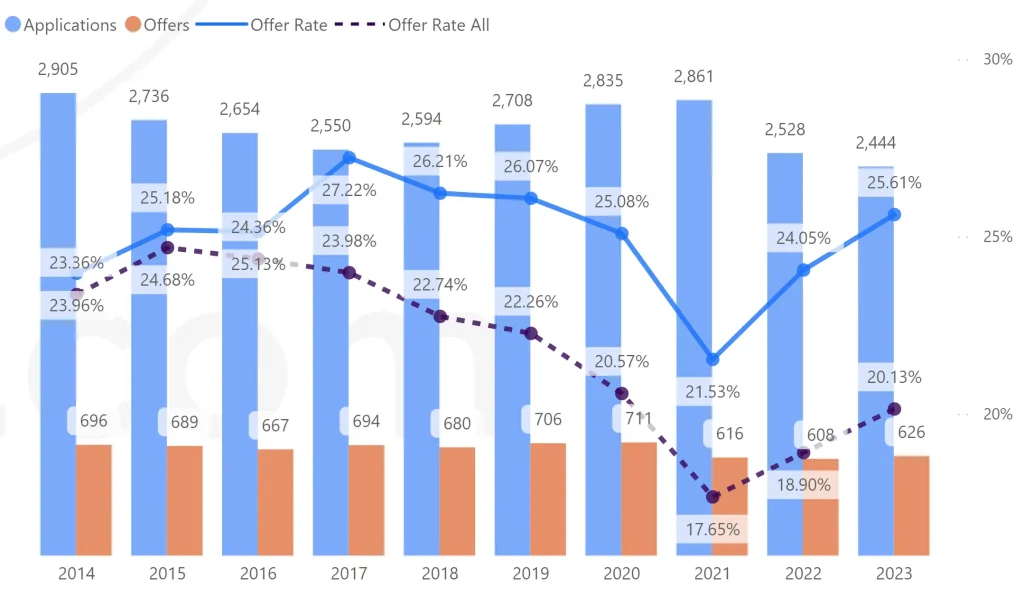
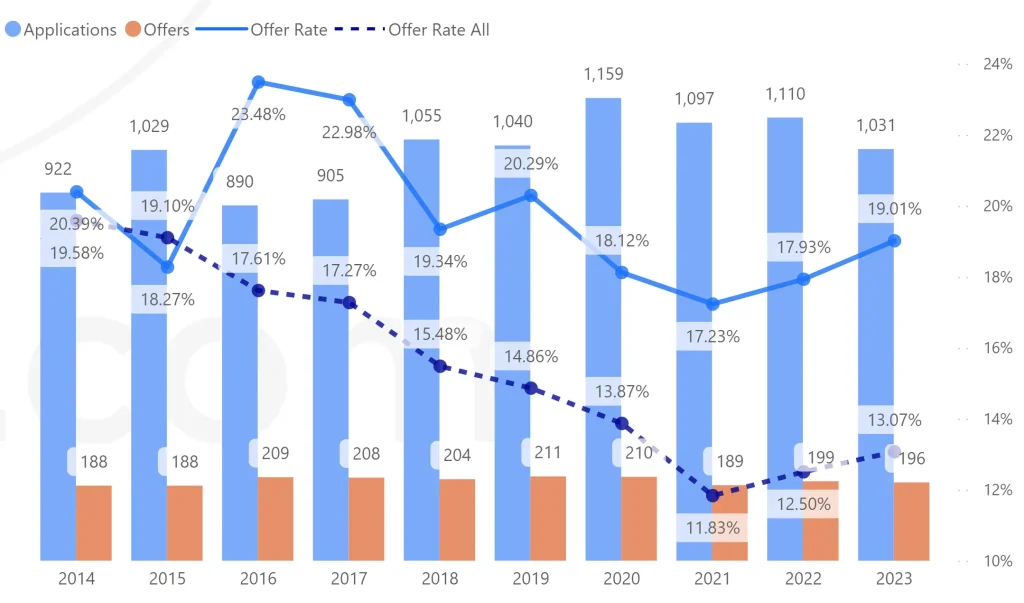
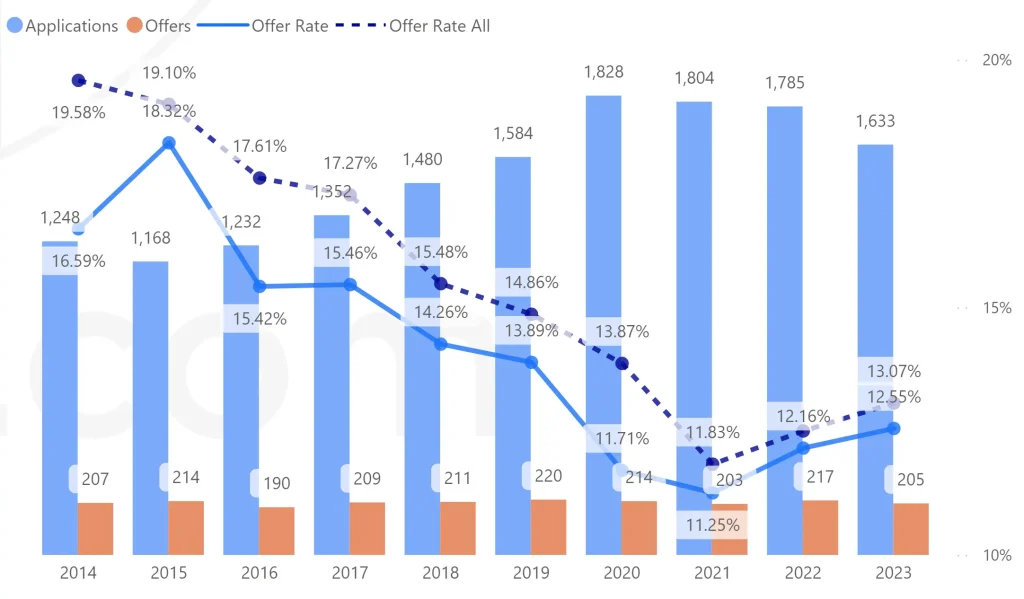
    The charts below present admissions data over the past decade for Mathematics and Computer Science programmes at Oxbridge, alongside Economics at Cambridge.
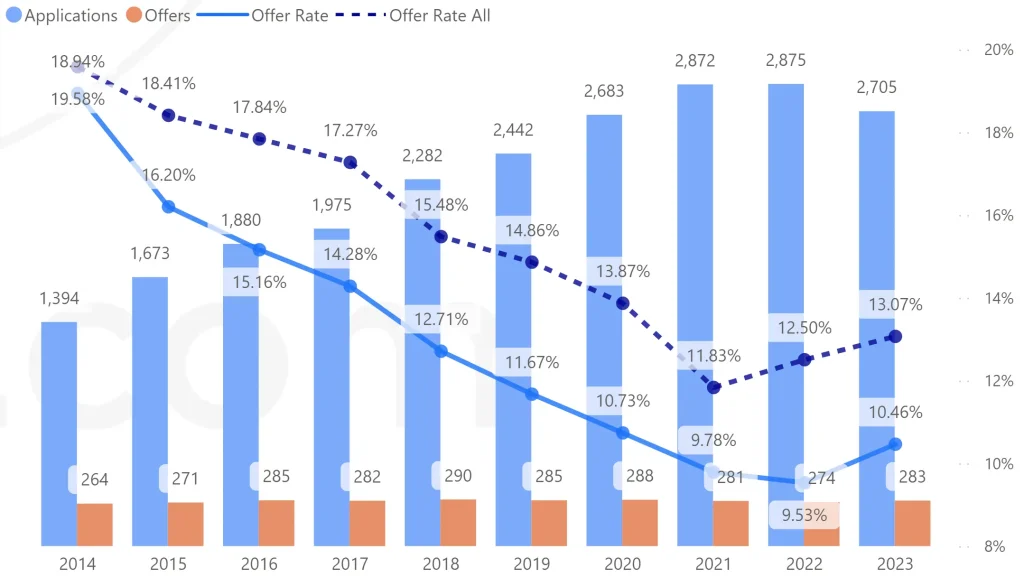
    牛津大学数学类专业招生数据2014-2023申请季

    Mathematics-related Admissions Data at Oxford during 2014–2023 Application Cycles
    (Plotted by UEIE based on official data)
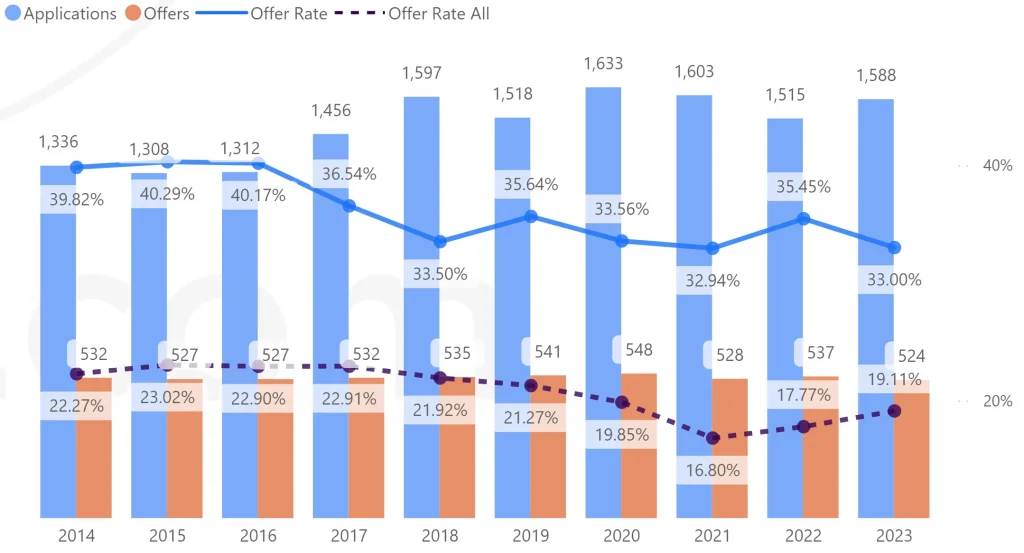
    剑桥大学数学专业招生数据2014-2023申请季

    Mathematics-related Admissions Data at Cambridge during 2014–2023 Application Cycles
    (Plotted by UEIE based on official data)
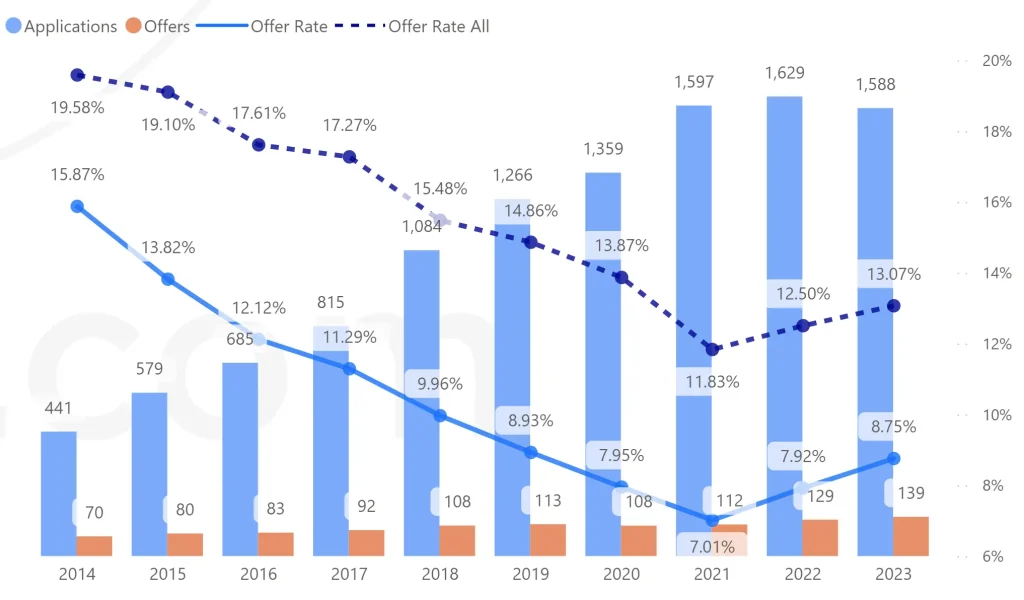
    牛津大学计算机专业招生数据2014-2023申请季

    Computer Science Admissions Data at Oxford during 2014–2023 Application Cycles
    (Plotted by UEIE based on official data)
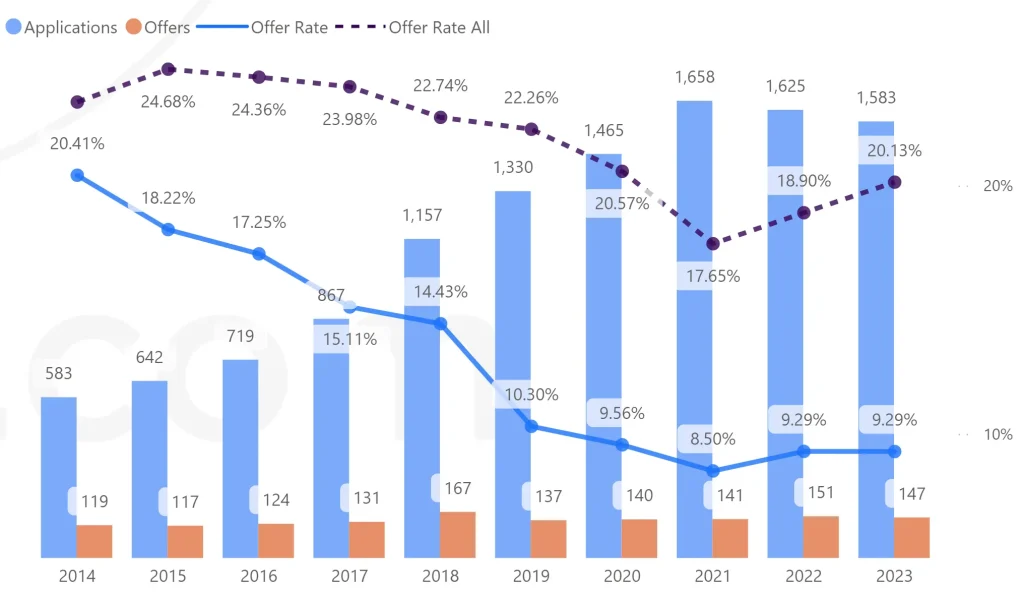
    剑桥大学计算机专业招生数据2014-2023申请季

    Computer Science Admissions Data at Cambridge during 2014–2023 Application Cycles
    (Plotted by UEIE based on official data)
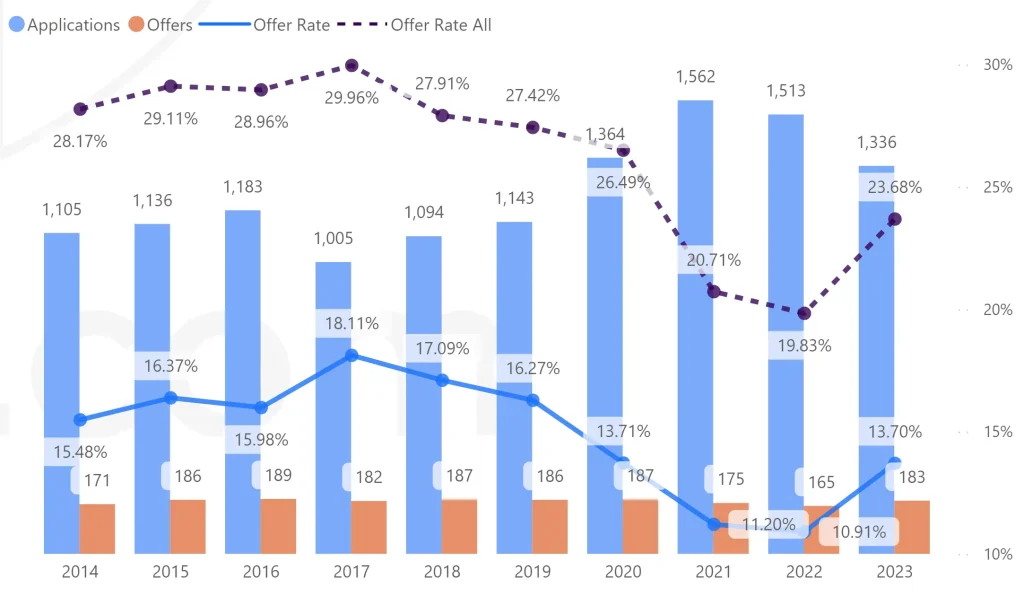
    剑桥大学经济专业招生数据2014-2023申请季

    Economics Admissions Data at Cambridge during 2014–2023 Application Cycles
    (Plotted by UEIE based on official data)

    Synthesising data from previous years, the actual admission rate for Oxbridge mathematics programmes ranges between 10% and 17% (Cambridge’s Mathematics offer rate is high, but STEP ultimately filters out half of the offer holders). The offer rate for Computer Science stands at 8%–10%, while the offer rate for Cambridge Economics has hovered between 10% and 13% in recent years. This means that if you want to take the initiative in your Oxbridge application, your admissions test score must place you in the top 20% globally or regionally.

    2. Extreme Regional Hyper-Competition: Shattering the Illusion of “Low Global Scores”

    The TMUA features a maximum raw score of 40 marks (20 marks each for Paper 1 and Paper 2), which is converted into a final reported score ranging from 1.0 to 9.0.
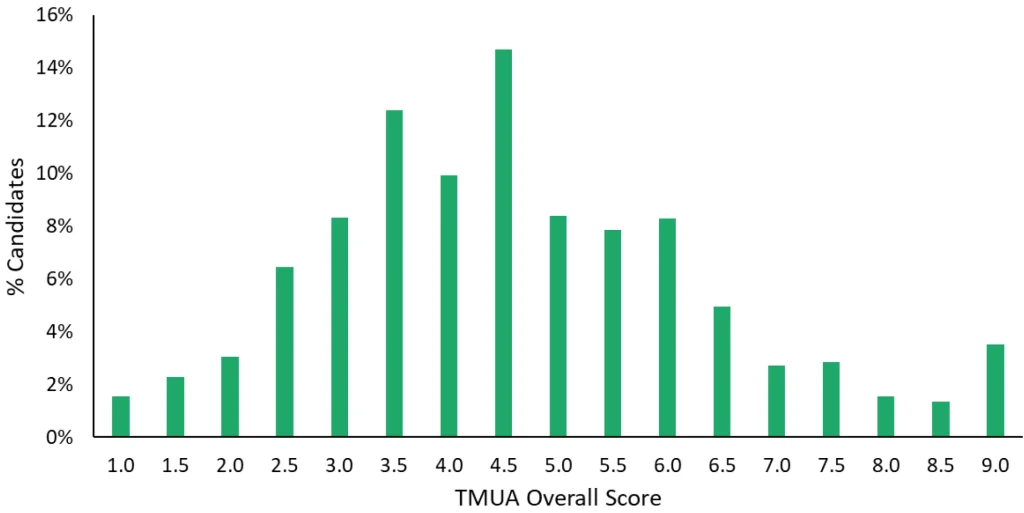
    TMUA Oct 2025 Score Distribution

    Global Score Distribution for the TMUA — October 2025

    According to the global TMUA score distribution shown above, the top 10% globally corresponds to a score of 7.0, while the top 20% aligns roughly with 6.0. However, this is merely the global distribution. If you are a candidate from China, you should focus more on the regional score distribution and recognise the reality of intense local competition.

    TMUA Core Score Distribution in Selected Regions (2024/25 Cycle)

    Country or Region 50th Percentile 75th Percentile 90th Percentile
    United Kingdom 3.8 4.8 5.8
    China 5.4 6.7 8.4

    According to the official 2024/25 application cycle score distribution report published by UAT-UK, the 90th percentile (top 10%) for Chinese candidates is as high as 8.4! Meanwhile, the median score (5.4) is already closing in on the top 10% threshold for domestic UK candidates (5.8). For Chinese candidates to break into the top 20%, they generally need to achieve a TMUA score of around 7.0.

    Based on these official data points, combined with my years of experience and observations of previously admitted students, we have developed a competitiveness ladder model for Mathematics, Computer Science, and Economics programmes based on reported TMUA scores.

    Competitiveness Tier Model for
    Mathematics, Computer Science, and Economics Programs

    (Based on the personal insights of Mr. Xie Tao; tailored specifically for candidates from China and does not constitute an official guarantee of university admission.)

    TMUA Report Score Global Ranking Tier
    Mathematics Computer Science Economics
    8.5 Top ~4% Grandmaster Grandmaster Grandmaster
    8.0 Top ~6% Master Master
    7.5 Top ~8% Diamond Diamond Master
    7.0 Top ~10% Platinum
    6.5 Top ~17% Gold Platinum Diamond
    6.0 Top ~25% Platinum
    5.5 Top ~35% Silver Gold Gold
    5.0 Top ~50% Silver Silver

    Admission Predictions by Rank Tier

    Tier Admission Prediction
    Grandmaster Extremely high probability of Oxbridge admission, allowing you to secure for admission based on academic results alone.
    Master Above average probability of Oxbridge admission, with distinct advantages applying to other G5 universities.
    Diamond Relatively low probability of Oxbridge admission, but extremely high chances for securing offers from other G5 universities.
    Platinum Strong probability of securing interview offers from top-tier universities such as Imperial College and LSE, and still stand a chance of Oxbridge admission, for those who are exceptionally lucky or deliver a truly outstanding performance in the interview.
    Gold Basic G5 competitiveness, most likely to get interview offer for Oxbridge admission.
    Silver Moderate competitiveness, at a relative disadvantage among applicants to top-tier universities.

    3. Diagnostic Exam and Target Anchoring

    Why is a diagnostic exam necessary?

    Since the TMUA is a computer-based test, sitting a diagnostic exam (mock test) before starting your official preparation is crucial. This helps you to:

    • Experience the real exam environment
      Familiarise yourself with the online testing platform’s interface and question presentation. Completing 20 multiple-choice questions within 75 minutes for Paper 1 and Paper 2 respectively creates intense time pressure, which may expose weaknesses in your mental arithmetic without a calculator.
    • Assess your current standing across topics
      Evaluate your understanding of mathematics, logic, and proof, as well as your problem-solving speed and accuracy, identifying the primary gaps between your current level and the exam requirements.

    How to select a diagnostic tool?

    You can choose a past TMUA paper (2016–2023) for assessment. However, these past papers only test content knowledge and cannot fully simulate the TMUA’s online format, interface, and computer-based timing rules. You must also pay attention to how well they align with the current syllabus. Alternatively, you could use the official specimen and practice papers released by UAT-UK, but these tend to be easier than the exams from the last two years, making them less accurate for assessing your true capability. To address this, our UEIE research and teaching team has developed a Free TMUA Diagnostic Exam, paired with an online computer-based testing system that replicates the official interface with 99% accuracy.

    This diagnostic exam is mapped against the latest TMUA syllabus and is designed to assess the core knowledge and skills required for the TMUA more effectively. According to feedback from past students, the difficulty of this paper closely matches that of the 2024 and 2025 past papers, maintaining an identical question style. Furthermore, based on data collected from global candidates sitting this diagnostic exam, we have derived an objective and reasonable conversion curve for reported scores, helping candidates better understand their standing within the global applicant pool.

    Click the link below to learn more about this diagnostic exam and complete it online.
    What is the self-assessment process?

    • Strictly enforce independent timing of 75 minutes each for Paper 1 and Paper 2, completing them consecutively within a single 150-minute block.
    • Complete the test on a computer. Calculators are strictly prohibited; use only pen and paper for rough workings.
    • Check your answers against the solutions or system scoring to objectively evaluate your performance in each module (ideally converting it to a reported score between 1.0 and 9.0).
    • Focus your analysis on the root causes of mistakes: Are they due to missing knowledge points? Unclear conceptual understanding? Calculation errors? Misinterpretations in reading? Poor time allocation? Or a lack of strategic techniques?
    • Log your weak areas to serve as focal points for your subsequent TMUA preparation.

    II. Bridging the Gaps: TMUA Syllabus Review and Weakness Checklist

    To conquer the TMUA preparation, first it requires a clear understanding of the specific scope of knowledge required and knowing how to align these requirements with your current academic background (e.g., whether you have completed A-Level Mathematics or are studying within the AP/IB systems).

    1. Key Changes to the Test Syllabus

    • No changes to the syllabus content
      The content of the latest syllabus remains unchanged from the previous year, indicating that the TMUA scope is highly stable.
    • 100% overlap between the TMUA and ESAT syllabi
      The syllabus content for TMUA Paper 1 perfectly aligns with ESAT Mathematics 1 and Mathematics 2. This is excellent news for TMUA candidates as well working on the ESAT preparation and the select few who need to sit both tests.

    2. Topics Covered

    The TMUA framework is primarily based on the UK A-Level Mathematics syllabus, alongside elements of GCSE Mathematics. Consequently, a solid command of the corresponding A-Level and GCSE Mathematics content is a prerequisite for TMUA preparation.

    Paper 1: Applications of Mathematics

    • Section 1 mainly covers AS-Level Mathematics content: algebra and functions, sequences and series, coordinate geometry in the $(x, y)$ plane, trigonometry, exponentials and logarithms, differentiation, integration, and graphs of functions.
    • Section 2 mainly covers GCSE Mathematics content: units, number, ratio and proportion, algebra, geometry, statistics, and probability.

    Paper 2: Mathematical Reasoning

    • In addition to covering all knowledge points from Paper 1, this paper introduces assessments on the logic of arguments, methods of proof, and identifying errors in mathematical proofs.

    3. Is it necessary to study A-Level Further Mathematics in advance?

    No. The TMUA syllabus content does not extend beyond AS-Level Mathematics and GCSE scope. However, from the perspective of deepening and broadening your mathematical thinking, as well as preparing for university interviews and future undergraduate studies, I highly recommend that students take A-Level Further Mathematics if time and energy permit. Although it is not directly tested, the thought processes and breadth of knowledge it instils are immensely beneficial for grasping challenging TMUA questions and future academic pursuits.

    4. Is a background in mathematical competitions required?

    It offers an advantage, but it is not essential. In recent years, the style and difficulty of certain TMUA questions have indeed shown a trend towards mathematical competitions, occasionally involving foundational knowledge and methods common in competitions (such as elementary number theory, basic combinatorics, and recursive thinking).

    Consequently, students with a background in competitive training may hold an advantage when tackling certain difficult problems. Students without a competition background need not be overly anxious; the core of the TMUA remains the proficient application of syllabus knowledge. However, during the TMUA preparation, if you encounter questions of this nature, it is worth exploring and supplementing relevant foundational competition insights and problem-solving techniques to stretch and extend your capabilities.

    5. Aligning Knowledge Across Different Curriculums

    Students studying AP or IB curricula must pay close attention to differences in coverage and prepare systematically.

    Curriculum System
    Alignment and Recommendations
    A-Level System
    Highest alignment with the syllabus. However, gaps may still exist in the breadth of pure mathematics and specific topics. Furthermore, regular school training typically lacks dedicated practice on themes found in Paper 2, such as “necessary and sufficient conditions”, “logic of proof by contradiction”, and “identifying flaws in proofs”.
    AP SystemAP Calculus AB or BC provides a strong foundation for most of the pure mathematics required in TMUA Paper 1 (especially calculus). However, the breadth of algebra and geometry is often insufficient. Furthermore, the TMUA demands a high level of proficiency in sketching graphs by hand. For AP students accustomed to relying on graphing calculators, encountering questions that require extreme precision in algebraic manipulation and manual sketching can easily lead to a breakdown. Therefore, AP students need to allocate time to adapt swiftly to a non-calculator exam environment.
    IB SystemCompared to the TMUA syllabus, IB Mathematics HL (including both AA and AI) may present gaps in the breadth of pure mathematics and statistics, as well as specific topics. Additionally, the intensity of foundational computation and algebraic skills training in the IB curriculum differs from TMUA requirements. Coupled with the heavy academic workload inherent to the IB programme, students in this system face a greater challenge when preparing for the TMUA.

    III. Breakout Strategies: Enhancing Decision Efficiency and the Advanced Roadmap

    In the TMUA exam hall, the challenge lies not in the extreme depth of a single question, but in the ultimate demand for speed and accuracy under intense pressure.

    1. Strategies for Enhancing Core TMUA Capabilities

    To survive under the high intensity of having less than 1.5 minutes per question on average, you must achieve:

    • Deeply understand core concepts and apply knowledge flexibly
      You cannot stop at surface-level memorisation of formulas and definitions; instead, you must deeply understand the mathematical logic and applicability boundaries behind each topic. You must also be able to connect seemingly isolated knowledge points, applying them flexibly to novel scenarios set by the questions to quickly construct correct problem-solving models or approaches. This forms the foundation for quickly identifying the examined concept and eliminating distractor options.
    • Break the calculator dependency and rebuild mental arithmetic instincts
      Calculators are strictly prohibited throughout the TMUA. Students who have grown accustomed to relying on tools in the A-Level or AP systems must deliberately train their mental and written calculation techniques during TMUA preparation. Fully transforming common formulas, algebraic manipulations, equation solving, and order-of-magnitude estimations into conditioned reflexes is the only way to avoid running out of mental computing power in the exam hall.
    • High-speed decision-making and the “philosophy of abandoning questions”
      With an average of only 3.75 minutes per multiple-choice question, the timing might seem more generous than the ESAT. However, TMUA questions and options are exceptionally clever, littered with conceptual blind spots and distractor choices. You must develop an instinct for quickly identifying distractors, and decisively skip questions when stuck. Securing the total number of correct questions is the sole rule for achieving a high score.

    2. Core Factors Affecting the TMUA Preparation Timeline

    Your ideal TMUA preparation duration primarily depends on:

    • Target Score Band
      Are you aiming for a 6.5, a 7.0, or even higher? Higher targets generally demand longer refinement periods and higher-intensity training.
    • Baseline Proficiency
      How solid is your current grasp of A-Level/GCSE knowledge? What is your calculation speed and accuracy?
    • Weekly Time Commitment
      How many hours of highly efficient study time can you consistently guarantee each week?

    3. TMUA Preparation Timeline Suggestions for Different Starting Points

    Based on students’ backgrounds, here are my recommendations for TMUA preparation launch dates and cycles:

    • Strong Baseline (e.g., STEP Grade 2 or above, or competition experience like AIME/BMO1)
      The focus should be on adapting to the TMUA multiple-choice format, speed requirements, and Paper 2’s logical reasoning style. It is recommended to begin targeted training roughly 2–3 months before the exam (e.g., starting in July or August for the October exam).
    • Intermediate Baseline (e.g., A-Level system, no competition or STEP experience)
      You need to simultaneously consolidate content proficiency, improve calculation speed and accuracy, and adapt to the TMUA assessment style. It is recommended to start systematic TMUA preparation no later than 4–6 months before the exam (e.g., launching in June or July for the October exam). You must progress through a complete cycle of “Knowledge Mastery $\rightarrow$ Strategy & Techniques $\rightarrow$ Mock Exams $\rightarrow$ Final Sprint”. You can refer to the “June to October TMUA Golden Preparation Timeline” table below.
    • AP / IB System Students (no competition or STEP experience)
      In addition to the challenges faced by intermediate students, you will require extra time to bridge knowledge gaps, with a heavy emphasis on reinforcing calculation speed and precision—areas that may receive less training in your original curriculum. It is strongly advised to begin as early as possible, ensuring at least 4–6 months or longer for TMUA preparation (e.g., launching in early May or even earlier). Preparation must combine knowledge supplementation with TMUA-specific targeted training.

    June to October TMUA Golden Preparation Timeline

    Jun–Jul

    Clear
    Blind Spots

    √ Familiarise with the Syllabus; Organise Knowledge


    Systematically and comprehensively organise all knowledge points on the syllabus by category and topic. You must not only remember formulae but also understand their derivation, basic principles, and common question patterns, while beginning to accumulate problem-solving techniques.

    Jul–Aug

    Increase Speed 

    √ Intensive Practice; Internalise Knowledge


    This is the watershed! Relying solely on lessons will not achieve internalisation. This must be coupled with high-quality practice, and the difficulty of the questions must be moderate: slogging through overly difficult problems wastes time and damages confidence, while simple questions fail to identify gaps. Furthermore, to cope with CBT pressure, all practice must be completed under timed conditions.

    Sep–Oct

    Pursue Precision

    √ Full Mock Exams; Develop Instincts


    In a highly simulated computer-based environment, become familiar with the countdown rhythm and optimise time management and question-skipping strategies. Through high-quality mock training, develop an instinctive response to various “trap” questions, ultimately improving accuracy under extreme time pressure.

    4. Common Pitfalls and Solutions for TMUA Preparation

    In the process of tutoring students for the TMUA, I have observed several widespread misconceptions that severely hinder preparation efficiency and final performance. Actively identifying and avoiding them can help you achieve twice the result with half the effort.

    Pitfall 1: Launching too late, lacking a clear plan

    • Manifestation & Consequences
      Underestimating the preparation time required to achieve the necessary speed and proficiency for the TMUA. Starting too late leaves insufficient time for later practice, making it difficult to perform stably under pressure.
    • Solution
      Plan early and commit consistently! Refer to the timeline recommendations provided above, start as early as possible based on your individual situation, and stick to a regular schedule of high-quality training every week.

    Pitfall 2: Ignoring the online format, practicing detached from reality

    • Manifestation & Consequences
      Relying predominantly on paper-based materials for TMUA preparation and lacking sufficient practice on online platforms. Failing to familiarise oneself with reading, answering, flagging, and navigating in an online environment; failing to specifically train calculation speed and techniques in a non-calculator setting. This leads to unfamiliarity with operations, an inability to keep up with the pace, and frequent calculation errors in the actual test.
    • Solution
      Shift your focus entirely to online practice and simulations during the mid-to-late stages of TMUA preparation. Use official practice tools and high-quality online mock exams (such as UEIE mock tests) with high frequency; treat non-calculator arithmetic as a specialised skill to be trained deliberately and continuously.

    Pitfall 3: Underestimating multiple-choice questions, lacking strategy and technique

    • Manifestation & Consequences
      Believing multiple-choice questions are simple and failing to focus on methods and techniques; lacking time-management awareness, with a problem-solving speed far slower than the required pace. Failing to analyse options, eliminate distractors, or make strategic guesses.
    • Solution
      Treat multiple-choice exam techniques as an essential component of your learning. Complete a large volume of timed multiple-choice practice to build a sense of speed and accuracy. Repeatedly rehearse time allocation and answering strategies during mock exams.

    Pitfall 4: Neglecting official resources, relying on outdated information

    • Manifestation & Consequences
      Failing to carefully study the latest official syllabus, leading to deviations in the scope of revision; failing to closely analyse the latest updates and official resources released by UAT-UK, hoarding vast amounts of materials without utilising them deeply.
    • Solution
      Position the official syllabus and official practice resources at the core of your preparation; use past papers critically; select high-quality supplementary resources (such as UEIE self-study packs, Isaac Physics, etc.); regularly check the official website for the latest updates.

    Pitfall 5: Emotional imbalance, carrying excessive stress

    • Manifestation & Consequences
      Experiencing extreme anxiety over the speed requirements; suffering an emotional breakdown when encountering difficult problems or consecutive incorrect answers, which compromises subsequent performance; harboring an excessive fear of losing marks instantly on multiple-choice errors.
    • Solution
      Position yourself scientifically and respond calmly! Set reasonable milestone goals, and accept that failing to complete or making mistakes on some questions is entirely normal. Train your ability to quickly skip difficult questions and make strategic guesses. Cultivate resilience under pressure.

    IV. Moving Beyond Blind Practice: Data-Driven Resources and Closed Loop for TMUA Preparation

    After defining the timeline and avoiding pitfalls, leveraging high-quality resources to fill the vacuum left by the scarcity of new official questions represents the final step in executing your TMUA preparation. When facing the TMUA—which carries an exceptionally low margin for error and rigorously tests real-time reflexes—blindly grinding through questions will yield half the result for twice the effort. What you need is a scientific TMUA preparation scheme that directly addresses the pain points of computer-based testing while genuinely elevating your mathematical aptitude.

    1. Official Cornerstone Resources

    You can access the most vital foundational TMUA preparation materials on the official UAT-UK website:

    • The latest version of the TMUA syllabus
    • Official specimen papers and practice materials
    • Examination guides and FAQs
    • TMUA Paper 2 notes on logic and proof
    • TMUA past papers (2016–2023)

    Special Reminder: While past papers are excellent tools for verifying knowledge mastery, they cannot simulate a genuine computer-based testing environment or the psychological pressure of a countdown timer. During the mid-to-late stages of revision, you must combine your study with highly realistic online practice, and avoid seeking a false sense of security in paper-based legacy questions.

    2. UEIE’s Exclusive “Learn-Practise-Test” All-In-One Matrix

    To help candidates aiming for Oxbridge and the G5 achieve top scores, our research and teaching team has meticulously crafted the UEIE TMUA On-Demand Suite. This material is rigorously revised annually based on the latest TMUA test trends, perfectly covering the core closed loop of scientific preparation:

     Systematically review core examinable topics and deeply deconstruct efficient, “anti-routine” problem-solving techniques.

     An all-English question bank, scientifically categorised by topic modules and difficulty levels. Through a massive volume of targeted, high-quality timed practice, it helps you completely break your dependency on calculators.

     Developed with immense effort, these exams replicate the official computer-based testing environment with 99% accuracy. They recreate the genuine exam interface and high-pressure countdown experience, ensuring you firmly secure a top-tier standing through real-world practice.

    3. Advanced Studies and Systematic Planning

    Beyond the on-demand suite, UEIE runs systematic, rolling TMUA preparation programmes year-round. For students required to sit the TMUA, we have mapped out a structured teaching and reinforcement loop. This is particularly true for high-achieving candidates aiming for the top 10%, who often require more rigorous TMUA preparation planning and instructional hours as a guarantee. Through high-density academic pressure and periodic milestone assessments, we ensure that candidates leave absolutely no blind spots in either their breadth of knowledge or precision in problem-solving.
    Conclusion

    In an application season marked by intense hyper-competition, the TMUA has never been a test that purely measures the extreme difficulty of beyond-syllabus knowledge. What you can least afford to waste is time spent blindly trialling and making errors. Pinpointing your score target, mastering the golden TMUA preparation timeline, and employing scientific training methods constitute your only shortcut to standing out.

    It is my hope that this TMUA preparation guide will help you reject ineffective hyper-competition, locate your true coordinates, and serve as a reliable beacon on your journey to scaling the heights of Oxbridge and the G5.


  • The Efficient ESAT Preparation Guide

    The Efficient ESAT Preparation Guide

    The-Efficient-ESAT-Preparation-Guide-Video-Poster

    Acknowledgements

    Profound gratitude is extended to Joy, our esteemed chemistry specialist, and Sara, our distinguished biology specialist, for their invaluable contributions to the chemistry and biology sections of this ESAT preparation guide.

    With the University of Oxford fully introducing the ESAT (Engineering and Science Admissions Test) for engineering, physics, and other degrees in the 2027 application cycle, it has officially converged with the University of Cambridge and Imperial College London regarding STEM admissions tests. The candidate pool is set to expand significantly, and the admission threshold for top-tier universities will inevitably rise.

    In the Comprehensive ESAT Guide, I provided an in-depth analysis of the exam’s requirements, format, and scoring mechanisms. This guide, however, distils my years of practical experience coaching students for similar admissions tests and related competitions. It aims to provide you with a systematic and highly efficient ESAT preparation strategy, allowing you to comfortably cross this admissions threshold with utmost academic rigour.

    I. Know Yourself and Your Enemy: Admission Data, Score Distribution, and Target Positioning

    Before embarking on your ESAT preparation journey, setting goals based purely on intuition is a major pitfall. We must use objective data to pinpoint your true standing in this highly competitive arena.

    1. Clarify Your Choice of Subject Modules

    You need to confirm not only whether your target degree requires the ESAT, but also the specific combination of modules needed. Below are recommendations for high-frequency module combinations when applying to multiple G5 universities simultaneously (e.g., “Cambridge + Imperial + UCL”) (Note: You cannot apply to both Oxford and Cambridge in the same cycle):


    Major CategoryUniversity Combination for ApplicationRecommended Module Selection

    Engineering

    (excluding Chemical Engineering,
    Mechanical Engineering)

    Cambridge + Imperial College + UCL

    1st ESAT sitting in October:
    Maths 1 + Maths 2 + Physics

    Cambridge + Imperial College
    Oxford + Imperial College + UCL
    Oxford + Imperial College
    Imperial College + UCL

    1st ESAT sitting in October or 2nd ESAT sitting in January:
    Maths 1 + Maths 2 + Physics

    Chemical
    Engineering
    Cambridge + Imperial College

    1st ESAT sitting in October:
    Maths 1 + Maths 2 + Chemistry

    Oxford + Imperial College

    Module Conflict, Unable to Select:

    Oxford requires candidates to take Maths 1 + Maths 2 + Physics, whereas Imperial College requires Maths 1 + Maths 2 + Chemistry. However, each candidate is permitted to select only three modules within a single test sitting; furthermore, candidates who sit for the first ESAT in October are ineligible to sit for the second ESAT the following January.

    Mechanical EngineeringCambridge + Imperial College + UCL 

    1st ESAT sitting in October:
    Maths 1 + Maths 2 + Physics

    2nd TARA sitting in January

    Oxford + Imperial College + UCL
    Imperial College + UCL
    PhysicsCambridge + Imperial College 

    1st ESAT sitting in October:
    Maths 1 + Maths 2 + Physics

    Oxford + Imperial College

    Biology &

    Life Sciences

    Cambridge + Imperial College

    1st ESAT sitting in October:
    Maths 1 + Chemistry + Biology

    Oxford + Imperial College

    2. Analyse Admission Data and the True “Safety Line”

    Synthesising historical data, the offer rates for Engineering and Physics (Natural Sciences) degrees at Oxford and Cambridge typically fluctuate between 10%-25%. This means that if you want to hold the initiative in your application, your admissions test score must be firmly rooted within the top 25% globally.

    The text below details the admission numbers and distributions for Oxbridge engineering and sciences.

    剑桥大学工程专业招生数据2014-2023申请季

    Engineering Admissions Data at Cambridge during 2014–2023 Application Cycles
    (Plotted by UEIE based on official data)

    剑桥大学自然科学专业招生数据2014-2023申请季

    Natural Sciences Admissions Data at Cambridge during 2014–2023 Application Cycles
    (Plotted by UEIE based on official data)

    Engineering Science Admissions Data at Oxford during 2014–2023 Application Cycles
    (Plotted by UEIE based on official data)

    牛津大学物理专业招生数据2014-2023申请季

    Physics Admissions Data at Oxford during 2014–2023 Application Cycles
    (Plotted by UEIE based on official data)

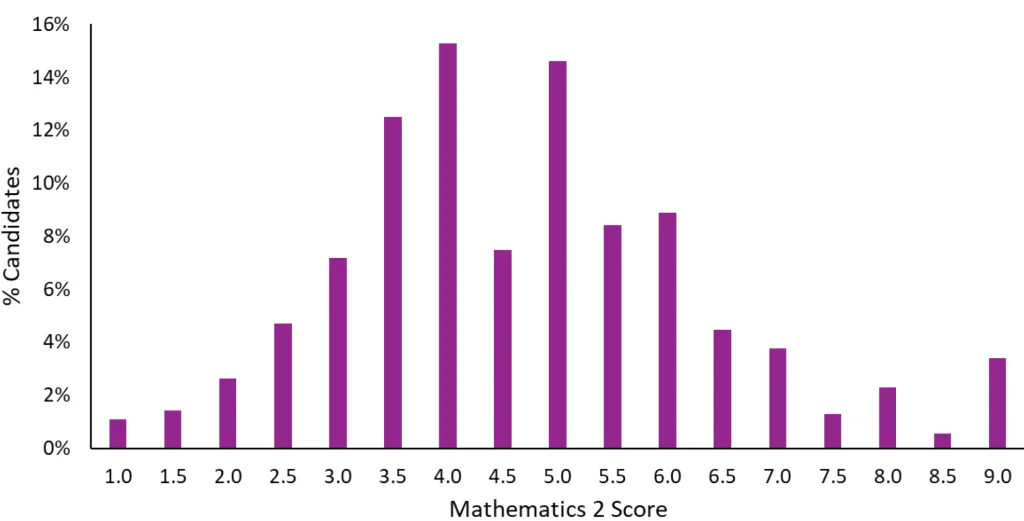
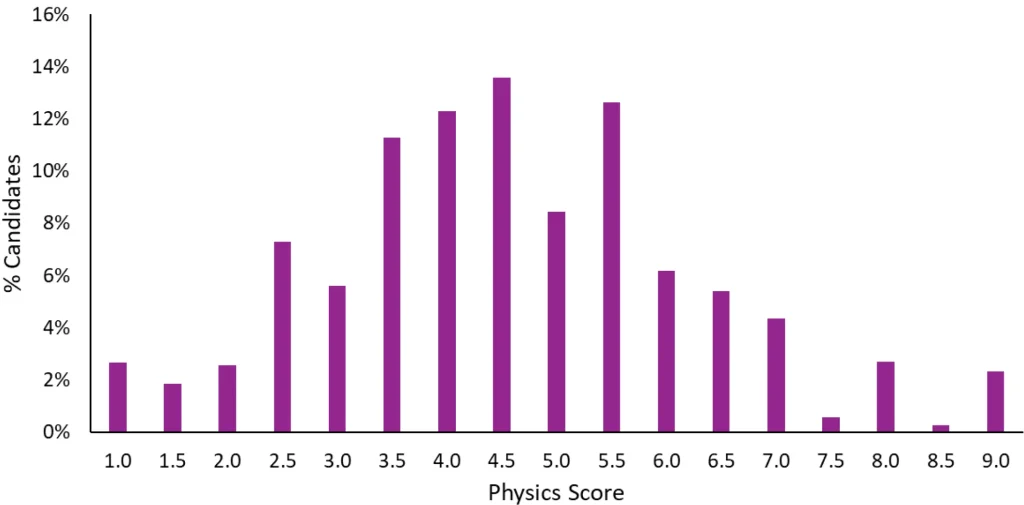
    According to the official October 2025 score distribution data released by UAT-UK: the top 10% of global candidates achieved a score of 7.0, while the median was anchored at 4.5. Based on the distribution charts, the score range for the top 25% lies approximately between 5.6-6.0.

    Global Score Distribution for the Five ESAT Modules — October 2025
    (Screenshot from the Official UAT-UK Report)

    However, this is merely a “passing line” from a global average perspective; for highly competitive Chinese candidates, this score is far from safe.

    Comparison of ESAT Module Scores: Chinese vs. UK Candidates (2024/25 Application Cycle)

    ModuleChinese Candidates
    (Top 10%)
    Chinese Candidates
    (Top 25%)
    UK Candidates
    (Top 10%)
    UK Candidates
    (Top 25%)
    Maths 18.5
    7.15.64.8
    Maths 28.26.8
    5.75.0
    Physics8.06.86.0
    5.0
    Chemistry8.26.86.2
    5.2
    Biology7.66.47.0
    5.4

    * Source: UAT-UK Official Report

    As clearly illustrated in the table above, there is a staggering, asymmetric gap between the scores of candidates from the two countries. Taking Mathematics 1—the foundational bedrock of all disciplines—as an example, the discrepancy between the top 25% in China and the UK is an astonishing 2.3 points. The top 10% threshold for Chinese candidates has been driven up to 8.5. Consequently, the “safety line” for Chinese candidates must be significantly adjusted upwards; striving for zero margin of error in the Mathematics 1 module is the absolute foundation for standing your ground.

    3. Diagnostic Exam and Target Anchoring

    Why perform an assessment?

    Because the ESAT is a computer-based test, taking a diagnostic exam (mock test) before officially starting your preparation is particularly crucial. This will help you:

    • Experience the real exam environment
      Familiarise yourself with the online testing platform’s interface and question presentation, alongside the intense time pressure of completing 27 multiple-choice questions within 40 minutes per module. This may expose weaknesses in your mental arithmetic without a calculator.
    • Assess your current standing in each subject
      Form a baseline judgment of your knowledge mastery, problem-solving speed, and accuracy in the compulsory Mathematics 1 and your two elective modules, identifying the primary gaps between your current level and the exam requirements.

    How to choose assessment tools?

    Past ESAT papers have never been publicly released. Currently, the official UAT-UK body has only published specimen papers and practice questions, but the difficulty of these specimen papers is significantly lower, making it impossible to accurately assess your true level. To address this, our UEIE research and development team has developed a set of Free ESAT Diagnostic Exam, complete with an online computer-based testing system that replicates 99% of the official interface.

    Aligned with the latest ESAT syllabus, this diagnostic exam is designed to evaluate the core knowledge and abilities required for the ESAT more effectively. According to authentic feedback from past students, the difficulty of this paper is slightly higher than that of the 2024 and 2025 past questions. However, this does not prevent us from deriving an objective and reasonable score conversion curve based on global candidate data, thereby helping applicants better determine their position among worldwide peers.

    Click the link below to learn more about the diagnostic exam and complete them online:

    Of course, you can also use past ENGAA/NSAA papers for ESAT preparation. However, while these past papers can verify your mastery of the relevant knowledge, they cannot fully simulate the online testing format, interface, and computer-based timing rules of the ESAT. Furthermore, you must pay close attention to syllabus alignment.

    What is the self-assessment process?

    • Strictly time each module independently for 40 minutes, and complete your chosen combination of modules consecutively.
    • Complete the test on a computer with a strict ban on calculators, using only pen and paper for rough working.
    • Check your answers against the solutions or system scoring to objectively evaluate your performance in each module (ideally converting it into a reported score between 1.0-9.0).
    • Critically analyse the reasons behind your mistakes: Are they due to missing knowledge points? Clear misconceptions? Calculation errors? Misinterpretations in reading comprehension? Poor time allocation? Or a lack of test-taking techniques?
    • Record the weak areas in each subject to serve as the primary focus for your subsequent ESAT preparation.

    4. Setting a Scientific Target for ESAT Preparation

    Equipped with an awareness of your target requirements and your own starting point, the next step is to set a score anchor that suits you. You can refer to the competitiveness ladder model below to establish a reasonable ESAT preparation target based on your diagnostic exam score.

    Report Score Global Ranking Tier Admission Prediction
    8.5 Top ~3% Grandmaster Extremely high probability of Oxbridge admission, allowing you to secure for admission based on academic results alone.
    8.0 Top ~5% Master Above average probability of Oxbridge admission, with distinct advantages.
    7.5 Top ~7% Diamond Relatively low probability of Oxbridge admission, but high chances for Imperial College London.
    7.0 Top ~10% Platinum Still stand a chance of Oxbridge admission, for those who are exceptionally lucky or deliver a truly outstanding performance in the interview.
    5.5 Top ~25% Gold Basic G5 competitiveness, most likely to get interview offer for Oxbridge admission.
    4.5 Top ~50% Silver Moderate competitiveness, at a relative disadvantage among applicants to top-tier universities.

    *The analysis presented above reflects the experienced academic perspectives of Mr. Xie Tao and does not constitute an official guarantee of university admission.

    It is worth noting that your score anchor should be challenging enough to unlock your potential, yet realistic enough to avoid unnecessary anxiety.

    II. Required Knowledge Base for ESAT Preparation

    Having clarified your goals, the second step is to take stock of your academic arsenal. Accurately grasping the requirements of the ESAT syllabus and seamlessly integrating them with your existing curriculum is the key to efficient test preparation.

    1. Scope of the Examination Syllabus

    • Knowledge Foundation
      The ESAT syllabus is broad, drawing primarily from the core knowledge of UK A-Level (or equivalent qualification) Mathematics, Physics, Chemistry, and Biology. It assumes candidates already possess a solid GCSE (or equivalent level) foundation in the respective subjects.
    • Exclusion of Further Content
      The syllabus does not include A-Level Further Mathematics or any Physics, Chemistry, or Biology content that extends beyond the standard A-Level scope.

    2. Overview of Core Content across Subject Modules

    The following outlines the primary areas of knowledge covered by each module:

    • Mathematics 1
      Basic arithmetic and number theory concepts, units, ratios and proportions, algebra (including equations, inequalities, polynomials), planar and coordinate geometry, basic statistics and probability. (Roughly corresponds to GCSE and parts of A-Level Mathematics content)
    • Mathematics 2
      Advanced algebra and functions (including polynomials, modulus functions, mappings), sequences and series, coordinate geometry (including parametric equations, foundational conic sections), trigonometry (including compound angles, double angles, trigonometric equations/inequalities), exponential and logarithmic functions, calculus (differentiation, integration for area/volume), and the application of calculus to curve sketching. (Roughly corresponds to AS-Level Mathematics and parts of A2 Pure Mathematics content)
    • Physics
      Electricity (circuits, electric fields), foundational magnetism, kinematics, Newton’s laws, energy and momentum, circular motion, moments, foundational thermal physics, properties of matter, waves (including basic optics), atomic physics and radioactivity. (Roughly corresponds to AS-Level and parts of A2 Physics core content)
    • Chemistry
      Atomic structure and periodicity, stoichiometry and equations, redox reactions, chemical bonding and structure, states of matter and particle theory, main group chemistry, separation techniques, acids, bases and salts, reaction rates, foundational chemical thermodynamics, foundational electrochemistry, core organic chemistry, metals and their reactivity, air and water, and foundational chemical analysis. (Roughly corresponds to AS-Level and parts of A2 Chemistry core content)
    • Biology
      Cell structure and function, biological molecules, enzymes, cellular transport, cell division and inheritance, DNA and gene technology, variation and evolution, animal physiology (respiration, circulation, digestion, nervous and endocrine systems, etc.), plant physiology, and ecosystems. (Roughly corresponds to AS-Level and parts of A2 Biology core content)

    3. Knowledge Integration and Recommendations for Different Curricula

    Natural knowledge gaps exist across different educational curricula. It is imperative to conduct a thorough, line-by-line comparison against the ESAT syllabus before your preparation:

    ESAT Module

    A-Level

    AP

    IB

    Chinese High School Curriculum

    Mathematics 2

    Strictly circumscribed by the A-Level Mathematics syllabus.

    Calculus AB/BC addresses calculus; supplementary revision of non-calculus elements from Pre-Calculus, such as algebra, functions, trigonometry, and coordinate geometry, is requisite.

    DP Mathematics SL (Analysis and Approaches / Applications and Interpretation) generally encompasses the requisite topics; HL knowledge is not deemed essential.

    High school mathematics (New Textbook: Compulsory + Selective Compulsory) covers most knowledge; foundational calculus must be covered via electives or self-study.

    Physics

    Typically necessitates prospective study of certain A2 components (e.g., thermal physics, wave phenomena, modern physics). Specific topics previously encountered at GCSE/IGCSE level will be assessed according to A2 standards.

    Physics C (Mechanics + Electricity & Magnetism) or a synthesis of Physics 1 and 2 affords extensive coverage, yet meticulous cross-referencing with the syllabus is imperative; supplementation may be required (e.g., waves, thermal physics, modern physics, elementary astronomy).

    DP Physics HL Core provides substantial coverage; proactive study of pertinent HL physics topics stipulated by the syllabus is advisable (Optional topics are not required); particular attention should be devoted to enhancing calculus-based physics calculation proficiency.

    The physics elective combination (e.g., the physics track in the “3+1+2” system) covers most mechanics and electricity knowledge. Waves, thermal physics, modern physics, and calculus-based calculations are relatively weak and require targeted reinforcement.

    Chemistry

    Subsequent to AS completion, further A2 content requires supplementation, notably in domains such as the structure of matter, chemical principles (kinetics, equilibrium, energetics), and core organic chemistry.

    AP Chemistry generally furnishes sound coverage of ESAT topics; nonetheless, a granular, item-by-item verification against the syllabus details is strongly recommended.

    DP Chemistry SL addresses a broad spectrum of topics, but relevant HL topics concerning structure, principles, organic chemistry, etc., necessitate supplementation in alignment with the syllabus. Diligence regarding the pace of study is crucial.

    Completing high school chemistry (New Textbook: Compulsory + Selective Compulsory) covers most test points, but parts of organic chemistry and experimental analysis need to be supplemented. Concurrently, reinforce relevant English technical terms.

    Biology

    AS-level knowledge accounts for most content, but due attention must be paid to the breadth and depth stipulated by the syllabus. Particular emphasis should be placed on fortifying experimental analysis skills and the application of mathematical principles within a biological context.

    AP Biology provides comprehensive coverage, but dedicated focus should be directed towards the cultivation of experimental analysis skills and mathematical application capabilities, as the emphasis herein may subtly diverge from that of the ESAT.

    DP Biology HL offers extensive coverage; a strengthening of physiological knowledge is required, alongside an enhancement of experimental analysis capabilities and mathematical reasoning in the context of biological problem-solving. Prudent management of the study pace is essential.

    After completing high school biology (New Textbook: Compulsory + Selective Compulsory), you primarily need to strengthen scientific inquiry (experimental analysis) capabilities and adapt to reading comprehension and technical vocabulary in an English environment.

    4. An Objective View on Competition Experience

    If you have experience preparing for top-tier Olympiads such as the BPhO or UKChO, this will undoubtedly provide tremendous support regarding logical rigour, stress resilience, and problem-solving flexibility. However, please remember that the ESAT is not an Olympiad. Do not get bogged down in excessively complex derivations that go beyond the syllabus. During your preparation, you must rein your mindset back into the foundational ESAT syllabus, translating the acuity cultivated through competitions into an optimal multiple-choice strategy geared towards an average pace of “one and a half minutes per question”.

    III. ESAT Preparation Strategies and Timeline Planning: Core Capability Remodelling and Advancement Pathways

    Mastering the examination syllabus is merely securing your entry ticket. In the real exam hall, what ultimately decides victory or defeat is rarely whether you know how to do a question, but whether you can do it correctly and swiftly under extreme pressure. This demands that we shift our focus during ESAT preparation away from pure knowledge acquisition and towards remodelling core test-taking capabilities.

    1 Strategies for Enhancing Core ESAT Capabilities

    To survive the extreme intensity of averaging less than 1.5 minutes per question, you must achieve the following:

    • Deeply understand core concepts and apply knowledge flexibly
      You cannot settle for superficial memorisation of formulae and definitions. Instead, you must thoroughly understand the physical, chemical, or biological principles—or the mathematical logic—behind each knowledge point, alongside its operational boundaries. Furthermore, you should be able to connect seemingly isolated concepts and apply them flexibly within the novel contexts presented in questions, swiftly constructing correct problem-solving models or approaches. This forms the foundation for quickly identifying what a question is testing and eliminating distractor options.
    • Wean yourself off calculator dependency and rebuild your mental arithmetic instincts
      Calculators are strictly prohibited throughout the entire ESAT. Students accustomed to relying on tools within the A-Level or AP systems must deliberately train their mental and written calculation skills. Thoroughly transforming common formulae, algebraic manipulations, equation solving, and order-of-magnitude estimations into second nature is the only way to avoid running out of cognitive processing capacity in the exam room.
    • Extreme decision-making under 90 seconds and the “philosophy of skipping questions”
      You must handle 27 multiple-choice questions within 40 minutes. Under such oppressive pressure, stubbornly fixating on a single question is a fatal error. You must possess sharp, rapid decision-making skills: quickly extract core information from the stem, and decisively employ techniques like dimensional analysis, substituting special values, or analysing extreme cases to narrow down the options. The moment you get stuck, immediately mark the question and skip it—preserving your total number of correct answers is the core principle of achieving a top score.

    2. Core Factors Influencing the ESAT Preparation Cycle

    The duration of your ESAT preparation primarily depends on:

    • Target Score
      Aiming for top score bands in each module demands more refined polishing.
    • Starting Level
      Your current mastery of relevant subjects, calculation speed and accuracy, and adaptation to the online multiple-choice format.
    • Number of Preparation Subjects
      The total number of ESAT modules needed for your preparation (typically three).
    • Weekly Effective Study Time
      How many hours you can consistently dedicate to focused, highly efficient ESAT preparation.
    • Learning Efficiency
      The rate at which you absorb knowledge and master new skills.

    3. The June-to-October Golden Preparation Timeline for ESAT

    The timeline outlined below is suitable for the majority of candidates, though you may adjust it to establish a pragmatic ESAT preparation timeframe tailored to your personal circumstances.

    Jun–Jul


    Clear
    Blind Spots

    √ Familiarise with the Syllabus; Organise Knowledge


    Systematically and comprehensively organise all knowledge points on the syllabus by category and topic. You must not only remember formulae but also understand their derivation, basic principles, and common question patterns, while beginning to accumulate problem-solving techniques.

    Jul–Aug


    Increase Speed 

    √ Intensive Practice; Internalise Knowledge


    This is the watershed! Relying solely on lessons will not achieve internalisation. This must be coupled with high-quality practice, and the difficulty of the questions must be moderate: slogging through overly difficult problems wastes time and damages confidence, while simple questions fail to identify gaps. Furthermore, to cope with CBT pressure, all practice must be completed under timed conditions.

    Sep–Oct


    Pursue Precision

    √ Full Mock Exams; Develop Instincts


    In a highly simulated computer-based environment, become familiar with the countdown rhythm and optimise time management and question-skipping strategies. Through high-quality mock training, develop an instinctive response to various “trap” questions, ultimately improving accuracy under extreme time pressure.

    4. Common ESAT Preparation Pitfalls and Strategies

    In the course of coaching students for the ESAT preparation, I have observed several widespread pitfalls that severely undermine preparation efficiency and final outcomes. Proactively identifying and avoiding them will allow you to achieve twice the result with half the effort.

    Pitfall 1: Starting Too Late, Lacking or Having Inadequate Planning

    • Manifestation & Consequences
      Underestimating the workload of multi-subject ESAT preparation (typically three modules) and the demands placed on various skills (especially speed), leading to delayed preparation right before the exam; or having unclear planning, failing to allocate time reasonably across different ESAT modules and preparation stages.
    • Strategy
      Fully recognise the complexity and long-term nature of ESAT preparation and kick off early. Devise a detailed, staged preparation plan tailored to the specific characteristics of each module, and execute it rigorously.

    Pitfall 2: Overlooking Online Characteristics, Detaching Practice from Reality

    • Manifestation & Consequences
      Relying primarily on paper-based materials for ESAT preparation, lacking sufficient practice on online platforms. Candidates remain unfamiliar with reading, answering, flagging, and navigating in an online environment, and fail to target their calculation speed and techniques without a calculator. This leads to clumsy operation, trailing behind the clock, and frequent calculation blunders in the actual exam hall.
    • Strategy
      The mid-to-late stages of ESAT preparation must pivot heavily towards online practice and simulations. Frequently utilise official practice tools alongside high-quality online mock exams (such as UEIE mock exams); treat non-calculator operations as a dedicated skill to be trained deliberately and continuously.

    Pitfall 3: Underestimating Multiple-Choice Questions, Lacking Strategies and Techniques

    • Manifestation & Consequences
      Dismissing multiple-choice questions as simple, thereby disregarding strategic methods and techniques; lacking an awareness of time management, with a pacing far slower than the required average of 1.5 minutes per question; and lacking proficiency in analysing options, eliminating distractors, or making strategic guesses.
    • Strategy
      Treat multiple-choice exam techniques as an essential component of your studies. Conduct extensive timed multiple-choice drills to cultivate a sense of pace and precision. Repeatedly rehearse time allocation and answering strategies during mock exams.

    Pitfall 4: Chaotic Use of Resources, Lagging Information

    • Manifestation & Consequences
      Blindly grinding through questions, particularly using old ENGAA/NSAA papers without discrimination, while overlooking differences in syllabus matching and formatting; failing to follow the latest announcements and official resource releases on the UAT-UK website; hoarding vast amounts of materials without utilising them deeply.
    • Strategy
      Anchor your core focus around the official syllabus and official practice resources; use past papers critically; select high-quality supplementary resources (such as the UEIE Self-Study Kit, Isaac Physics, etc.); and regularly check the official website to secure the latest updates.

    Pitfall 5: Unbalanced Mindset, Stress Overload

    • Manifestation & Consequences
      Experiencing excessive anxiety over multi-subject ESAT preparation and high-speed pacing requirements; falling into self-doubt or even giving up when mock results are underwhelming or when encountering a bottleneck; suffering from extreme pre-exam nerves that impair performance.
    • Strategy
      Set realistic goals and accept challenges and setbacks; focus on the process and incremental progress; learn to relax and recalibrate, balancing work and rest; build self-confidence, and trust the value of your hard work.

    IV. Efficient Utilisation of ESAT Preparation Resources

    Having mapped out the timeline and pitfall-avoidance strategies, the final piece of the puzzle in implementing your ESAT preparation is leveraging high-quality resources to fill the vacuum left by the absence of official past papers. Faced with an admissions test that offers an exceptionally low margin for error, blindly grinding through questions will only yield half the result for twice the effort. What you need is a scientific ESAT preparation scheme that directly targets the pain points of computer-based testing.

    1. Official Cornerstone Resources

    You can access the most essential foundational ESAT preparation materials on the official UAT-UK website:

    • The latest version of the ESAT examination syllabus.
    • Official specimen papers and practice materials.
    • Examination guides and FAQs.
    • Past papers of the ESAT’s predecessors, the ENGAA and NSAA exams (2016–2023).

    2. UEIE’s Exclusive “Learn-Practise-Test” All-In-One Matrix

    Meticulously crafted by our research and development team, the UEIE ESAT On-Demand Prep Suite undergoes rigorous annual revisions based on the latest exam trends, perfectly encompassing the core closed-loop of scientific preparation:

     Say goodbye to fragmented learning. Let top tutors guide you through a systematic review of core tested points. The courses strictly maintain academic rigour, deeply breaking down anti-routine, highly efficient problem-solving techniques.

     A question bank scientifically stratified by topic and difficulty. Through a vast volume of high-quality, targeted, and timed drills, it helps you completely wean off calculators and build muscle memory for extreme mental arithmetic and rapid decision-making.

    Developed with immense effort, these online mock tests replicate 99% of the official computer-based testing environment. They restore the genuine exam interface and the high-pressure countdown experience, ensuring you firmly occupy a top tier in actual combat.

    3. Advanced Learning and Systematic Planning

    Beyond the on-demand suite, if you require supervision from master tutors and personalised module diagnostics, UEIE also offers systematic group classes on a rolling basis throughout the year. For students getting ready for the ESAT preparation, we have mapped out a structured teaching and reinforcement closed loop to ensure that under high-intensity academic training, candidates’ foundational knowledge base remains rock-solid.

    Conclusion

    The ESAT is an exceptionally objective touchstone. It filters away superficial packaging, identifying only those scientific minds that can maintain mathematical and logical fluency under extreme pressure. Having clarified your score positioning and mastered the timeline and study methodologies, the single most critical step forward is immediate action.

    May this ESAT preparation guide help you pinpoint your coordinates within this brand-new standardised testing system, serving as a steadfast signpost as you scale the peaks of Oxford, Cambridge, and the G5.

  • ESAT/TMUA/TARA Key Dates & Requirements for 2027 Entry

    ESAT/TMUA/TARA Key Dates & Requirements for 2027 Entry

    ESAT-TMUA-TARA-Key-Dates-Requirements-for-2027-Entry-Video-Poster

    I. Overview of Oxford and Cambridge Admissions Test Reforms

    In 2026, Oxbridge admissions tests are undergoing a major transformation. The University of Oxford has introduced the UAT-UK system, with the ESAT, TMUA, and TARA replacing the long-standing PAT, MAT, and TSA. (For more details, see: Navigating Oxford’s 2027 Admissions Tests Reform) The University of Cambridge has also established the TMUA as the key metric for issuing interview offers for Mathematics.

    As the “stepping stone” for G5 applications, the importance of admissions test scores goes without saying. In this period of policy shifts, accurately deconstructing the latest requirements and strategically planning a preparation path are essential for every applicant seeking to gain a competitive edge.

    This article provides a comprehensive summary of the latest 2026 admissions cycle arrangements—covering detailed schedules and specific subject requirements—for Oxford, Cambridge, and the G5 universities. It aims to empower applicants to clearly define their academic trajectory, optimise their preparation timelines, and thereby direct their efforts precisely toward securing admission to prestigious institutions.

    II. ESAT, TMUA, and TARA Admissions Test Schedules for 2027 Entry

    Immediately following the official release of the 2026 admissions test schedule by UAT-UK, we have meticulously compiled the table below to outline the names, dates, formats, and applicable subject areas for each test, from which you can quickly gain a clear understanding of this year’s ESAT, TMUA, and TARA admissions test arrangements.

    1. Key Dates for the First Sitting (October 2026)

    Key DatesMatters

    1st June 2026

    3pm BST

    Account creation, access arrangements and bursaries open for all 2027 entry candidates

    20th July 2026

    3pm BST

    Test booking opens for October 2026

    14th September 2026

    6pm BST

    Deadline for requesting access arrangements for the October 2026 sitting (candidates who make a request by this date will still be able to book a test once approved)

    21st September 2026

    6pm BST

    Deadline for requesting a bursary for the October 2026 sitting (candidates who make a request by this date will still be able to book a test once approved)

    28th September 2026

    6pm BST

    Test booking closes for October 2026
    12th-16th October 2026

    Test Window 1

    All three tests will run on all days for candidates in all countries except China, Hong Kong and Macau.

    Delivery window for candidates sitting in China, Hong Kong and Macau:

    • 12th-13th: ESAT

    • 14th: TARA

    • 15th-16th: TMUA

    16th November 2026Candidates to receive test results via their UAT-UK account

    2. Test Dates, Subjects, Applicable Universities and Courses for the First Sitting

    * Delivery dates for candidates sitting in China, Hong Kong and Macau.

    Test Name Test Date(s) Subjects Applicable Universities Applicable Courses (Text with underline indicates a single course)
    ESAT 12th-13th October 2026 Mathematics 1

    Mathematics 2

    Physics

    Chemistry

    Biology

    The University of Cambridge Engineering, Chemical Engineering and Biotechnology, Natural Sciences, Veterinary Medicine
    The University of Oxford Biomedical Sciences, Biomedical Engineering, Chemical Engineering, Civil Engineering, Electrical Engineering, Engineering Science, Mechanical Engineering, Information Engineering, Physics, Physics and Philosophy
    Imperial College London Aeronautical Engineering, Chemical Engineering, Civil Engineering, Design Engineering, Electrical & Electronic Engineering, Electronic and Information Engineering, Mechanical Engineering, Biochemistry, Biological Sciences, Biotechnology, Ecology and Environmental Biology, Microbiology, Physics, Physics with Theoretical Physics
    UCL Electronic and Electrical Engineering
    TMUA 15th-16th October 2026 Mathematics

    Logic and Proof

    The University of Cambridge Mathematics, Computer Science, Economics
    The University of Oxford Computer Science, Computer Science and Philosophy, Mathematics and Computer Science, Mathematics and Philosophy, Mathematics/ Mathematics and Statistics
    Imperial College London Computing, Economics, Finance and Data Science, Mathematics, Mathematics (Pure Mathematics), Mathematics and Computer Science, Mathematics with Applied Mathematics/Mathematical Physics, Mathematics with Mathematical Computation, Mathematics with Statistics, Mathematics with Statistics for Finance
    LSE Economics, Econometrics and Mathematical Economics, Actuarial Science, Data Science, Economics and Data Science, Financial Mathematics and Statistics, Mathematics, Statistics, and Business, Mathematics with Data Science, Mathematics with Economics, Mathematics and Economics
    UCL Economics
    TARA 14th October 2026 Critical Thinking

    Problem Solving

    Critical Writing

    The University of Oxford Economics and Management, Experimental Psychology, History and Economics, History and Politics, Human Sciences, Philosophy and Linguistics, Philosophy, Politics and Economics (PPE), Psychology and Linguistics, Psychology and Philosophy
    UCL Computer Science, Computer Science and Mathematics, Mechanical Engineering, Robotics and Artificial Intelligence

    3. Key Dates for the Second Sitting (January 2027)

    Not applicable for Cambridge or Oxford applicants unless you are applying to a mature college with a January admissions deadline at Cambridge, or an Oxford Foundation Year programme also with a January deadline.

    Key DatesMatters

    5th October 2026

    3pm BST

    Applications re-open for access arrangements and bursaries for January 2027

    26th October 2026

    3pm GMT

    Test booking opens for January 2027

    7th December 2026

    6pm GMT

    Deadline for requesting access arrangements for the January 2027 sitting (candidates who make a request by this date will still be able to book a test once approved)

    14th December 2026

    6pm GMT

    Deadline for requesting a bursary for the January 2027 sitting (candidates who make a request by this date will still be able to book a test once approved)

    21st December 2026

    6pm GMT

    Test booking closes for January 2027
    4th-8th January 2027

    Test Window 2

    All three tests will run on all days for candidates in all countries except China, Hong Kong and Macau.

    Delivery window for candidates sitting in China, Hong Kong and Macau:

    • 6th: ESAT

    • 7th: TARA

    • 8th: TMUA

    8th February 2027
    Candidates to receive test results via their UAT-UK account

    4. Test Format

    With the exception of the Cambridge STEP exam, all the tests mentioned above are delivered online as computer-based tests. They are administered by Pearson VUE at their global test centres.

    III. Comparative Analysis of Oxbridge & G5 Test Requirements by Course

    This section provides a side-by-side comparison of admissions test requirements for five major subject categories: Mathematics, Computer Science, Engineering, Natural Sciences (Physics), and Economics.

    We will focus specifically on:

      • Required Tests: Which admissions tests does each university require for the same course?
      • Test Difficulty: What is the approximate difficulty level of each test?
      • Target Scores (Reference): Apart from Cambridge’s STEP, which has defined grade requirements, other tests do not have official ‘cut-off scores’.
      • Suggested Timeframe: How long does one typically need to prepare for each admissions test?

    The reference scores provided in the tables below are not official data and do not necessarily represent the minimum scores achieved by admitted students.

    1. Admissions Test Requirements for Mathematics Courses

    University Test Difficulty Target Score (Reference) Suggested Timeframe
    The University of Cambridge TMUA+STEP Hard TMUA: 7.5 or above STEP: Grade 1 or above TMUA: 3–4 months STEP: more than 6 months
    The University of Oxford TMUA Medium 7.5 or above 4–6 months, up to 10 months
    Imperial College London TMUA Medium 6.5 or above
    LSE TMUA Medium 7.0 or above
    UCL TMUA Medium 6.5 or above

    2. Admissions Test Requirements for Computer Science Courses

    UniversityTestDifficultyTarget Score (Reference)Suggested Timeframe
    The University of Cambridge
    TMUAMedium8.0 or above4–6 months,
    up to 10 months
    The University of OxfordTMUAMedium8.0 or above
    Imperial College LondonTMUAMedium7.0 or above
    UCLTARAMedium6.0 or above

    3. Admissions Test Requirements for Engineering Courses

    University Test Difficulty Target Score (Reference) Suggested Timeframe
    The University of Cambridge ESAT Medium An average of 7.5 or above across three modules 4–6 months,

    up to 10 months

    The University of Oxford ESAT Medium An average of 7.5 or above across three modules
    Imperial College London ESAT Medium An average of 7.0 or above across three modules
    UCL ESAT / TARA Medium An average of 6.0 or above across three modules

    (Electrical and Electronic Engineering requires ESAT; Mechanical Engineering requires TARA)

    4. Admissions Test Requirements for Natural Sciences (Physics) Courses

    UniversityTestDifficultyTarget Score (Reference)Suggested Timeframe
    The University of Cambridge
    ESATMediumAn average of 7.5 or above across three modules
    4–6 months,
    up to 10 months
    The University of OxfordESATMediumAn average of 7.5 or above across three modules
    Imperial College LondonESATMediumAn average of 7.0 or above across three modules

    5. Admissions Test Requirements for Economics Courses

    University Test Difficulty Target Score (Reference) Suggested Timeframe
    The University of Cambridge TMUA Medium 7.0 or above 4–6 months,
    up to 10 months
    The University of Oxford TARA Medium PPE, Economics and Management: 8.0 or higher
    Others: 7.0 or higher
    Imperial College London TMUA Medium 6.0 or above
    LSE TMUA Medium 7.0 or above
    UCL TMUA Medium 6.0 or above

    IV. Preparation Timeline for Admissions Tests and Interviews

    This section provides a general timeline for admissions test and interview preparation to assist candidates in effectively planning their study progress. Please note that this serves merely as a reference; specific arrangements should be adjusted based on individual circumstances and the requirements of your target universities.

    UEIE will be releasing a comprehensive series of brand-new preparation guides for the STEP, TMUA, ESAT, and TARA throughout April and May—please stay tuned!

    Time Period Main Tasks Key Focus Areas
    Feb – Jun Information Gathering
    &
    Cognitive Training
    1. Read the latest admissions requirements on the Oxbridge/G5 university websites carefully.
    2. Decide on target courses and the required tests.
    3. Gather official materials: syllabuses, sample questions, past papers.
    4. Understand test formats, question types, difficulty levels.
    5. Create a detailed preparation plan or choose suitable prep courses/materials.
    6. Strengthen maths and critical thinking skills for tests and interviews.
    Jun – Aug Systematic Revision
    &
    Foundation Building
    1. Review foundational knowledge for each test subject based on the syllabus.
    2. Use structured courses or materials for topic-specific practice.
    3. Complete examples and exercises to consolidate knowledge.
    4. Start attempting past papers (if available) to understand question styles and difficulty.
    Sep – Oct Final Push
    &
    Mock Exams
    1. Take mock exams to familiarise yourself with timings and procedures.
    2. Focus on weaknesses identified in mocks.
    3. Improve speed and accuracy in answering questions.
    4. Get into optimal condition before sitting the actual tests.
    Oct – Dec Interview Preparation
    1. Analyse test results (if released) to assess strengths and weaknesses.
    2. Adjust application strategy if necessary (e.g., change target school/course – not applicable if UCAS submitted).
    3. Intensify mock interview practice if you receive invitations.
    Jan – Jun
    (Following Year)
    Awaiting Results
    &
    STEP Prep
    (if needed)
    1. Wait for admission decisions.
    2. If required, prepare for STEP exams (refer to STEP preparation guides).
  • Navigating Oxford’s 2027 Admissions Tests Reform

    Navigating Oxford’s 2027 Admissions Tests Reform

    Navigating-Oxfords-2027-Admissions-Tests-Reform-Video-Poster

    I. Background and In-Depth Analysis of the Reforms

    A recent announcement by the University of Oxford (Advance notice of changes to admissions tests for 2027-entry) marks the end of an era. Starting from 2026 onwards (i.e., for the 2027 autumn admissions cycle), Oxford will officially join the UAT-UK alliance, jointly led by Imperial College London and the University of Cambridge.

    1.1 Oxford’s Admissions Tests Enter a “Unified” Era

    This means that the traditional admissions tests with a strong Oxford character – MAT (Mathematics), PAT (Physics), and the TSA (Thinking Skills Assessment), which was popular among humanities and social science applicants – will officially be retired. They will be replaced by a fully digital, computer-based testing system administered by Pearson VUE.

    1.2 Restructuring of the Admissions Test Landscape

    For applicants applying for entry in 2027, with the exception of Law (LNAT) and Medicine (UCAT), all other major subject admissions tests will be integrated into the UAT-UK system.

    Subject Area New Test Original Test Target Degrees
    Maths Computer Science TMUA MAT Mathematics Mathematics and Statistics Mathematics and Computer Science Philosophy & Maths Computer Science Computer Science & Philosophy
    Engineering Science ESAT PAT BMSAT Biomedical Sciences Engineering Science Physics Physics & Philosophy
    Humanities Business TARA TSA Economics & Management History & Economics History & Politics (still tbc) Human Sciences Politics, Philosophy and Economics Psychology (Experimental) Psychology, Philosophy and Linguistics

    Important Notice

    In addition to the subjects listed above, Oxford has explicitly canceled the AHCAAT, CAT, MLAT, and PhilLAT specialized exams.
    Furthermore, the Materials Science program, which previously required the PAT exam, will no longer require applicants to take the ESAT exam for the 2027 application cycle.

    1.3 Impact of the 2027 Oxford Admissions Test Reforms

    The integration into the UAT-UK system brings three profound changes, which necessitate a fundamental adjustment to preparation strategies.

    Shift from Oxford’s unique style to “G5 standardization”

    The UAT-UK system exams are more modular and standardized. This means that the focus of preparation will shift from tackling Oxford-style challenging problems to achieving extreme proficiency in standardized tests.

    The “one test, multiple applications” advantage for cross-university applications

    Candidates only need to take one exam to meet the admissions test requirements of Oxford, Imperial College, and other G5 universities simultaneously, greatly reducing the effort required for applying to multiple universities.

    Subtle adjustments in assessment dimensions (e.g., TMUA)

    While MAT includes both multiple-choice and short-answer questions, TMUA consists purely of multiple-choice questions. This requires students to shift their problem-solving strategies from “in-depth derivation” to “logical quick judgment,” placing a higher weight on logical reasoning.

    II. Reshaping the Examination Logic: From “Drill-Based Learning” to “Thinking Skills Training”

    Facing the complete alignment of the written examination system, applicants for the 2027 intake need to make the leap from “simply working on practice questions” to “training fundamental thinking skills.”

    2.1 TMUA: Transitioning from “Mathematical Exploration” to “Logical Rigor”

    For students who originally planned to prepare for the MAT, switching to the TMUA is not simply a change in question types, but a profound adjustment in thinking habits.

    Question Type Differences

    The MAT prefers in-depth deductive reasoning, while the TMUA requires quick decision-making across 40 multiple-choice questions.

    Logical Emphasis

    TMUA Paper 2 specifically tests students’ mathematical logic and proofs, which are almost entirely absent in the A-Level system.

    Reusing Old Questions

    The multiple-choice questions in the MAT are highly consistent with the TMUA in terms of mathematical intuition and trap setting, and remain an excellent resource for training.

    For more information and preparation guides for TMUA, please refer to the following articles:

    2.2 ESAT: “Modular Assessment” for Physics and Engineering

    The ESAT replaces the PAT as the new standard in the STEM field, and its biggest change lies in its modular structure.

    Resource Mapping

    In addition to the PAT, past papers from Cambridge University’s NSAA (Natural Sciences) and ENGAA (Engineering) are predecessors of the ESAT and have high reference value.

    Remaining Value of the PAT

    The physics calculations and mathematical deduction questions in the PAT can still be used to strengthen the ESAT modules, but overly “Oxford-style” short-answer questions should be excluded.

    Preparation Focus

    Candidates need to allocate time and control the pace precisely across modules such as mathematics, physics, and chemistry, according to their target major.

    For more information and preparation guides for ESAT, please refer to the following articles:

    2.3 TARA: “Direct Inheritance” and In-Depth Exploration of Thinking Abilities

    Although TARA (Test of Academic Reasoning for Admissions) is a newly adopted admission test, its core is a deep integration of Oxford’s TSA (Thinking Skills Assessment) and the first part of the original BMAT.

    Logical Core

    It focuses on critical thinking and problem-solving. We advise students not to focus on the sheer “quantity” of questions, but rather to break down TARA’s complex argumentative structure by building logical models.

    Resource Transfer

    For students applying for Politics, Philosophy and Economics, or Economics and Management, past TSA exam papers remain a highly valuable resource.

    III. Bridging the Resource Gap and Meeting the Challenges of Computer-Based Testing

    Based on the in-depth insights above, the UEIE research and teaching team has immediately adjusted the curriculum for the 2027 application season to meet the challenges of the “no official past papers” era.

    3.1 Breaking the Dilemma of “No Official Past Papers”

    For 2027 applicants, the biggest source of anxiety stems from the “uncertainty of resources.” Since 2024, the official body has stopped releasing past papers for the UAT-UK system (TMUA, ESAT, and TARA), marking the end of the era where success was achieved by simply “doing a large number of practice questions.”

    The Value of UEIE

    At UEIE, we don’t simply reorganize old questions; instead, we reconstruct the test setters’ thinking logic through data modeling of feedback from previous test-takers. The original mock exams we have developed are extremely realistic in terms of difficulty and style compared to the actual computer-based test.

    3.2 Challenges of the UAT-UK Computer-Based Testing Environment

    Computer-based testing is not just a change in format, but also a test of exam psychology.

    Irreversible Time Management

    Each module has independent timing, and time cannot be allocated across modules, requiring strong rhythm control abilities.

    Pure Digital Interactive Examination Platform

    Students accustomed to using paper drafts often experience a decrease in reaction speed when performing complex calculations on a screen. UEIE’s high-fidelity computer-based testing platform is designed to eliminate this “maladaptation”.

    IV. Embracing Change and Seizing Opportunities

    The “unified” reform of the Oxford’s admissions tests is a challenge for those who are unprepared, but for applicants who deeply understand the underlying logic, it is an excellent opportunity to improve preparation efficiency and achieve “multiple applications with one exam.”

    4.1 UEIE’s Research and Teaching Empowerment

    Facing the resource gap in the 2027 application season, the UEIE research and teaching team has fully completed a deep iteration of the curriculum system.

    Data-Driven Original Question Bank

    Given the current situation where official past papers are no longer released, we have reconstructed the question-setting logic through data analysis, providing original practice question banks that highly match the difficulty and style of the actual exam.

    High-Fidelity Computer-Based Testing System

    Our computer-based testing platform highly simulates the digital interactive environment of UAT-UK, helping students overcome the exam anxiety caused by “time constraints” and “screen simulations”.

    Full-Process Exam Preparation Support

    From the rigorous logical training of TMUA, to the modular time allocation of ESAT, and the brand-new TARA thinking modeling courses, UEIE can provide the most comprehensive academic support.

    4.2 Start Your 2027 Exam Preparation Journey Now

    Don’t let policy changes become an obstacle on your application path. Click the link below to enter UEIE’s dedicated exam preparation hub, designed specifically for you, to get the latest exam preparation guides, in-depth data analysis, and systematic courses.

    UEIE Tips

    The competition for the 2027 cohort is not only a competition of academic preparation, but also a competition of adaptability. The earlier you become familiar with the computer-based testing logic and exam pacing, the more advantageous position you will occupy in this “unified” reform.

    Explore UEIE Oxbridge Admission Test Preparation Hub

  • ESAT & TMUA Sprint Playbook

    ESAT & TMUA Sprint Playbook

    In early September 2025, with just one month remaining until key admissions exams like the ESAT and TMUA, we conducted our third stage of benchmark exams. This serves not only as an assessment of past efforts but also as our most valuable strategic roadmap for the final push.

    This report provides an in-depth analysis of the exam data, helping you to clearly see your progress, pinpoint areas for improvement, and formulate the most effective preparation strategy for the final thirty days. Remember, every moment of reflection now is an investment in a successful outcome.

    I. About the Exams

    1. Exam Details

    ProgramStage 1:
    Diagnostic Exam
    Stage 2:
    Summer Progress Exam
    Stage 3:
    Benchmark Exam
    Exam TypeESAT & TMUA
    Question SourceOriginal Mock Exams
    Exam FormatTime-limited Online Exam
    Exam Difficulty★★★★★★★☆★★★★
    Exam DatesFeb-Jun, 2025Jul-Aug, 2025Early Sep, 2025
    Exam Scope

    Open to the public globally*

    Internal Exam

    Internal Exam

    No. of Participants150+50-6060-70

    * The exam was open to participants of all nationalities and ages, with the majority coming from over 30 countries and regions, including mainland China, the UK, India, and Hong Kong.

    ** The difficulty level was benchmarked against the October 2024 ESAT and TMUA examinations: ★★★

    2. Exam Papers and Score Conversion

    To ensure fairness and validity, all exams used highly realistic, custom-written questions, with no past paper content. The time limits were identical to the actual exams, and the computer-based exam interface replicates the official platform with over 99% accuracy.

    Links to all exam papers and their score conversion tables can be found below. Please note that access to most papers, excluding the diagnostic exam, requires authorisation.

    Exam Stage
    Exam Papers (and Links)Score Conversion Table
    Conversion Table Version Used
    Diagnostic Exam
    TMUA Diagnostic ExamPaper 1
    Paper 2
    2025.06.30
    ESAT Diagnostic ExamMaths 1
    Maths 2
    Physics
    Chemistry
    Biology
    Summer Progress Exam
    TMUA Summer Progress ExamPaper 1
    Paper 2
    2025.08.30
    ESAT Summer Progress ExamMaths 1
    Maths 2
    Physics
    Chemistry
    Biology
    Benchmark ExamTMUA Mock Exam 1Paper 1
    Paper 2
    2025.09.08

    ESAT Mock Exam 1

    Maths 1
    Maths 2
    Physics
    Chemistry
    Biology

    3. Explanation of the Score Conversion Table

    To ensure that a student’s score accurately reflects their relative standing among global candidates, UEIE academic team applies its deep professional experience and a unique algorithmic model to conduct a curve-fitting analysis of the exam data. This process generates a unique score conversion curve for each exam paper, from which the corresponding score conversion table is derived.

    Please note that as we continuously acquire new performance data, the conversion curve for each exam is dynamically optimised. Consequently, minor differences may be observed in tables viewed at different times.

    Furthermore, although the difficulty level varies between exams, our conversion model has minimised the impact of this variable on the final score to a negligible level.

    4. A Brief Guide to the Reported Score

    The percentage score is converted into a Reported Score on a scale of 1.0 to 9.0, with 9.0 being the maximum mark.

    The number of correct answers needed for a certain score varies by paper and is detailed in each conversion table.

    The table below shows the general correlation between Reported Scores and global candidate rankings.

    Reported Score
    Approximate Global Ranking
    8.5Top 3%
    8.0Top 5%
    7.5Top 10%
    7.0Top 15%
    6.5Top 20%
    6.0Top 25%
    5.0Top 50%

    (The data in the table represents the personal opinion of Xie Tao.)

    II. Performance Data and Statistics

    To simplify this analysis, the Reported Scores for students across the ESAT and TMUA exams have been combined.

    • For TMUA, the average of the two papers is used.
    • For ESAT, the average of the three sections is used.
    • The average Reported Scores of all students from each exam onstitute the raw data.

    1. Performance Trend Over Time

    MetricDiagnostic ExamSummer Progress Exam
    Benchmark Exam
    Mean Score
    5.376.376.78
    Median5.46.46.9
    Standard Deviation
    1.510.970.89

    2. Performance Histograms from Each Exam Stage

    ESAT & TMUA Sprint Playbook
    Diagnostic Exam Scores
    (February – June 2025)
    ESAT & TMUA Sprint Playbook
    Summer Exam Scores
    (July – August 2025)
    ESAT & TMUA Sprint Playbook
    Benchmark Exam Scores
    (Early September 2025)

    III. Our Progress: Growth Demonstrated by Data

    Comparing the data across the three exam stages reveals encouraging signs of progress:

    • Significant improvement in overall performance: Both the mean and median scores show a steady upward trend, with the mean score rising from 5.37 to 6.78. This proves the effectiveness of the systematic revision and training from the first two stages.
    • The performance gap is narrowing: A steady decrease in the standard deviation (from 1.51 to 0.89) shows that the gap between students is closing. Higher-performing students are consolidating their strengths, while others are working hard to catch up, creating a positive and competitive atmosphere.

    IV. Priorities for the Home Straight: Eight Key Areas to Conquer

    While this improvement is commendable, we must address the common challenges revealed in this exam. Think of these not as “problems,” but as your clearest opportunities to boost your score.

    1. Knowledge Retention: Forgetting recently learned topics, particularly in TMUA Paper 2 and the ESAT science sections.
    2. Conceptual Ambiguity: Imprecise understanding of fundamental concepts and definitions, leading to lost marks on “trick” questions.
    3. Calculator Dependency: Reduced speed and proficiency in manual calculation due to long-term reliance on calculators.
    4. Reading Speed Bottlenecks: Slow processing of technical English and long questions, which impacts problem-solving efficiency.
    5. Sub-optimal Strategies: Using conventional methods to solve problems when faster, more elegant techniques would save valuable time.
    6. Reduced Practice Time: Summer activities and personal statements have squeezed practice time, leaving students feeling out of touch.
    7. Stamina and Endurance: A noticeable decline in concentration and energy during longer exams (over 1.5 hours).
    8. Mindset and Focus Under Pressure: Performance being affected by technical issues, simple errors, or seeing an interim score update.

    V. To Our Students: Execute Your Final Push Plan

    To address these key areas, execute the following strategies with focus and precision over the final month:

    Consolidate Knowledge (For points 1 & 2)

    Action: Don’t just review your mistakes—dissect them. Group errors by topic for deeper reflection. Write out key definitions and formulae and place them where you’ll see them every day.

    Practise Deliberately (For points 3 & 4)

    Action: Take the “Calculator Detox” challenge. From now on, do all calculations with pen and paper. For reading, set a timer and practise reading technical texts or long-form questions every day to improve your speed.

    Optimise Your Technique (For points 5 & 6)

    Action: Time is your most valuable asset. Commit to a fixed practice schedule. When practising, don’t just aim for the right answer—strive for the “optimal solution.” Master the smart techniques taught in class.

    Simulate Exam Conditions (For points 7 & 8)

    Action: Physical and mental stamina are critical. Use the 7 upcoming mock exams as your training ground. Adhere strictly to official timings and conditions. Remember: the purpose of a mock is to expose weaknesses. Every setback now is designed to ensure a smooth performance on exam day.

    VI. To Our Parents: Providing the Strongest Support

    In this final sprint, your support is your child’s greatest asset. We sincerely recommend that you:

    • Focus on reassurance, not scores: Mock scores are part of the process. Help your child focus on the “why” behind their results and the “how” of their improvement plan. Your trust is the cornerstone of their confidence.
    • Manage the logistics: A consistent routine, nutritious meals, and a quiet study environment are the foundation of effective preparation.
    • Provide emotional support: Pay attention to your child’s emotional state. When they feel anxious, listen more and lecture less. A walk or a relaxed chat can be more effective than any motivational speech.
    • Work in partnership with us: Trust the school, the teachers, and your child. Maintain communication with us so that, together, we can help them succeed.

    VII. Conclusion: Trust the Process, Embrace the Challenge

    This final month is for consolidating knowledge, refining skills, and, crucially, mastering your mindset. We hope this analysis helps clarify the path ahead. Please trust that every ounce of effort you have put in has forged the strength you possess today.

  • Cambridge STEP Preparation Guide: Strategies for Top Grade Success

    Cambridge STEP Preparation Guide: Strategies for Top Grade Success

    Cambridge STEP Prep Guide

    Getting ready for the STEP exam can leave many students feeling a bit lost. You might wonder: how long should I really spend preparing? What’s the best way to get better at solving problems? And what preparation methods will actually work best for me? Hopefully, this Cambridge STEP Prep Guide will help clear up some of those questions.

    This article brings together my (Mr. Xie Tao’s) own practical experience and insights from many years of helping students get ready for Oxbridge maths tests and competitions. I’ll be focusing on how to set sensible goals for your preparation, how to really sharpen up your core maths skills in a targeted way, using smart strategies and methods, planning your time effectively, making the most of all sorts of resources, and steering clear of the usual mistakes people make when preparing.

    Before you really get stuck into this guide, you might find it helpful to first get a good grasp of the basics of the STEP exam by reading my Cambridge STEP Comprehensive Guide.

    I. Pinpointing Your Goals and Where You Stand

    Starting your Cambridge STEP preparation requires clear goals and an honest assessment of your current skills. This is absolutely key before you can plot any effective course of action.

    1. Pinning Down Exactly What’s Required

    What precisely are the STEP grade requirements for the university and course you’ve got your eye on? Will you need STEP 2 or STEP 3? Is your target a Grade 1 or something higher than a Grade 2? Knowing this information is crucial as it sets your finish line for STEP exam preparation. Always verify the latest admissions criteria on your target university’s official website. I’ve also included a general overview in the second part of the Cambridge STEP Demystified.

    2. Having a Go at an Initial Self-Assessment

    Before properly diving into systematic preparation, it’s a good idea to take a diagnostic or baseline test. This is because it will help you:

    • Get a Feel for the Difficulty: Experience first-hand the style and genuine challenge of STEP questions.
    • See Where You’re At: Get an initial sense of how your current mathematical ability measures up against what’s needed for STEP.

    A few tips for your diagnostic test:

    • Choosing the Paper: It’s best to pick a past paper from at least three years back. This preserves valuable recent papers, which are best used for timed mock exams later.
    • Setting the Scene: Simulate real exam conditions strictly. Finish within 3 hours, without notes or calculators.
    • Marking Your Work: Mark your paper as accurately as you can using the official Mark Scheme. If marking standards confuse you, ask a teacher or tutor for evaluation help.
    • Mindset Matters: Please remember that your baseline score is just that – a starting point. It’s not a prediction of your final result. Its main purpose is simply to show you the gap you need to close. Keep your answer script safe so you can look back at it later.

    3. Setting Achievable STEP Grade Targets

    After understanding the requirements and your current level, set a realistic Cambridge STEP goal.

    • Understanding Scores and Grades: Your final STEP result will be given as a grade, but these grades are worked out from your raw score (out of 120). Crucially, the grade boundaries change slightly each year. You’ll need to understand typical score boundaries over the years. This helps convert target grades (e.g., Grade 1) into concrete marks (e.g., 80–100). Click to check out historical score boundary data.
    • Getting SMART with Your Goals: Taking into account your baseline test results, your target university’s requirements, and the total time you can realistically dedicate to Cambridge STEP preparation, set a goal that is Specific, Measurable, Achievable, Relevant, and Time-bound (SMART). For example: To achieve a Grade 1 in the STEP 2 exam next June, aiming to consistently score over 90 marks in mock tests beforehand.
    • Striking a Balance Between Ambition and Reality: Your goal should definitely push you and tap into your potential, but it also needs to be realistic. Setting your sights too high can easily lead to unnecessary anxiety and feeling disheartened.

    II. The Knowledge You’ll Need for Cambridge STEP Preparation

    Before starting STEP preparation, understand the exam’s content clearly. Link your school math studies to your STEP prep effectively. Plan when to complete Further Mathematics based on your schedule. Identify additional topics required for AP or IB courses.

    1. What STEP Expects You to Know from A-Levels

    As detailed in Part Six of my Cambridge STEP Comprehensive Guide, the STEP exam syllabus closely aligns with UK A Level Mathematics and Further Mathematics. This connection is clearly demonstrated through comparative tables in the Overview of the STEP Examination Syllabus section. The exam’s content systematically builds upon these foundational curricula.

    A Quick Recap of the Key Points:

    • For STEP 2, you’re expected to have a solid grasp of everything in the A Level Mathematics syllabus, plus the core bits of AS Further Mathematics.
    • STEP 3 goes a bit further, requiring you to be on top of all of A Level Mathematics and the full A Level Further Mathematics syllabus.
    • Additionally, the STEP syllabus covers specific topics not in standard A Levels. It requires a higher level of understanding in certain areas. This understanding goes beyond typical A Level course expectations.

    So, having a really firm grip on your A Level course content is absolutely essential for STEP prep.

    However, just meeting A Level exam requirements is far from enough. STEP tests topics much more deeply. It also requires different thinking approaches. Additionally, its question styles are completely distinct.

    2. Do You Need to Finish Further Mathematics Before Tackling STEP?

    Many students and parents ask me yearly. They wonder: Must they finish A Level Further Maths? Is this essential before STEP preparation?

    Based on my many years of teaching experience, the answer is: No, and in fact, I wouldn’t recommend it. Here’s why:
    • The Forgetting Curve: If you get through Further Mathematics several months, or even a year, ahead of time, by the point you actually need to use that knowledge to solve STEP questions (which is usually in the later stages of your preparation), you might find you’ve forgotten a lot of the finer points – things like specific formulas or methods for Maclaurin series, second-order differential equations, or hyperbolic functions. You’d then have to relearn them, which isn’t the most efficient way to go about things.
    • Depth of Understanding: Some students might rush through Further Mathematics just to get ahead, meaning their understanding isn’t as solid or thorough as it could be. A surface-level approach makes STEP challenging. This exam demands deep subject understanding. It also requires flexible knowledge application.
    • Question Dependence: Not every STEP question actually requires Further Mathematics knowledge. This is particularly true for some of the earlier or pure maths questions, where a good foundation in A Level Mathematics is perfectly adequate.

    Because of this, I recommend a strategy I call Studying Further Mathematics and STEP Simultaneously. I’ve used this approach for years, and it has proved very effective.

    3. Getting Stuck into the Studying Further Mathematics and STEP Simultaneously Strategy

    Here are my suggestions for how to put the strategy into practice:
    • Build a Strong A Level Mathematics Foundation: This is where you start – you absolutely must get this sorted first.
    • Begin with Topics That Don’t Rely on Further Maths: You can kick off with STEP topics that only need A Level Mathematics knowledge (for instance, earlier questions from areas like algebra, functions, coordinate geometry, sequences and series, and basic calculus). This way, you can adapt to the STEP style and difficulty, and start building your problem-solving instincts.
    • Work Through Further Mathematics at the Same Time: Start or carry on studying A Level Further Mathematics at your usual pace.
    • Link Your Learning and Practice: Once you’ve finished a chapter in Further Mathematics (like complex numbers, matrices, or polar coordinates), you can immediately tackle the corresponding STEP topics for practice. This builds deeper understanding through STEP questions. It also applies knowledge practically. Such practice directs Further Maths study efficiently. Immediate application connects learning with use.
    • AS First, Then A2: Prioritise studying and practising the STEP topics that link to the AS Further Mathematics content covered in both STEP 2 and STEP 3. This lets you work on both levels at once. After that, you can focus on studying and practising the STEP 3 topics that mainly involve the A2 Further Mathematics content.
    There are some clear advantages to using this strategy:
    • It makes starting your Cambridge STEP preparation feel less daunting.
    • It ensures that your Further Mathematics knowledge is fresh and you understand it thoroughly when you need to use it.
    • Learning and applying the material reinforce each other, making your overall study more effective.
    • It fits better with the typical STEP preparation timeline, which often spans six months to a year.

    To sum up: To start getting ready for STEP, you only really need to have finished your A-Level Mathematics. You absolutely can (and I’d recommend you do) study Further Mathematics at the same time as your STEP exam preparation.

    4. Advice if You’re Doing the AP System

    Looking at What’s Covered:

    • Pure Mathematics: AP Calculus BC covers a good chunk of what’s needed for STEP Pure Mathematics, but there are still some Pure Maths topics from A Level Further Mathematics (like basic number theory, certain proof techniques, and more complex series or differential equations) that you’ll need to cover additionally.
    • Mechanics: The scope of AP Physics C Mechanics knowledge is generally pretty good for covering what’s required in the STEP Mechanics section. However, STEP Mechanics questions can demand a higher level of mathematical application, especially with calculus.
    • Statistics: The content and what’s focused on in AP Statistics are quite different from the STEP Statistics section. You’ll need to systematically study the Statistics part of A Level Further Mathematics to be able to handle it.

    Tips for Preparing:

    • Supplement Your Pure Maths: Set aside time specifically to study the Pure Mathematics topics in A Level Further Mathematics that aren’t covered in AP.
    • Strengthen Your Mechanics: Make the most of having relatively complete knowledge in Mechanics by practising more STEP Mechanics questions. This can help build your confidence and potentially take some pressure off your Pure Maths choices.
    • Think Carefully About Statistics: If you’re planning to attempt Statistics questions in STEP, make sure you systematically cover the knowledge from the Statistics section of A Level Further Mathematics. Otherwise, it’s probably best to focus your efforts on Pure Mathematics and Mechanics.

    5. Advice if You’re Doing the IB System

    Looking at What’s Covered:

    • Even IB Math HL has content gaps. This includes old and new syllabi (AA HL/AI HL). It won’t fully cover STEP’s Pure Math needs. Statistics depth is also insufficient.
    • IB Physics lacks calculus-based mechanics depth. This makes STEP Mechanics questions hard. Directly tackling them becomes difficult.

    Challenges You Might Face:

    • The overlap in the knowledge systems is relatively low, meaning you’ll have quite a bit of extra content to pick up.
    • The IB programme itself is quite demanding with its workload, which could eat into your STEP preparation time.

    Tips for Preparing:

    • Get Started Early: Compared to students doing A Levels or APs, if you’re an IB student, you’ll need to start planning and getting ready for STEP sooner.
    • Assess Precisely and Supplement: Carefully compare what you know with the STEP syllabus to pinpoint exactly where your knowledge gaps are. Then, put together a detailed plan for learning the extra material. You might need to dedicate extra time to systematically study some of the core modules from A Level Further Mathematics.
    • Consider Professional Help: Given the differences in the knowledge systems and the time pressure, getting targeted tutoring from experienced teachers could be particularly helpful.

    III. The Key Skills You Absolutely Need to Ace STEP Preparation

    Having a good grip on the knowledge is fundamental, but to score highly in STEP, you’ll need these four core skills as well. You simply can’t do without them, and you’ll need to consciously work on them as you prepare:

    1. Being Able to Calculate Accurately and Efficiently

    What’s Needed: You won’t have a calculator in the STEP exam, so you need to be incredibly accurate with your calculations and be able to work through problems at a decent pace. Getting complex algebraic expressions right and performing precise calculations is par for the course.

    Common Weak Spots: Students, particularly those on international programmes like A-Level, AP, or IB who are used to relying on calculators, often find calculation a weak area. It’s easy to make mistakes or take too long over complex calculations, which slows down your progress through a problem.

    How to Improve:

    • Targeted Practice: Work specifically on boosting your calculation skills. This means getting better at things like simplifying and manipulating complicated algebraic expressions, polynomial operations, calculating exact trigonometric values, doing definite and indefinite integrals without a calculator, and solving systems of equations.
    • Ditch the Calculator Dependence: Consciously practice working without a calculator on a regular basis to break that reliance on the tool.
    • Build Good Habits: When you practice, aim for precision and thoroughness to cut down on silly errors. Get the balance right between speed and accuracy.

    2. Having Rigorous, Thorough Logic and Proof Skills

    What’s Needed: STEP puts a huge emphasis on logical precision and complete proofs. You need to be able to build a clear line of argument and handle different cases rigorously.

    Common Weak Spots: Many students haven’t had systematic training in logic and only have a superficial understanding of proof methods. When writing out proofs, they often skip steps, don’t properly back up their claims, or aren’t careful and thorough enough when dealing with different cases.

    How to Improve:

    • Master the Methods: Get comfortable with and understand when and how to write out common proof methods used in A-Level and Further Mathematics (like direct proof, proof by contradiction, mathematical induction, proof by construction, etc.).
    • Sharpen Your Logic: Actively work on your logical reasoning skills. Make sure every step in your working follows logically from the last and that cause and effect are clear.
    • Don’t Skip Cases: Develop the habit of thinking about cases and make sure you cover all possibilities without any overlaps or gaps, keeping your logic sound.
    • Write Properly: When you practice, make sure you set out your work correctly. Clearly state any conditions or assumptions, show your steps logically, and clearly state your conclusions.

    3. Being Able to Apply Your Knowledge Flexibly and Insightfully

    What’s Needed: Part of what makes STEP fascinating, and tricky, is that it often asks you to use your knowledge in new and unfamiliar situations. The key to scoring well is understanding the connections between different parts of a question and being able to adapt core methods flexibly.

    How it Shows Up in Questions: This usually comes into play in the last one or two parts of a longer question. These later parts are often extensions, variations, or deeper explorations of what came before. You need to have truly understood the main ideas or techniques used in the earlier parts of the problem to be able to apply them cleverly here.

    A Common Pitfall: Trying to score marks by just memorising how to solve the last part of tricky problems won’t work. The crucial thing is understanding where an idea came from so you can figure out where it needs to go next.

    How to Improve:

    • Dig Deeper: Don’t just settle for knowing how to do a problem on the surface. Aim for a deep understanding of theorems and methods, and know when and where they can be applied.
    • Spot the Connections: When you’re working through a problem, actively think about the information given in the question and how the different parts build on each other.
    • Review and Summarise: After you’ve done some practice, look back and summarise what you’ve learned. Try to pick out the main ideas and general strategies, and think about how they could be tweaked or extended. Just memorising how to do the last part won’t be effective.

    4. Writing Your Maths Clearly and Properly

    What’s Needed: Writing clearly, neatly, and precisely isn’t just a sign of good mathematical skill; it’s also absolutely essential to make sure the examiner can understand your working and give you the marks you deserve.

    Common Issues: Messy handwriting, not using standard mathematical symbols correctly, skipping logical steps, not including necessary explanations in words, or incomplete proofs can all lead to losing marks unnecessarily, even if your thinking was actually correct.

    How to Improve:

    • Use Standard Notation: Always use the widely accepted mathematical symbols and terms, and clearly define any variables you use.
    • Make Your Logic Clear: Set out your working step-by-step so it’s easy to follow. Add in explanations or reasons where necessary for key steps. Make sure your proofs have a complete structure.
    • Keep Your Paper Tidy: Write clearly and keep your answer sheet neat so it’s easy for the examiner to read.
    • Learn from Examples and Get Feedback: Look at official mark schemes or examples of good answers to see how things should be written. Also, after you’ve done some practice, ask a teacher or classmate for feedback on how you’ve set out your work.

    I usually make a point of stressing and guiding students on proper writing conventions right from the start of tutoring. We then work on building good writing habits over time. This not only helps students improve their logical skills but also makes it much more efficient for them to communicate their ideas to me.

    IV. Your Core Prep Strategies and How to Use Resources Effectively

    Having clear strategies and knowing how to use your resources well are absolutely key to preparing efficiently.

    1. The Golden Rule: Focus on Understanding First, Then Practice

    Remember this: getting ready for STEP is not just about mindlessly slogging through practice questions! Unlike many standard exams, STEP papers are highly integrated, flexible, and challenging. Simply doing loads of questions without truly grasping the underlying concepts often doesn’t get you very far.

    Only a limited portion of the syllabus is covered by past papers, and the official solutions can sometimes be a bit too brief, or even have mistakes. So, the main focus of your preparation should be on really building a deep understanding of mathematical concepts and methods. Once you’ve got that, then you can use high-quality practice (including working through questions) to apply, reinforce, and improve your skills.

    2. Phase One: Systematic Learning (Building a Solid Base)

    Goal

    To systematically get to grips with the knowledge covered in the syllabus, setting a strong theoretical foundation for tackling complex, integrated STEP problems later on.

    Method

    • Work through the material topic by topic or by knowledge area (e.g., algebra, functions, calculus, complex numbers, vectors, basic mechanics, basic probability and statistics).
    • As you learn, really concentrate on understanding where theorems come from, how methods are derived, and the connections between concepts, rather than just memorising formulas and steps for solving problems.

    Resources

    • Study the Syllabus: Be clear on what you need to cover and what’s expected.
    • Use Free Resources: Make use of the Cambridge STEP Support Programme modules, good textbooks (like Advanced Problems in Mathematics), and resources such as Underground Maths and MEI. Go through the knowledge areas one by one, focusing on understanding the underlying principles.
    • High-Quality Textbooks / Structured Courses: My Cambridge STEP Video Lecture Series is a good option for systematic learning. It uses detailed explanations of selected examples to teach you the fundamental problem-solving approaches and quickly get to grips with the tricky bits. You can also use the Cambridge STEP Practice Question Bank which has carefully chosen Group A questions for reinforcing your learning.

    3. Phase Two: Tackling Past Papers (Boosting Your Skills Effectively)

    Goal

    To get used to the style and difficulty of STEP questions and improve how quickly and accurately you can solve problems, as well as honing your core skills (calculation, logic, applying knowledge, writing).

    Method

    • Start Easier, Build Up: Begin by selecting past paper questions related to the topics you’ve already covered that aren’t too difficult, then gradually move on to more integrated and challenging problems.
    • Practice Under Timed Conditions: Start introducing timed practice to simulate exam pressure and work on managing your time. You could try timing yourself for individual questions first (e.g., aiming for around 30 minutes per question), and then move on to doing sets of questions under timed conditions.
    • Review in Depth: Finishing a question and checking the answer isn’t the end of the process – reviewing your work is absolutely crucial for improving. You need to analyse why you made mistakes (Was it a lack of understanding of a concept? A calculation error? A flawed approach? Using the wrong method?), summarise effective methods and techniques, and think about better ways you could have solved the problem.

    Resources

    • Past Papers: These are the most important practice materials. I recommend working systematically through the papers from the last ten to fifteen years.
    • Mark Schemes: Use these to check your answers and understand where marks are awarded. But be aware that they can be very brief and don’t always provide detailed step-by-step solutions.
    • Examiners’ Reports: These are incredibly valuable! Read the Examiners’ Reports carefully to understand the difficult points in that year’s paper, common problems students faced, characteristics of high-scoring answers, and reasons why marks were lost. This will help you avoid making similar mistakes.
    • Topic-Based Practice: The Group B questions in the Cambridge STEP Practice Question Bank are carefully selected STEP past paper questions and problems from similar-level maths competitions. Each question comes with detailed steps, which helps fill in the gaps where official solutions are less detailed, allowing you to focus on specific topics for concentrated practice and reinforcement.

    4. Phase Three: Final Push – Mock Tests (Winning on Exam Day)

    Goal

    To simulate the real exam, identify any remaining gaps, refine your exam strategy, and get into the right frame of mind for the test.

    Method:

    • Full Simulation: Take complete past papers strictly under exam conditions – that means sticking to the 3-hour time limit, no distractions, no calculator or dictionary, and following the instructions (like choosing 6 questions).
    • Practise Your Strategy: Rehearse how you’ll quickly look through the paper within the time limit, choose the 6 questions you’re most confident with, manage your time effectively, and deal with anything unexpected (like getting stuck on a question).
    • Spot the Gaps: The main point of mock tests, apart from getting a rough idea of your score, is to uncover any gaps in your knowledge, weak spots in your skills, or issues with your strategy. This then helps you focus your efforts on fixing these in the final run-up to the exam.
    • Get Your Mind Right: Get used to the pressure of the exam and build your confidence.
    • How Many Mock Tests: I recommend taking 3 to 4 high-quality mock tests for each exam (STEP 2 and STEP 3).

    Resources

    • Recent Past Papers: Prioritise using papers from the last few years that you haven’t attempted before for your mock tests, as these will be the closest in difficulty and style to the actual exam.
    • Mark Schemes: Use these after your mock test to evaluate your performance and get a sense of your approximate score.

    5. Key Advice and Recommendations for Choosing Cambridge STEP Preparation Resources

    The Essentials:

    • Official Materials: The official resources (Syllabus / Past Papers / Mark Schemes / Examiners’ Reports) are your bible for STEP exam preparation. You must use them thoroughly. The Cambridge University STEP Support Programme is a good free resource for structured learning and you can use it depending on your circumstances.
    • Supplementary Resources: Use other resources (like MEI, Underground Maths, recommended books, online communities, etc.) selectively based on your individual needs. Avoid trying to use too many resources or trying to cover everything, which can spread your focus too thinly. It’s about quality over quantity when it comes to resources.

    A Structured Preparation Option:

    If you’re looking for a proven, structured learning path, clear explanations of difficult topics, and effective practice resources carefully chosen based on years of teaching experience, my (Mr. Xie Tao’s) STEP preparation course and materials are an excellent choice.

    This set of materials is updated every year and is currently in its 8th edition for 2025. It includes two parts:

    • Cambridge STEP Video Lecture Series: Focuses on in-depth explanations of selected example questions and clarifying key knowledge points.
    • Cambridge STEP Practice Question Bank: Organised by topic, this collection includes carefully selected past paper questions along with challenging problems from other maths competitions, aiming for precise practice.

    These materials embodies the essence of my many years of teaching experience and can effectively help you save time spent searching for resources, accurately tackle difficult areas, and aim for a higher grade!

    Find out more about STEP preparation resources on the Cambridge STEP Prep Hub page.

    V. How to Map Out Your Cambridge STEP Preparation Time

    How long will I need to prepare? This is a question almost every STEP candidate asks. There’s no single, simple answer because it really depends on several things. Below, I’ll offer some suggestions for planning based on my experience, and you can use these, along with some of the points raised, to create a sensible timetable that works for you.

    1. The Main Factors Influencing Your Timeline

    How much time you’ll need primarily comes down to:

    • Your Target Grade: Are you aiming for a Grade 2, a Grade 1, or the top S grade? Generally speaking, the time needed increases significantly with each step up in grade.
    • Where You’re Starting From: What did your self-assessment tell you? What’s the level of your current mathematical foundation and core skills (like calculation, logic, etc.)?
    • The Time You Have Available: How long is it until the exam? How many hours can you realistically and consistently put into STEP exam preparation each week?

    Some General Pointers:

    • Cambridge University itself has previously suggested allowing at least 6 months for preparation.
    • Based on what I’ve seen, students who ultimately achieve a Grade 1 or S usually spend at least 9 months preparing, clocking up over 400 effective study hours in total.

    These figures are just a guide; the key is putting in consistent, productive effort.

    2. Strategies Tailored to Different STEP Exam Preparation Periods

    More than 18 Months (Plenty of Time)

    • Early Stages (First 6-12 months): There’s no need to jump into high-intensity STEP-specific training too early. I’d suggest actively getting involved in maths competitions (like the AMC series, BMO, Euclid, etc.) during this period to sharpen your thinking skills and ability to tackle problems in depth. Gradually transition into systematic STEP preparation, perhaps following the pattern suggested for the Around 12 Months timeframe below.

    Around 12 Months (A Pretty Good Timeframe)

    • First 8-9 Months: This is your systematic learning phase. The aim is to cover most of the syllabus content and start getting to grips with problem-solving methods. I’d suggest dedicating 4-6 hours or more each week during this period.
    • Middle 2-3 Months: Focus on past paper practice to boost your speed, refine your strategy, and hone your core skills. Aim for more than 8 hours per week here.
    • Final Month: This is your intensive mock test phase. Simulate the real exam, identify any last-minute gaps, and fine-tune your exam strategy. I’d recommend putting in over 12 hours per week during this final push.

    6-9 Months (Getting a Bit Tight)

    • This timeframe presents a significant challenge, especially if you’re aiming for Grade 1 or higher.
    • You must work efficiently and accelerate your systematic learning! Prioritise the core topics and start tackling past papers earlier and more frequently.
    • Be realistic about aiming for the top grades. For example, for a student with average foundational knowledge, improving from a Grade 3 to a Grade 2 is a more achievable goal within this timeframe. Aiming for a Grade 1 would require a very strong existing foundation or an extremely high level of commitment and intense effort.
    • I strongly recommend seeking guidance from someone experienced or using high-quality, structured course resources.

    Less than 6 Months (Extremely Challenging)

    • Unless you already have a very solid mathematical background (like extensive competition experience with excellent results) or are already performing close to your target level, achieving a significant improvement (especially reaching Grade 1 or S) in such a short time is extremely difficult.
    • I’d suggest adjusting your preparation strategy: focus specifically on practising the types of questions you’re most confident you can score marks on. Do a few mock tests to get used to the process and strategy. Your goal should be to perform at your current highest possible level, rather than trying to cover the entire syllabus.

    3. Juggling STEP Prep and Schoolwork: Practical Tips

    • Set Fixed Times: Schedule your STEP exam preparation into your weekly routine just like a regular school subject.
    • Make the Most of Holidays: Use longer breaks to focus on intensive study.
    • Find the Overlap: Work on your A Level Further Mathematics and Camridge STEP preparation at the same time.
    • Know When to Prioritise: During busy exam periods for school, adjust your priorities accordingly to make sure your core academic work is covered. Just be sure to get back into your STEP prep promptly afterwards.
    • Take Breaks: Long-term preparation is a marathon, not a sprint. Make sure you get enough rest and avoid burning yourself out to keep your preparation sustainable.

    VI. Common Preparation Mistakes and How to Steer Clear of Them

    Over the years of tutoring students for STEP, I’ve noticed a few common pitfalls that can really hinder progress. Being able to spot and avoid these actively will help you make your efforts count for much more.

    Starting Too Late, Not Having a Plan — Mistake 1

    What it looks like and the consequences: You only start getting ready when the exam is just around the corner, leaving you seriously short on time and unable to cover everything systematically or get enough practice in.

    How to fix it: Plan early and stick at it over the long term. Understand that preparing for STEP takes time and commit to starting well in advance (I’d suggest 9-12 months or more). Put together a detailed plan and make sure you follow it strictly.

    Getting Your Methods Wrong, Focusing on Tricks Over Understanding — Mistake 2

    What it looks like and the consequences: You get too caught up in grinding through questions, chasing speed and clever techniques, but you don’t focus enough on truly understanding the basic concepts. You might also undervalue rigorous logical proof and writing your maths properly, leading to a weak foundation, getting stuck on harder problems, and even dropping marks on easier ones.

    How to fix it: Put understanding first, and build your skills alongside it. Go back to the core principle (see 4.1) and focus on grasping the concepts. Make proof and mathematical writing (see 3.2, 3.4) skills you consciously work on independently. Aim for quality over quantity when doing practice questions, and make sure you review your work thoroughly to learn from it.

    Not Doing Enough Practice Under Exam Conditions, Just Doing Theory — Mistake 3

    What it looks like and the consequences: You don’t time yourself when you practice, and you don’t do full mock exams. This means you don’t have a feel for the exam pressure or how to manage your time effectively on the day.

    How to fix it: Simulate the real exam experience. In the later stages of your preparation, you absolutely must do timed practice sessions and full mock exams (see 4.4). It’s not just about practising the questions; it’s also about practising your strategy, managing your nerves, and getting your timekeeping right.

    Getting Stressed, Feeling Overwhelmed — Mistake 4

    What it looks like and the consequences: Setting unrealistically high targets makes you anxious. You might be overly hard on yourself when you hit setbacks. Putting in long hours without breaks leads to being less effective or even burning out.

    How to fix it: Be realistic about your goals and make time for breaks. Set SMART goals (see 1.2) and accept that hitting bumps in the road is normal. Try to stay calm, focus on the process and the progress you’re making. Plan in time for rest (see 5.3) to make sure you can keep your preparation going sustainably.

    Not Using Official Resources, Being Out of the Loop — Mistake 5

    What it looks like and the consequences: You don’t spend enough time carefully studying the latest official syllabus and Examiner’s Reports, relying instead on second-hand information or just guessing how things work.

    How to fix it: Stick closely to the official guidance and make good use of the reports. Treat the official syllabus as your essential guide. Read the Examiner’s Reports in depth to learn from others’ experiences and mistakes, and understand what the examiners are looking for when marking.

    VII. A Final Word: Mindset and Taking Action

    If you’ve read this far, you should have a pretty good understanding of all the different aspects of preparing for STEP. As we wrap up this guide, let me just reiterate how important your mindset is and help you figure out your next steps.

    1. Embracing the Challenge: The Mindset You Need

    The Cambridge STEP preparation journey is a long and demanding one, and having strong mental resilience is absolutely key to seeing it through. Please make sure you cultivate the following attitudes:

    • Face Setbacks and Build Resilience: Difficult questions, getting things wrong, and not doing as well as you hoped in mock tests are all part of the process. The important thing is to see them as chances to learn and grow, quickly adjust your approach, learn from the experience, and get back to it.
    • Focus and Keep Putting in the Work: There are no shortcuts when it comes to STEP prep. Make sure you’re putting in high-quality, consistent study time each week. It’s about making steady progress day by day; that’s how you wear down the challenge over time.
    • Keep a Balanced Perspective: Try to stay calm and find a balance between your preparation and your life outside of studying. Focus on your own progress rather than constantly comparing yourself to others. Learn to manage stress and make sure you get enough rest (see 5.3) so you can keep up your preparation over the long haul.
    • Find the Enjoyment to Keep You Going: Try to find pleasure in tackling and solving challenging mathematical problems, and appreciate the elegance of the solutions. When you can enjoy the process, it becomes much easier to stick with it.

    2. Taking Action: What to Do Next

    Now that you’re clear on the right mindset and methods, the crucial next step is to turn that understanding into action. I’d suggest you get started on the following straight away:

    • Double-Check the Official Requirements: Visit your target university’s official website again to confirm the very latest, most accurate admissions requirements for the year you’re applying (including STEP, TMUA, MAT, etc.).
    • Plan and Get Started: Look at the How to Register for Cambridge STEP to understand the application process details. Then, using the core strategies from this preparation guide, create a detailed and achievable plan for your preparation, and start putting it into action immediately.
    • Choose and Use Resources Wisely: Make official materials your central focus, and then use other carefully selected supplementary resources – or the course materials I’ve put together – effectively. Check out the Cambridge STEP Prep Hub to help speed up your preparation process.

    I wish you the very best as you work smart and hard to conquer STEP and secure your place at your dream university!