
Tag: ESAT

  • ESAT vs PAT Comparison: Strategies for Engineering & Science Test Prep

    ESAT vs PAT Comparison: Strategies for Engineering & Science Test Prep

    I. ESAT vs PAT: How to Choose Your Key to Top Science and Engineering Universities?

    For students and parents preparing applications for engineering or science courses at Oxford, Cambridge, and Imperial College London, the names PAT (Oxford Physics Aptitude Test) and ESAT (Engineering and Science Admissions Test) will likely ring a bell. These are crucial ‘acid tests’ used by these top-tier institutions to select applicants for their science and engineering disciplines.

    A common question naturally arises, particularly for those students and parents aiming for engineering or physics programmes at both Oxford and Cambridge/Imperial College: Given that both are science and engineering-related examinations, how significant are the differences between ESAT and PAT? If my child needs to prepare for both, is there an efficient way to combine their preparation? Or are they entirely distinct, requiring separate and independent study?

    Admittedly, not all science applicants will need to tackle both examinations. For instance, those applying for courses in chemistry or biology-related fields (ESAT is required for Chemical Engineering and Biotechnology, biological streams of Natural Sciences, and Veterinary Medicine at Cambridge) or materials science (PAT is required for Oxford) typically only need to prepare for one.

    This article will delve into the core similarities and differences between the ESAT and PAT examinations. Our aim is to clarify the landscape for all students and parents interested in ESAT and PAT. Specifically for those needing to prepare for both – students applying for engineering or physics – we will focus on analysing the ‘correlation’ and ‘differences’ in their preparation, offering an effective combined strategy. For students who only need to take one examination, this comparison will also provide a deeper understanding of the unique aspects of the exam they face, thereby enabling more targeted preparation.

    II. ESAT vs PAT: A Table for Understanding Core Information

    First, let’s condense the key information about ESAT and PAT into a table. This will allow you to quickly grasp their overall structure and core differences.

    Dimension ESAT Oxford PAT
    Managing Body UAT-UK University of Oxford
    Exam Administrator Pearson VUE Pearson VUE
    Answering Format Online computer-based Online computer-based
    Paper Structure

    Total of 5 modules, typically choose 3:

      • Mathematics 1
      • Mathematics 2
      • Physics
      • Chemistry
      • Biology
    Unified paper: Mathematics + Physics
    Question Types and Volume 81 multiple-choice questions (3 modules, 27 questions/module) 40 multiple-choice questions
    Examination Duration 2 hours in total (3 modules, 40 minutes/module) 2 hours
    Knowledge Base A Level + GCSE Mathematics / Physics / Chemistry / Biology (depending on selected modules) A Level + GCSE Mathematics + Physics
    Further Mathematics Not required Not required
    Scoring Method Standardised score: 1.0-9.0 (after raw score conversion) Raw score: 0-100
    Calculator Not permitted Online calculator provided (personal calculators forbidden)
    Dictionary and Formula Sheet Not permitted Not permitted
    Required by University/Department
    • Cambridge: Engineering, Natural Sciences, Chemical Engineering and Biotechnology, Veterinary Medicine
    • Imperial College London: Department of Aeronautics, Department of Chemical Engineering, Department of Civil and Environmental Engineering, Dyson School of Design Engineering, Department of Electrical and Electronic Engineering, Department of Mechanical1 Engineering, Department of Physics
    • UCL: Electronic and Electrical Engineering
    • Oxford: Physics, Physics and Philosophy, Engineering, Materials Science

    Summary

    As the table above illustrates, both ESAT and PAT are online, multiple-choice examinations administered by Pearson VUE, aimed at applicants for top university science and engineering courses, and neither requires knowledge of Further Mathematics. However, they differ in the breadth of subjects covered (ESAT is broader), whether they are modular (ESAT is), calculator policies, and the final presentation of scores (standardised score vs. raw score).

    III. Analysis of Similarities and Differences: Feasibility and Key Points for Combined Preparation

    Having grasped the core information, let’s now delve into the feasibility of preparing for ESAT and PAT concurrently, highlighting key areas that demand particular attention.

    1. Where does the ‘Feasibility’ of Combined Preparation Lie?

    For students aiming to tackle both examinations (specifically those selecting the Mathematics 2 + Physics modules for ESAT), a combined preparation strategy is indeed feasible. This is primarily due to the following commonalities:

    Overlapping Mathematical and Physics Knowledge

    The content required for ESAT’s Mathematics 1, Mathematics 2, and Physics modules significantly overlaps with the A-Level/GCSE Mathematics and Physics knowledge needed for PAT. This means that when revising core topics such as functions, mechanics, electricity, and basic calculus, you can effectively ‘kill two birds with one stone.’

    Shared Skillset

    Both examinations place considerable emphasis on a student’s logical-mathematical reasoning, their ability to apply scientific principles to solve practical problems, and their capacity to maintain clear thinking and accuracy under pressure. Honing these core scientific literacies will benefit performance in both tests.

    Similar Format

    Both are online multiple-choice examinations administered via the Pearson VUE platform. Familiarity with the computer-based testing environment, on-screen reading, and multiple-choice answering techniques is transferable between the two.

    2. What are the ‘Points to Note’ for Combined Preparation?

    Despite these commonalities, it’s crucial not to treat ESAT and PAT as interchangeable. You must clearly recognise and specifically address the following key distinctions:

    ESAT’s Modularity and Breadth

    ESAT is structured into five modules: Mathematics, Physics, Chemistry, and Biology. Students must select and prepare for three of these, guided by their university application requirements. This implies a potentially broader knowledge base (particularly if Chemistry or Biology is chosen). Furthermore, during the exam, students will need to swiftly switch between different subject mindsets and manage their time effectively within the independent 40-minute slots allocated to each module.

    PAT’s Integration of Physics and Mathematics, and Depth

    While PAT only tests Physics and Mathematics, it strongly emphasises their deep integration in problem-solving. Questions may be more comprehensively and ingeniously designed, potentially demanding a more profound understanding of physical concepts and a more versatile application of mathematical tools.

    Fundamental Difference in Calculator Policy

    This is a critical distinction requiring careful attention:

    • ESAT does not permit calculator use. Preparation must therefore involve significant effort in training mental arithmetic, manual calculation, estimation, unit conversion, and the fluent recall of formulae and constants.
    • PAT, conversely, provides an online calculator. During preparation, students cannot rely on their familiar personal calculators. Instead, they must invest time in becoming proficient with the specific online tool provided. This includes learning to judge when to use it for complex calculations and when manual calculation or estimation might be more efficient. The training for these two distinct calculation approaches and skillsets is fundamentally different.

    Differing Emphasis on Speed

    ESAT allocates 40 minutes for 27 questions per module, averaging roughly 1.5 minutes per question. This demands exceptionally rapid knowledge retrieval and reaction speed. PAT, while also multiple-choice and with a total duration of 2 hours for 40 questions (averaging about 3 minutes per question), might appear slightly more relaxed. However, its questions may require more time for thorough reading, comprehension, modelling, and calculation (especially when using the online calculator). Consequently, it places equally high demands on depth of thought and problem-solving efficiency.

    IV. Effective Strategy: Devising Your ESAT and PAT Preparation Plan

    Having clarified the similarities and differences, we can now formulate an effective preparation strategy, particularly for students requiring combined preparation.

    1. From Where Does ‘Effectiveness’ Originate? When is it Applicable?

    The ‘effectiveness’ of combined preparation primarily stems from integrating common foundations. It is especially applicable to students whose application pathways cover related courses at Oxford and Cambridge/Imperial College, and who select the Mathematics and Physics modules for ESAT. Consolidating the revision of core mathematical and physical knowledge can effectively save time. However, please remember that the realisation of this efficiency must be predicated on precise, differentiated training.

    2. Practical Advice: How to Approach Combined Preparation?

    Step One: Confirm Modules and Self-Assess

    Firstly, confirm that your chosen course requires or allows the selection of ESAT’s Mathematics 2 and Physics modules! This is the prerequisite for combined preparation. Secondly, objectively assess your proficiency in Mathematics, Physics (and other ESAT elective subjects), and your abilities both with and without calculator assistance.

    Step Two: Consolidate Common Foundations

    Systematically revise and consolidate the overlapping A Level Mathematics and Physics core knowledge points. Focus on conceptual understanding and mastery of fundamental principles.

    Step Three: Differentiated Specialist Training

    ESAT Specialist Training

    • Undertake rigorous, high-intensity timed multiple-choice practice without a calculator. Focus on training speed, accuracy, and rapid knowledge retrieval skills.
    • Practise adapting to module switching to simulate continuous examination conditions.

    PAT Specialist Training

    • Frequently use the official online practice platform to master the functions and limitations of the online calculator, and to identify the most efficient usage strategies.
    • Engage in targeted practice of multiple-choice questions that integrate Physics and Mathematics and demand depth of thought.
    • Critically use PAT past papers (note formatting differences prior to 2024), focusing on learning question approaches and the application of physical models.

    Step Four: Simulate and Adjust

    Periodically undertake full online mock examinations for ESAT (according to module combinations) and PAT, strictly adhering to time and calculator rules.

    Based on mock examination results, analyse areas of weakness and promptly adjust revision priorities and training strategies.

    Recommended Preparation Time

    Considering the breadth of knowledge involved and the training of two different skill sets (particularly regarding calculators), it is advisable to allocate at least 5 months for systematic preparation. It is crucial to start early and ensure consistent, sustained effort.

    Official Resources are Fundamental

    The official ESAT and PAT websites, syllabuses, sample questions, and online practice platforms are fundamental resources that must be fully utilised.

    Platforms such as Isaac Physics are beneficial for enhancing general mathematical and physical abilities.

    Considering the unique nature of combined preparation, selecting courses and materials specifically designed for the characteristics of both ESAT and PAT will be significantly more effective. For example, the ESAT + PAT On-Demand Prep Suite and ESAT + PAT Live Classes offered by UEIE.

    Key Recommended Resources

    The greatest value of such resources lies in their optimised learning paths and training content, already structured according to the similarities and differences between the two examinations. They can clearly guide students on what to learn first, what to practise next, and how to practise most efficiently, thereby avoiding the potential waste of time and energy that can result from students figuring things out themselves. For those pursuing efficient preparation, this is a very wise choice.

    3. Key Advice for Parents/Students

    Combined preparation for ESAT and PAT is feasible, particularly for students primarily targeting engineering and physics disciplines. However, it is by no means an easy undertaking. The key to success lies in acknowledging and effectively addressing the core differences, especially calculator policies and examination style/structure. Planning must be meticulous, and training must be highly targeted; one cannot simply apply ‘one method for two examinations’.

    V. Conclusion: Precise Analysis, Effective Preparation

    In summary, ESAT and PAT, as gateways to science and engineering courses at their respective top universities, exhibit significant differences in terms of scope, structure, style, and particularly calculator policy, despite both being online multiple-choice examinations. Through the analysis in this article, we hope to have helped you clarify their core similarities and differences.

    For applicants, whether focusing on one examination or needing to tackle both, the key to success lies in precisely understanding the requirements of the target examination, planning scientifically, and undertaking targeted, effective preparation.

    Want to learn more? Please see:

  • October 2024 TMUA & ESAT Scores and Explanations

    October 2024 TMUA & ESAT Scores and Explanations

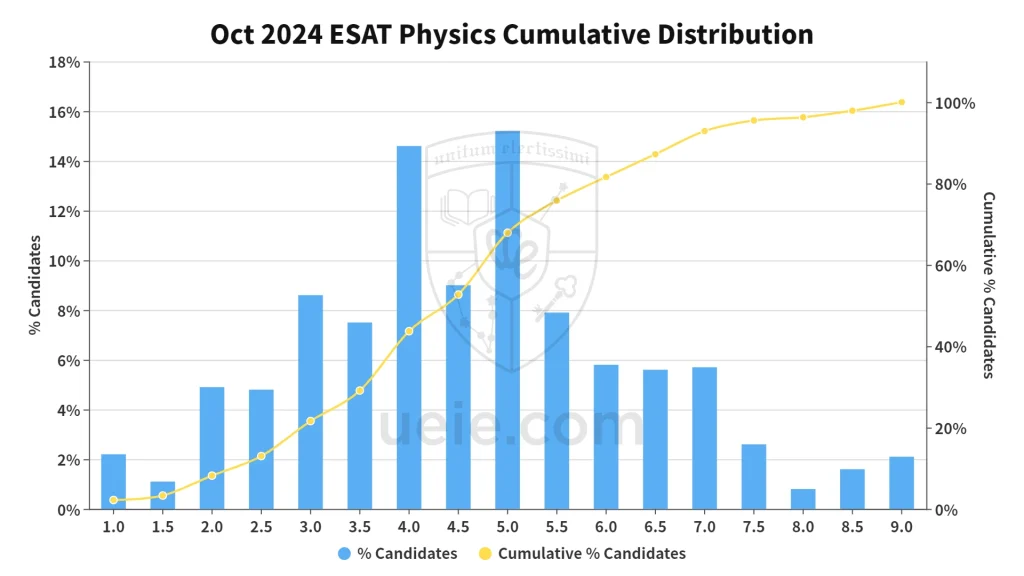
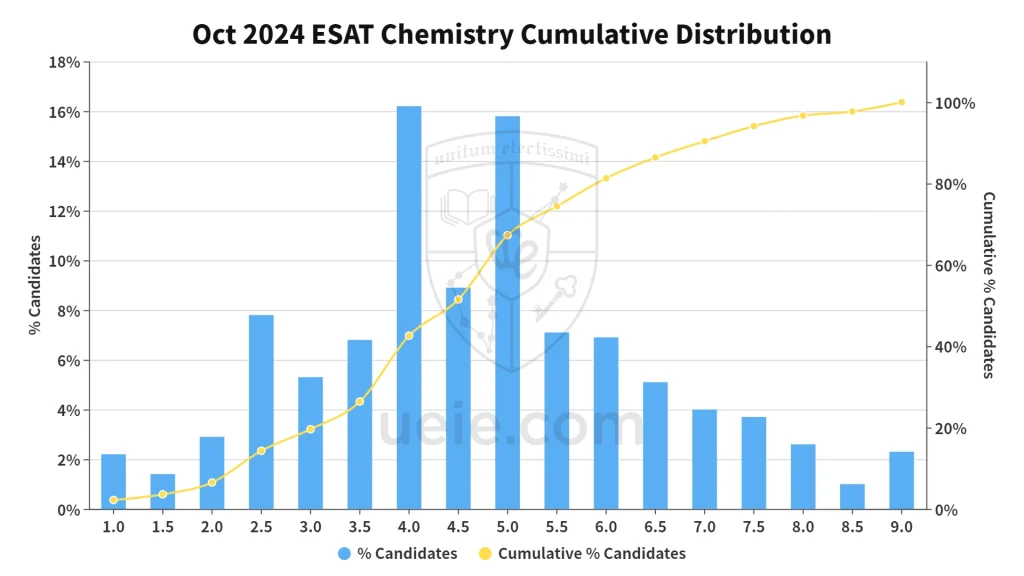
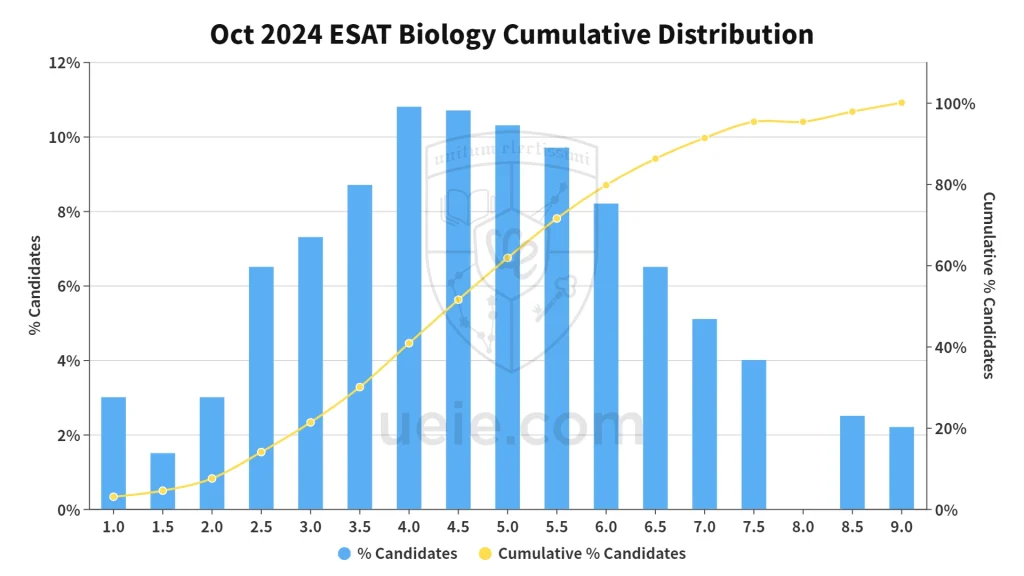
    The TMUA is a crucial benchmark for assessing a student’s mathematical ability. At the same time, the ESAT serves as a gateway to engineering and science-related courses at the University of Cambridge and Imperial College London. Both tests employ a 1.0 to 9.0 grading scale, similar to the IELTS, with higher TMUA and ESAT scores indicating a higher rank and stronger academic abilities in the relevant disciplines.

    I. Unveiling the secrets behind the 2024 TMUA and ESAT scores

    With this year’s adjusted scoring system, scores now provide a more intuitive reflection of a student’s rank, which is crucial for university admissions. So, where does your score stand? Let’s delve into a detailed analysis of the TMUA and ESAT score distribution.

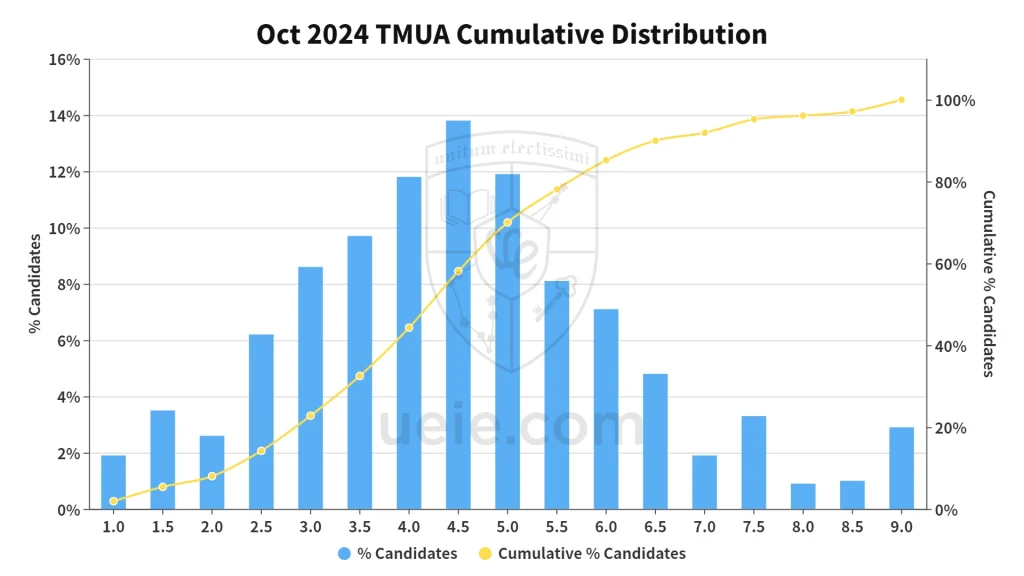
    TMUA

    2024 TMUA Score

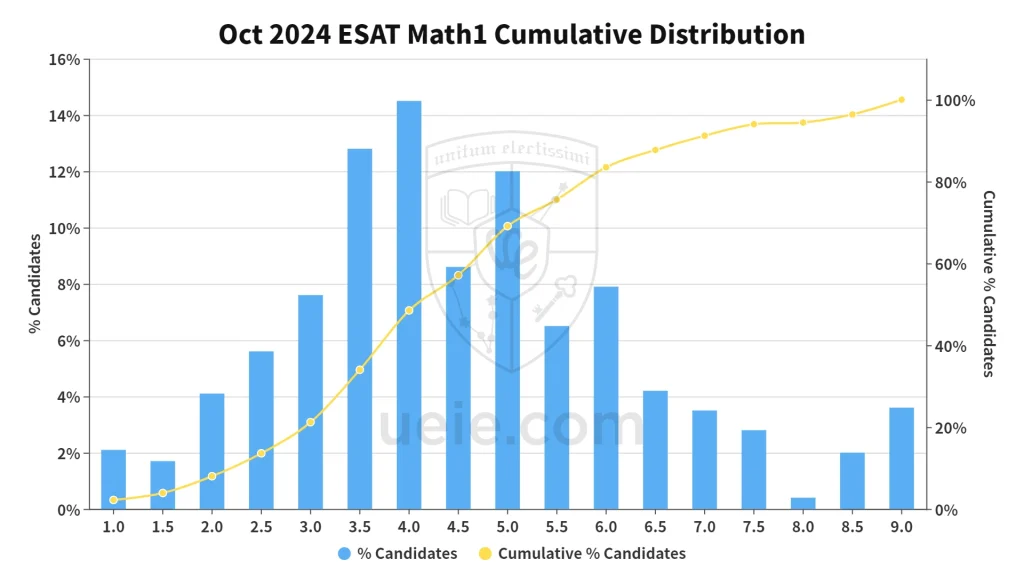
    Math 1 ESAT

    2024 ESAT Math 1 Score

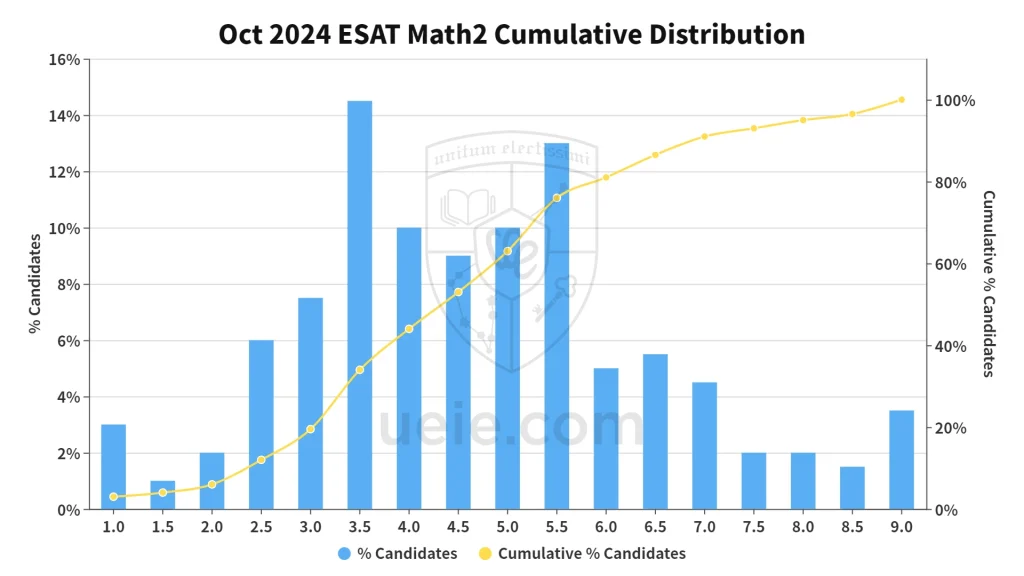
    Math 2 ESAT

    2024 ESAT Math 2 Score

    Physics ESAT

    2024 ESAT Physics Score

    Chemistry ESAT

    2024 ESAT Chemistry Score

    Biology ESAT

    2024 ESAT Biology Score

    II. Why are there so many applicants who scored 9?

    You may have noticed that the percentage of students scoring 9 is higher than those scoring 8 or 8.5! In some tests and subjects, the proportion of 9s even exceeds the combined proportion of 8.0 and 8.5 scores! There are several factors behind this phenomenon:

    • A concentration of top students: Each subject attracts a group of exceptionally talented students who possess strong learning abilities and test-taking skills.
    • Applicants for mathematics courses also sit the TMUA: Students applying for mathematics courses, who often have a strong aptitude for the subject, tend to score significantly higher on the TMUA compared to those applying for computer science or economics courses.
    • Chinese students’ strength in mathematics: It’s well-known that Chinese students excel in mathematics and science. Their advantage in these subjects often gives them an edge in TMUA and ESAT, contributing to the higher proportion of 9 scores.

    III. TMUA & ESAT scores: More than just correct answers

    The TMUA and ESAT scores are reported on a scale that runs from 1 (low) to 9 (high). Contrary to popular belief, the score is not a simple reflection of the correct answer rate. The exams use multiple test papers, and the difficulty level can vary across different regions and exam times. Under this mechanism, merely counting correct answers cannot accurately assess a candidate’s true ability. Instead, the official scores, derived from rigorous statistical analysis and adjustments, provide a more precise ranking of candidates relative to their peers. Therefore, TMUA and ESAT scores are better understood as a comprehensive assessment of a candidate’s overall ability.

    IV. Understanding your TMUA and ESAT score

    Regardless of your score, maintain a positive attitude and keep striving for your dreams. Please note that the following interpretations are based on general trends and individual opinions, and should be taken as a reference only:

    • 5.0 points: Congratulations! You’ve already outperformed half of the applicants.
    • 6.5 points: You have a high chance of receiving an interview invitation from Cambridge. It’s time to start preparing for your interview.
    • 7.5 points: Your chances of being admitted to Imperial College London and Cambridge are quite high.
    • 8.5 and 9.0 points: If your personal statement and interview (if any) are strong, you can expect offers from top universities like Cambridge, Imperial College London, and LSE.

    Of course, there are always exceptions. Factors such as luck, encountering an interviewer who is not a good fit, or performing poorly in an interview can influence the final outcome, even with a high TMUA or ESAT score. Remember, TMUA and ESAT scores are just one piece of the puzzle. Universities consider a variety of factors, including academic performance, personal statements, academic references, and interview performance, when making admissions decisions.

    V. Next steps for your application

    1. Don’t get overly focused on the correlation between your score and the number of correct answers.
    2. Set realistic academic expectations based on your score.
    3. Check the official websites of universities for the latest requirements and updates on exam scores.
    4. Maintain a positive attitude and continue striving for your goals.

    We hope the above information helps you better understand your TMUA and ESAT scores and aids in your future academic planning. Explore more preparation resources and posts:

  • How to Register for ESAT

    How to Register for ESAT

    For students aspiring to read engineering or natural sciences at the University of Cambridge, the University of Oxford or Imperial College London, the Engineering and Science Admissions Test (ESAT) result is a key determinant of their ultimate success in gaining admission. However, many students and their parents are unacquainted with the particulars of ESAT registration, such as the procedures for enrolment, the pertinent timelines, and the appropriate examination session for which to register. This article will, therefore, provide a detailed exposition and guidance on the various processes and facets of ESAT registration, aiming to elucidate these matters and resolve any uncertainties.

    I. ESAT Organisation and Administration

    Since 2024, the ESAT has been centrally managed by UAT-UK (University Admissions Tests – UK), a not-for-profit organisation. UAT-UK focuses on university admissions tests in the United Kingdom and currently oversees three computer-based testing programmes: ESAT, TMUA and TARA. Pearson VUE delivers these tests. It is the certification and licensure arm of Pearson, an internationally recognized learning company. With a vast network of over 5,500 test centres across more than 180 countries and territories, Pearson VUE provides professional assessment services to academic and admissions bodies globally.

    II. Key Dates for the Upcoming ESAT Sittings

    The ESAT has two test sittings, scheduled for October 2026 and January 2027. The pertinent dates are outlined below:

    1. October 2026 ESAT Sitting

    1st June 2026 Account Creation Opens
    20th July 2026 ESAT Registration Opens
    28th September 2026 ESAT Registration Closes
    12th-16th October 2026 ESAT Test Dates*
    16th November 2026 ESAT Results Released

    * Only on 12-13th October 2026 for candidates sitting in China, Hong Kong and Macau.

    2. January 2027 ESAT Sitting

    Not applicable for Cambridge or Oxford applicants unless you are applying to a mature college with a January admissions deadline at Cambridge, or an Oxford Foundation Year programme also with a January deadline.

    5th October 2026 Account Creation Opens
    26th October 2026 ESAT Registration Opens
    21st December 2026 ESAT Registration Closes
    4th-8th January 2027 ESAT Test Dates*
    8th February 2027 ESAT Results Released

    * Only on 6th January 2027 for candidates sitting in China, Hong Kong and Macau.

    III. ESAT Registration Procedure

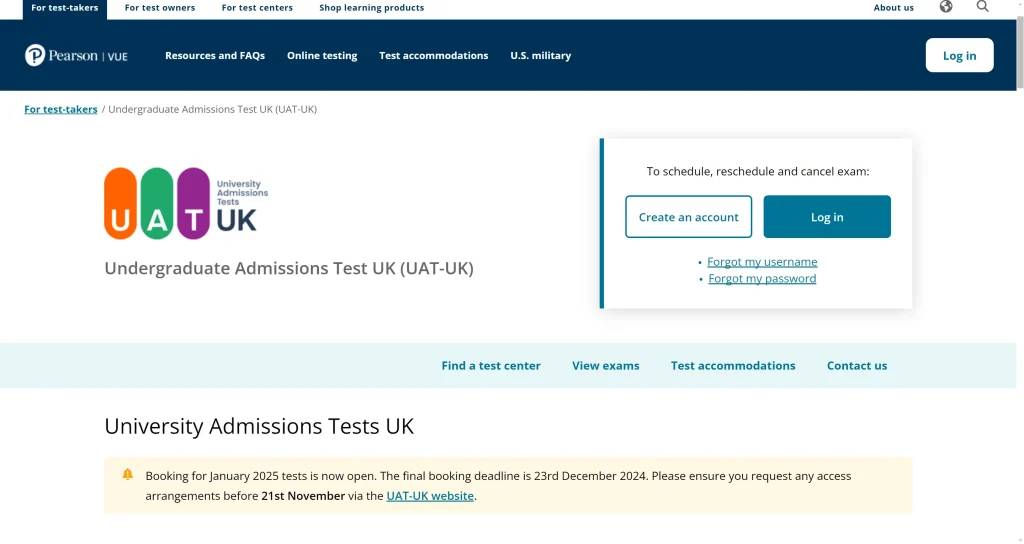
    1. Create a UAT-UK Account

    ESAT & TMUA Registration Guide - Creat your account - 1

    • It is imperative that the name used for UAT-UK account registration precisely matches the name on the candidate’s identification document. Discrepancies may prevent the candidate from sitting the examination. Candidates should also ensure their name matches their UCAS application name.
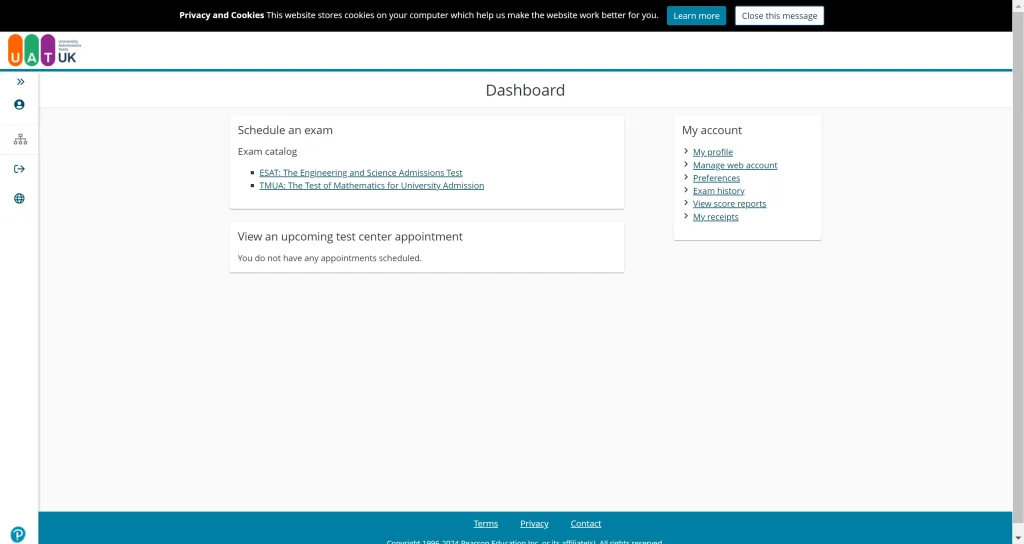
    • After creating an account, Pearson VUE will email candidates. This email enables them to confirm details and account settings. Candidates should receive it within 24 hours. This email will also include a temporary password for the candidate’s account.
    • Upon receipt of the account confirmation email, candidates may log in using the temporary password, subsequently change their password, and locate their UAT-UK ID (format: UATUK######) in the top left-hand corner of the page navigation bar.

    2. Test Booking

    • Log in to your UAT-UK account on the official Pearson VUE website and select the option to book the ESAT examination.

    ESAT & TMUA Registration Guide - Book a test - 2

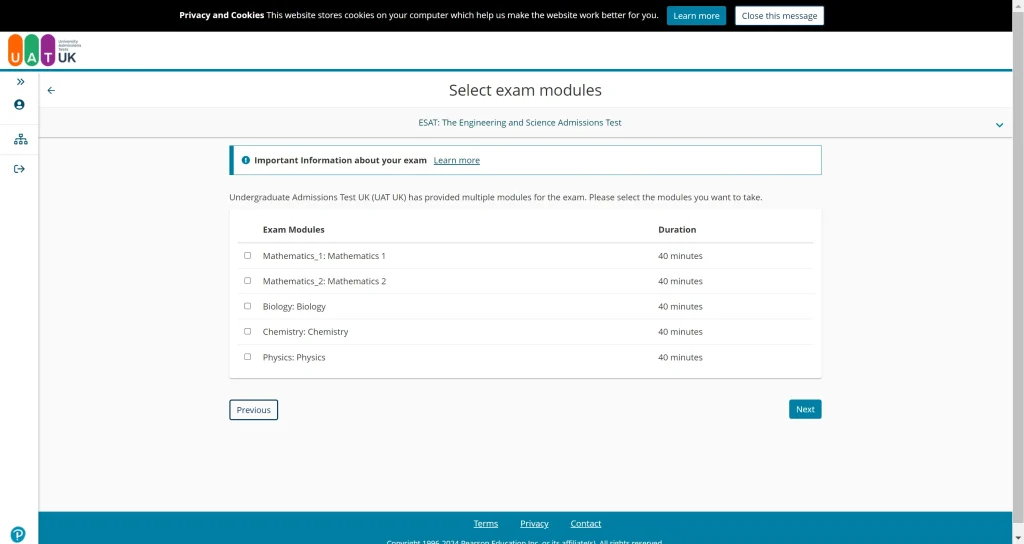
    • The ESAT comprises of five sections. Typically, all candidates are required to sit the Mathematics 1 module. In addition to this, candidates will generally need to select two further modules from Mathematics 2, Physics, Chemistry, and Biology, in accordance with the requirements of their chosen university and specific programme of study. It is imperative that candidates meticulously consult the official admissions webpage of their prospective institution to confirm the precise subject combination stipulated for their intended course. Selecting an appropriate combination of subjects is likely to strengthen your university application.

    ESAT Registration Guide - Select the tests - 3

    • Provide personal information pertinent to the examination. The system denotes compulsory fields with an asterisk (*).
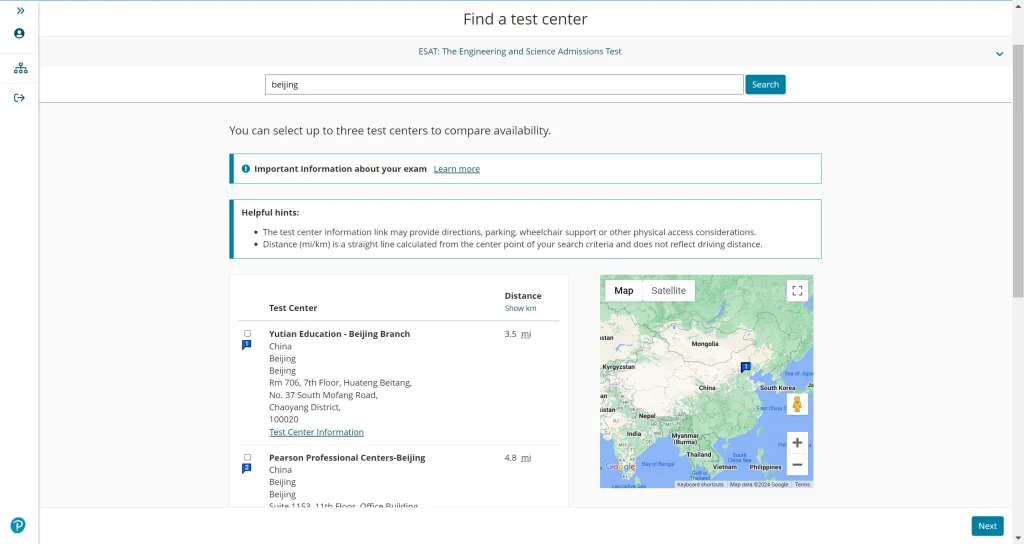
    • Candidates can locate their nearest test centre via the Pearson VUE website to complete their ESAT registration. Please note that sought-after test centres have limited places, especially as the registration deadline approaches. We strongly advise booking well in advance.

    ESAT & TMUA Registration Guide - Choose the test centre - 5

    3. Post-Registration and Pre-Examination Steps

    • Retain Confirmation Letter:
      It is strongly recommended that candidates save or print the examination confirmation letter issued by Pearson VUE once registration and payment are complete. This document usually serves as proof of entry for the examination.
    • Familiarise Yourself with Test Centre Regulations:
      Candidates are advised to visit the Pearson VUE website or contact their test centre before the examination to apprise themselves of specific test centre rules and regulations.
    • Official Contact Details: For any queries, candidates may contact the Pearson VUE candidate services helpline on 866 892 4788 (toll-free) or liaise with official customer service through the customer service centre on the Pearson VUE website.

    4. Test Fees

    • For candidates sitting the ESAT examination outside the UK and the Republic of Ireland (including mainland China), the fee is generally £133.
    • For candidates sitting the examination within the UK and the Republic of Ireland, the fee is £78.

    IV. Access Arrangements

    Candidates requiring access arrangements are advised to register for the examination at the earliest opportunity. Registering later may diminish the likelihood of securing arrangements at the preferred date and test centre. UAT-UK may take up to ten working days to process applications for access arrangements. Furthermore, the deadline for applying for access arrangements is typically in advance of the standard registration deadline. It is essential to check and submit such applications with ample time.

    All applications for access arrangements must be substantiated by evidence from a medical practitioner or specialist teacher, clearly detailing the candidate’s disability, medical condition, or other relevant circumstances.

    Types of access arrangements that necessitate application and approval include:

    • 25% extra time
    • Supervised rest breaks
    • Separate invigilation (rooming)
    • Use of a coloured reading overlay or bookmark
    • A reader or scribe
    • Other (please supply specific details of any aids or modifications required)

    V. Cancelling ESAT Registration

    1. Candidates may cancel or amend their examination booking up to 48 hours prior to the scheduled test without penalty.
    2. Cancellations or amendments must be effected by logging into the Pearson VUE website account or by contacting customer services for assistance.
    3. Should a candidate fail to cancel or amend their booking in good time, or fail to attend the examination, the examination fee will be forfeit.
    4. It is important to appreciate that the ESAT is conducted over only 1-2 days for candidates sitting in China, Hong Kong and Macau. The feasibility of successfully rescheduling a test date is dependent upon availability at the selected test centre.
    5. The precise cancellation and amendment policy will be as per the terms and conditions stipulated by Pearson VUE at the point of booking.

    VI. Concluding Thoughts

    As the 2026 ESAT draw nearer, it remains of paramount importance for all students intending to apply for engineering and natural sciences programmes at the University of Cambridge, the University of Oxford and Imperial College London to acquaint themselves promptly with the latest test updates and to familiarise themselves thoroughly with the complete ESAT registration procedure. Kindly make full use of this guide to prepare effectively for successful matriculation at your chosen institution.

    Should you wish to explore further aspects of the ESAT, such as a comprehensive overview of test information, guidance on structuring your preparation timeline, and effective study strategies, you may also consult our other articles by clicking the link provided below.