If you intend to apply for mathematics, computer science, or economics-related courses at top G5 universities in the UK, such as Oxbridge or Imperial College, you may need to face one of three examinations: STEP, TMUA, or MAT. The requirements for these examinations vary, often leaving applicants perplexed: STEP vs TMUA vs MAT — Which one should I prepare for? What are the differences between them? Which is most suitable for me?
Choosing the right examination and planning your preparation schedule appropriately can help you avoid detours and improve efficiency. This article will provide you with a clear and comprehensive comparative guide, analysing the core differences between STEP, TMUA, and MAT in terms of assessment focus, examination format, knowledge requirements, difficulty level, style, and specific university requirements. After reading this article, you will be better able to determine which examination best matches your target institutions and personal circumstances, thereby enabling you to make the most informed choice.
I. STEP vs TMUA vs MAT: Overview of the Three Examinations
To begin with, and before delving into a detailed comparison, the table below provides a quick outline of the core information for each of the three examinations – STEP, TMUA, and MAT – to help you form a basic impression.
| Dimension | Cambridge STEP | TMUA | Oxford MAT |
|---|---|---|---|
| Managing Body | University of Cambridge | UAT-UK | University of Oxford |
| Exam Delivery Provider | OCR Examination Board | Pearson VUE | Pearson VUE |
| Answering Format | Pen-and-paper | Online computer-based | Online computer-based |
| Question Types | Extended answer questions | Multiple-choice questions | Multiple-choice + Extended answer questions |
| Key Characteristics | Long, challenging questions; requires Further Mathematics knowledge; emphasises proof process. | High time pressure; requires A-Level Mathematics; assesses speed, precision, logical judgment. | Based on A-Level Mathematics, does not require Further Mathematics; emphasises flexibility of thought. |
| Typical Universities / Courses Requiring Exam |
|
|
|
| Keywords | Depth, Rigour, Proof, Cambridge | Speed, Accuracy, Logical Reasoning, Wide Applicability | Logic, Problem Solving, Flexibility of Thought, Oxford |
II. STEP vs TMUA vs MAT Comprehensive Comparison: Analysis of Key Dimensions
Having gained a basic impression of the three examinations, this section will provide a more comprehensive and detailed analysis, comparing the differences between STEP, TMUA, and MAT across multiple key dimensions.
1. Assessment Objectives and Focus
- Cambridge STEP: The core objective is to test profound mathematical thinking and rigorous proof-writing ability. Specifically, it requires students not only to solve problems but also to clearly and completely justify every step of their solution process, akin to conducting a small mathematical investigation. Therefore, it is suited for demonstrating a solid mathematical foundation and logical reasoning capability.
- TMUA: The core objective is to test the fluent application of mathematical knowledge and the agility of mathematical reasoning. It demands that students, under strict time constraints, quickly and accurately recall foundational knowledge (primarily AS Level) and make logical judgments. It is suited for demonstrating a solid foundation and efficient cognitive responsiveness.
- Oxford MAT: The core objective is to test a deep understanding of mathematical concepts and creativity in solving novel problems. It requires students to flexibly apply foundational knowledge (primarily A Level) and find breakthroughs via logical analysis in situations without fixed ‘routines’. It is suited for demonstrating flexibility of thought and mathematical intuition.
2. Applicable Universities and Course Requirements
University admissions policies may change annually. The table below is for reference only, based on information current as of 2025. Applicants for 2026 entry and beyond must consult the official websites of their target universities and courses for the latest, definitive information.
| Dimension | Cambridge STEP | TMUA | Oxford MAT |
|---|---|---|---|
| Main Mandatory Requirements (Uni/Course) |
|
|
|
| Recommended / Accepted Alternative / Other |
|
|
|
| Summary Positioning | Core requirement for Cambridge Mathematics, accepted by some other institutions. | Widest applicability, covering Maths, Comp Sci, Economics at many top institutions. | Core requirement for University of Oxford. |
3. Examination Format and Structure
| Dimension | Cambridge STEP | TMUA | Oxford MAT |
|---|---|---|---|
| Examination Mode | Pen-and-paper | Paperless computer-based | Paperless computer-based |
| Question Types | Extended answer questions | Multiple-choice questions | Multiple-choice + Extended answer questions |
| Paper Construction | Globally uniform paper | Question bank based (papers may differ slightly by region/session) | Globally uniform paper |
| Number of Questions | STEP 2 & STEP 3: 12 questions per paper, answer any 6. | Papers 1 & 2: 20 questions each, total 40 multiple-choice, answer all. | Total 25 multiple-choice + 2 extended answer (keyboard input), answer all. |
| Examination Duration | 3 hours / per paper | 2.5 hours (75 mins each for Paper 1 & 2) | 2.5 hours |
| Permitted Aids | Calculators, formula sheets, dictionaries NOT allowed. | Calculators, formula sheets, dictionaries NOT allowed. | Calculators, formula sheets, dictionaries NOT allowed. |
4. Marking Scheme and Result Presentation
| Dimension | Cambridge STEP | TMUA | Oxford MAT |
|---|---|---|---|
| Scoring Method | Only the best 6 questions scored (20 marks each), total 120. | All 40 multiple-choice questions scored (1 mark each), raw total 40. | All questions scored (MCQ weighted by difficulty, total 70; Extended answers 15 marks each with partial credit), total 100. |
| Result Format | Grades: S, 1, 2, 3, U (S highest) | Standardised score: 1.0 – 9.0 (one decimal place) | Raw score: 0 – 100 |
| Score Thresholds | Variable, adjusted annually based on paper difficulty and candidate performance. | No ‘pass mark’; score significance depends on application context. | No fixed ‘offer threshold’; Oxford uses holistic assessment, score significance interpreted against historical data. |
| Competitiveness Reference | Cambridge typically requires Grade 1 or S; other institutions may require Grade 2 or above. | Generally, 6.5+ considered competitive; 7.0+ strong; 8.0+ highly competitive. | Oxford offer-holders often average around 70; recent trend suggests rising scores, mainland Chinese students may need higher for interview. |
5. Comparison of Knowledge, Difficulty, and Style
| Dimension | Cambridge STEP | TMUA | Oxford MAT |
|---|---|---|---|
| Knowledge Requirement | STEP 2: A Level Maths + AS Further Maths STEP 3: A Level Maths + A Level Further Maths | Primarily based on A Level Maths + some GCSE Maths | Primarily based on A Level Maths |
| Further Mathematics | Required | Not required | Not required |
| Question Style | Depth & Rigour: Assesses deep understanding and complex application of knowledge, emphasising rigorous, multi-step proof processes. Structured, progressive questions, akin to mini mathematical research. | Speed & Application: Assesses fluent mastery and rapid, accurate application of foundational knowledge, plus agility in logical reasoning. Short, fast-paced questions focused on reaction speed and calculation/judgment precision. | Flexibility & Creativity: Assesses profound understanding of basic concepts and flexible application in novel contexts, emphasising logical analysis and creative problem-solving. Cleverly designed questions, sometimes like mathematical puzzles, prioritising insightful approaches. |
| Source of Difficulty | Depth and breadth of knowledge (esp. Further Maths); high standard for proof rigour; question length and computational complexity; requires problem-solving stamina. | Extreme time pressure (avg. 3.5 mins/question); demands exceptional speed and accuracy in calculation/judgment; requires swift judgement in logical reasoning questions. | Novelty/’non-routine’ nature of questions; demands depth and rigour in logical thinking; requires creative application of basic knowledge to unfamiliar scenarios. |
| Difficulty Rating | ★★★★★ | ★★★ | ★★★☆ |
| Comparison with A-Level | Far exceeds A-Level, particularly in depth of thought, proof requirements, and breadth of knowledge (incl. Further Maths). | Significantly exceeds A-Level, mainly in demands for speed, precision, and logical application. | Far exceeds A-Level, especially in depth of logical reasoning, creativity in problem-solving, and flexibility of thought. |
Summary Points
- Knowledge Threshold: STEP has mandatory Further Mathematics requirements, the highest amongst the three. The knowledge base for TMUA and MAT is relatively closer to standard A Level.
- Core Challenge: STEP’s difficulty lies in depth and proof; TMUA’s in speed and efficiency; MAT’s in thinking and novelty.
- Difficulty Consensus: All three examinations are considerably more challenging than A Level examinations, requiring a higher level of mathematical proficiency and ability.
III. How to Choose: Selecting the Most Suitable Examination for You
Having understood the detailed differences between the three examinations, the question now is: which examination(s) do you need to prepare for? The following steps will guide you in making an initial determination:
1. Step 1: Identify Mandatory Requirements
This is the decisive starting point for choosing an examination, overriding all other factors.
Clarify Targets: Clearly identify all the universities and specific courses you plan to apply for.
Verify Official Websites: Visit the official admissions pages for each of these university courses one by one. First, find and confirm the latest, most accurate entrance examination requirements for your intended year of entry (e.g., 2026). Crucially, pay attention to keywords such as ‘Required,’ ‘Recommended,’ ‘Accepted Alternative,’ etc..
Determine Mandatory Exams: Based on the official information, determine which examinations you must take.
- Applying to Oxford Mathematics/Computer Science etc. → MAT is mandatory.
- Applying to Cambridge Mathematics → STEP is mandatory.
- Applying to Cambridge Computer Science/Economics → TMUA is mandatory.
- Applying to Imperial/LSE/UCL/Warwick etc. for Mathematics, Computer Science, Economics → Check specific requirements; TMUA is often mandatory, but note if alternatives are accepted.
Completing this step clarifies the examination hurdles you must overcome. Consequently, for some students, the result might be needing to prepare for only one examination; in contrast, for others, it might mean facing the challenge of two or even three examinations simultaneously.
2. Step 2: When Options Exist, Match with Personal Attributes
You only need to consider this second step under the following circumstances:
- University Offers Multiple Options: Your desired university/course accepts more than one examination result (e.g., Warwick accepts TMUA/STEP/AEA).
- Saving Preparation Time and Effort: You are required to take multiple examinations and need to judge which one better aligns with your natural strengths to allocate preparation effort more reasonably.
- Considering Optional Exams for Enhancement: You are considering taking a non-mandatory examination (e.g., Oxford encourages STEP) to strengthen your application competitiveness.
In such cases, consider the following personal factors to determine which examination allows you to best leverage your strengths:
Academic Background and Strengths
- Is Further Mathematics your comfort zone, and do you enjoy rigorous proofs? → STEP might be a good fit.
- Is your foundational mathematics exceptionally solid, are you fast and accurate in calculations, and is your logic clear? → TMUA’s requirements might highly match your abilities.
- Can you demonstrate profound understanding without relying on Further Mathematics, are you flexible in thinking, and adept at clever solutions? → MAT’s style might suit you better.
Learning and Examination Preferences
- Prefer immersive problem-solving on a few challenging questions? → STEP’s format (choose 6 from 12).
- Prefer fast-paced responses to a variety of questions (multiple-choice)? → TMUA’s format.
- Prefer logical puzzles and showcasing thought processes (multiple-choice + extended answers)? → MAT’s format.
Available Preparation Time
- Ample time, able to commit long-term (9-12 months+)? → Better equipped to handle STEP’s depth requirements.
- Relatively limited preparation time, needing efficient improvement? → Preparation for TMUA or MAT (especially a TMUA+MAT combination) might offer higher time efficiency.
3. Summary
The primary basis for choosing an entrance examination is the undeniable mandatory requirement set by the target university. Beyond that, personal academic strengths, learning preferences, and time planning are important considerations for making a choice (when options exist) or optimising your preparation strategy.
IV. Addressing Multiple Challenges: Common Examination Combinations and Preparation Strategies
If you plan to apply simultaneously to several top universities (e.g., Oxbridge, Imperial, LSE) for mathematics, computer science, or economics courses, you will likely need to prepare for multiple entrance examinations. Below are suggestions for preparation timelines and strategies for common combinations of these three examinations.
1. STEP + TMUA Combination
Applicable Universities and Courses: Simultaneously applying to Cambridge University and other G5 universities for mathematics-related courses.
Suggested Preparation Period: 12 months or more. Sufficient time is needed to separately hone the depth required for STEP and the speed for TMUA.
Core Preparation Strategy:
- Specialised Training: Independent, high-intensity specialised practice sessions must be arranged to address STEP’s depth of proof and Further Mathematics, alongside TMUA’s timed multiple-choice answering, speed, and precision.
- Style Switching: Focus on adaptability training to switch between two vastly different problem-solving styles and thinking modes.
2. TMUA + MAT Combination
Applicable Universities and Courses: Simultaneously applying to Oxford University and other G5 universities for mathematics or computer science related courses.
Suggested Preparation Period: Preparation time varies depending on mathematical foundation, generally 5-10 months is recommended.
Core Preparation Strategy:
- Integrated Foundation: Leverage the high degree of knowledge overlap to consolidate foundational review and core competency training.
- Differentiated Training: Specifically strengthen TMUA’s timed multiple-choice speed and techniques, alongside MAT’s logical depth and extended answer argumentation.
- Resource Utilisation: Consider using resources specifically targeting this combination (e.g., the UEIE TMUA+MAT series) to maximise preparation efficiency.
3. STEP + TMUA + MAT Combination
Applicable Universities and Courses: Uncertain initially whether applying for Cambridge or Oxford mathematics, or wishing to enhance mathematical proficiency through STEP preparation, ultimately deciding to apply for Oxford and other G5 universities for mathematics or computer science related courses.
Suggested Preparation Period: 18 months or more. An extreme challenge to time, ability, and perseverance.
Core Preparation Strategy:
- Realistic Assessment: Prudently evaluate your own abilities and goals, setting feasible expectations.
- Intensive Planning: Develop an extremely detailed plan integrating the requirements of all three, potentially requiring trade-offs in some areas.
- Seek Support: Strongly recommended to seek guidance from experienced professionals and efficiently utilise all available resources.
- Focus on Core: Within extremely limited time, prioritise ensuring absolute solidity in core knowledge and common competencies before undertaking the most efficient training for specialised skills.
V. Conclusion and Action Recommendations
Through the comprehensive comparison in this article, it is hoped you now have a clearer understanding of the three entrance examinations: STEP, TMUA, and MAT. Let us summarise the core points:
- Cambridge STEP: Characterised by its depth, rigour, and requirement for Further Mathematics, it focuses on assessing students’ ability to undertake complex mathematical proofs and deep thinking, serving as a hallmark threshold for courses like Cambridge Mathematics.
- TMUA: With its high demands on speed, accuracy, and logical reasoning, it focuses on assessing students’ ability to fluently apply core mathematical knowledge under time pressure, having the broadest range of applications.
- Oxford MAT: By examining flexibility of thought, logical depth, and creative application of foundational knowledge, it focuses on assessing students’ mathematical potential and ability to solve novel problems, serving as Oxford University’s distinctive selection tool.
So, having clarified these differences, what should you do next?
First Priority
Verify Official Requirements! To reiterate, the final decision on which examination(s) to take rests with the universities and courses you are applying to. You need to log onto the official admissions websites of your target institutions to understand the latest, most accurate entrance requirements. Any non-official information (including this article) can only serve as a reference.
Gain In-depth Understanding of Relevant Exams
After determining the examination(s) you need to take, it is recommended you read my detailed guides and preparation guides for the relevant examinations to obtain more in-depth information:
Focus on Specific Combinations
If you find you need to take both TMUA and MAT, you can further read my analysis on preparation strategies for this combination:
Understand the Registration Process
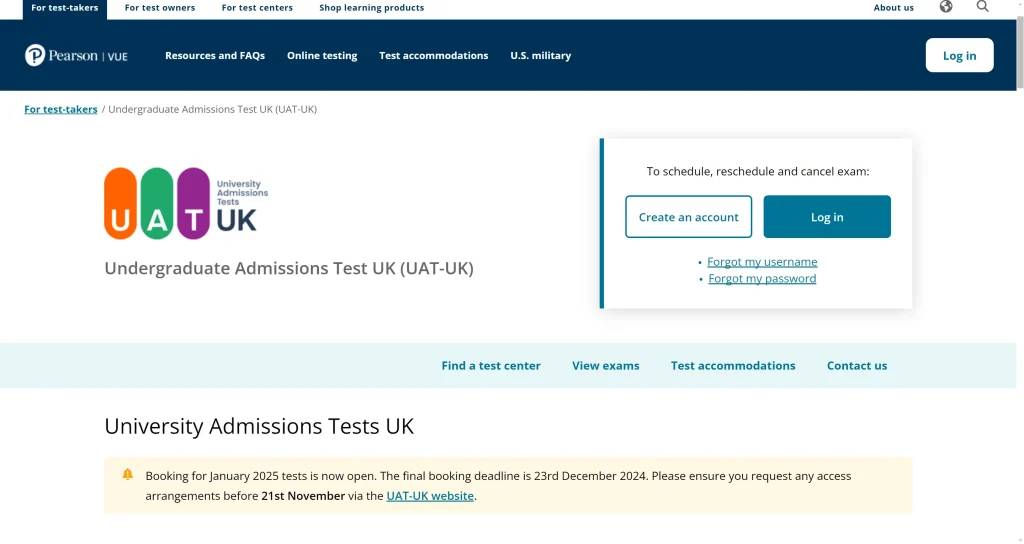
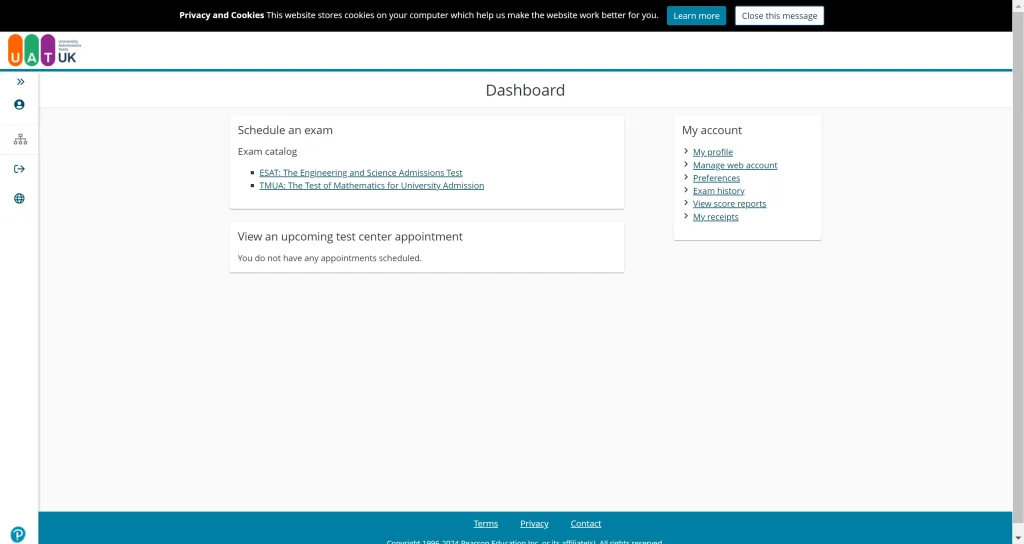
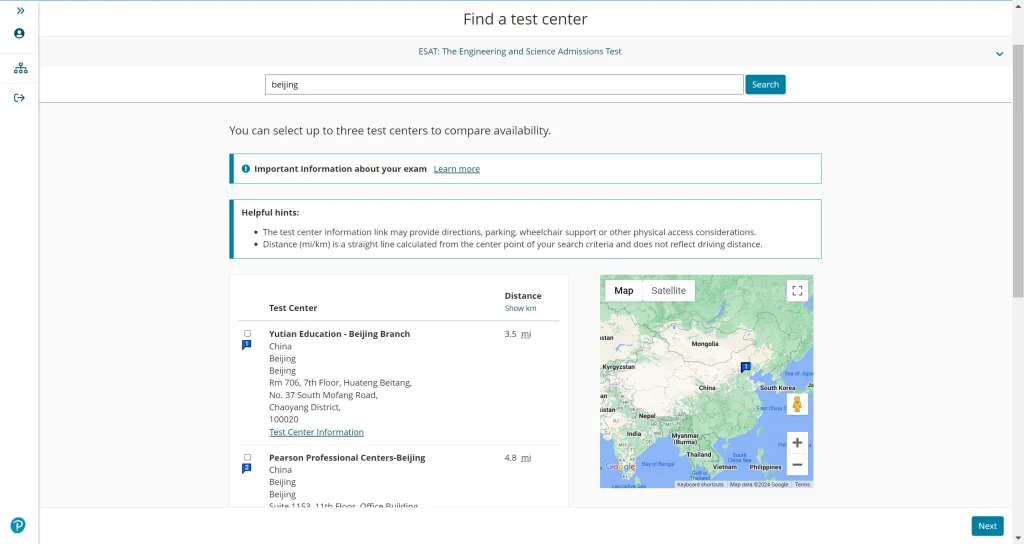
Once you have decided on the examination(s), familiarise yourself with and prepare for the registration procedures in a timely manner:
Plan and Prepare Early
Regardless of which examination you choose, thorough preparation is key to success. Utilise the relevant preparation guides, formulate a detailed preparation plan early on, and put it into action. If needed, consider leveraging high-quality preparation resources, such as:

TMUA Prep Hub

Cambridge STEP Prep Hub
Choosing the correct entrance examination is a significant step towards your dream university. I hope the comparative analysis in this article illuminates the path ahead, helping you make the decision best suited to you. Wishing you smooth preparation and successful applications!