
Tag: Apply to Oxford University

  • STEP vs TMUA vs MAT: A Strategic Comparison to Choose Your Maths Test

    STEP vs TMUA vs MAT: A Strategic Comparison to Choose Your Maths Test

    If you intend to apply for mathematics, computer science, or economics-related courses at top G5 universities in the UK, such as Oxbridge or Imperial College, you may need to face one of three examinations: STEP, TMUA, or MAT. The requirements for these examinations vary, often leaving applicants perplexed: STEP vs TMUA vs MAT — Which one should I prepare for? What are the differences between them? Which is most suitable for me?

    Choosing the right examination and planning your preparation schedule appropriately can help you avoid detours and improve efficiency. This article will provide you with a clear and comprehensive comparative guide, analysing the core differences between STEP, TMUA, and MAT in terms of assessment focus, examination format, knowledge requirements, difficulty level, style, and specific university requirements. After reading this article, you will be better able to determine which examination best matches your target institutions and personal circumstances, thereby enabling you to make the most informed choice.

    I. STEP vs TMUA vs MAT: Overview of the Three Examinations

    To begin with, and before delving into a detailed comparison, the table below provides a quick outline of the core information for each of the three examinations – STEP, TMUA, and MAT – to help you form a basic impression.

    DimensionCambridge STEPTMUAOxford MAT
    Managing BodyUniversity of CambridgeUAT-UKUniversity of Oxford
    Exam Delivery ProviderOCR Examination BoardPearson VUEPearson VUE
    Answering FormatPen-and-paperOnline computer-basedOnline computer-based
    Question TypesExtended answer questionsMultiple-choice questionsMultiple-choice + Extended answer questions
    Key CharacteristicsLong, challenging questions; requires Further Mathematics knowledge; emphasises proof process.High time pressure; requires A-Level Mathematics; assesses speed, precision, logical judgment.Based on A-Level Mathematics, does not require Further Mathematics; emphasises flexibility of thought.
    Typical Universities / Courses Requiring Exam
    • Mandatory for Mathematics at Cambridge
    • Accepted or recommended by Imperial/Warwick etc.
    • Mandatory for Computer Science, Economics at Cambridge & certain courses at Imperial/LSE/UCL
    • Accepted/alternative at Warwick/Durham etc.
    • Mandatory for Mathematics/Computer Science related courses at Oxford.
    KeywordsDepth, Rigour, Proof, CambridgeSpeed, Accuracy, Logical Reasoning, Wide ApplicabilityLogic, Problem Solving, Flexibility of Thought, Oxford

    II. STEP vs TMUA vs MAT Comprehensive Comparison: Analysis of Key Dimensions

    Having gained a basic impression of the three examinations, this section will provide a more comprehensive and detailed analysis, comparing the differences between STEP, TMUA, and MAT across multiple key dimensions.

    1. Assessment Objectives and Focus

    • Cambridge STEP: The core objective is to test profound mathematical thinking and rigorous proof-writing ability. Specifically, it requires students not only to solve problems but also to clearly and completely justify every step of their solution process, akin to conducting a small mathematical investigation. Therefore, it is suited for demonstrating a solid mathematical foundation and logical reasoning capability.
    • TMUA: The core objective is to test the fluent application of mathematical knowledge and the agility of mathematical reasoning. It demands that students, under strict time constraints, quickly and accurately recall foundational knowledge (primarily AS Level) and make logical judgments. It is suited for demonstrating a solid foundation and efficient cognitive responsiveness.
    • Oxford MAT: The core objective is to test a deep understanding of mathematical concepts and creativity in solving novel problems. It requires students to flexibly apply foundational knowledge (primarily A Level) and find breakthroughs via logical analysis in situations without fixed ‘routines’. It is suited for demonstrating flexibility of thought and mathematical intuition.

    2. Applicable Universities and Course Requirements

    University admissions policies may change annually. The table below is for reference only, based on information current as of 2025. Applicants for 2026 entry and beyond must consult the official websites of their target universities and courses for the latest, definitive information.

    DimensionCambridge STEPTMUAOxford MAT
    Main Mandatory Requirements (Uni/Course)
    • University of Cambridge: Mathematics
    • University of Cambridge: Computer Science, Economics
    • Imperial College: Mathematics Dept., Economics, Finance & Data Science, some Computer Science Dept. courses etc.
    • LSE: Economics, Econometrics, Mathematics & Economics etc.
    • UCL: Economics
    • University of Warwick: Mathematics, Statistics, Computer Science, Economics etc.
    • Durham University: Some courses
    • University of Oxford: Mathematics, Computer Science related courses
    Recommended / Accepted Alternative / Other
    • University of Warwick: Can be substituted with TMUA/AEA
    • Imperial College: Can supplement TMUA in special circumstances
    • UCL: Can be used to lower A Level requirements, or substituted with AEA
    • University of Bath etc.: May accept/recommend
    • University of Oxford: Participation officially encouraged
    • Warwick: Mathematics, Statistics accept STEP/AEA as alternatives
    • Imperial, Warwick etc.: no longer require or accept MAT
    Summary PositioningCore requirement for Cambridge Mathematics, accepted by some other institutions.Widest applicability, covering Maths, Comp Sci, Economics at many top institutions.Core requirement for University of Oxford.

    3. Examination Format and Structure

    Dimension Cambridge STEP TMUA Oxford MAT
    Examination Mode Pen-and-paper Paperless computer-based Paperless computer-based
    Question Types Extended answer questions Multiple-choice questions Multiple-choice + Extended answer questions
    Paper Construction Globally uniform paper Question bank based (papers may differ slightly by region/session) Globally uniform paper
    Number of Questions STEP 2 & STEP 3: 12 questions per paper, answer any 6. Papers 1 & 2: 20 questions each, total 40 multiple-choice, answer all. Total 25 multiple-choice + 2 extended answer (keyboard input), answer all.
    Examination Duration 3 hours / per paper 2.5 hours (75 mins each for Paper 1 & 2) 2.5 hours
    Permitted Aids Calculators, formula sheets, dictionaries NOT allowed. Calculators, formula sheets, dictionaries NOT allowed. Calculators, formula sheets, dictionaries NOT allowed.

    4. Marking Scheme and Result Presentation

    DimensionCambridge STEPTMUAOxford MAT
    Scoring MethodOnly the best 6 questions scored (20 marks each), total 120.All 40 multiple-choice questions scored (1 mark each), raw total 40.All questions scored (MCQ weighted by difficulty, total 70; Extended answers 15 marks each with partial credit), total 100.
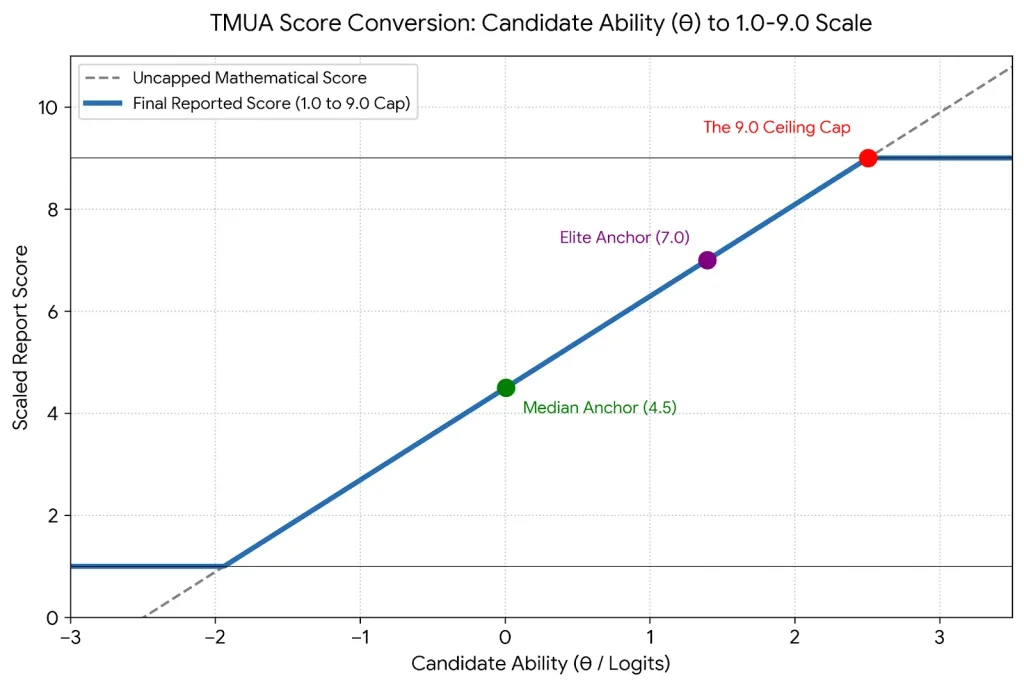
    Result FormatGrades: S, 1, 2, 3, U (S highest)Standardised score: 1.0 – 9.0 (one decimal place)Raw score: 0 – 100
    Score ThresholdsVariable, adjusted annually based on paper difficulty and candidate performance.No ‘pass mark’; score significance depends on application context.No fixed ‘offer threshold’; Oxford uses holistic assessment, score significance interpreted against historical data.
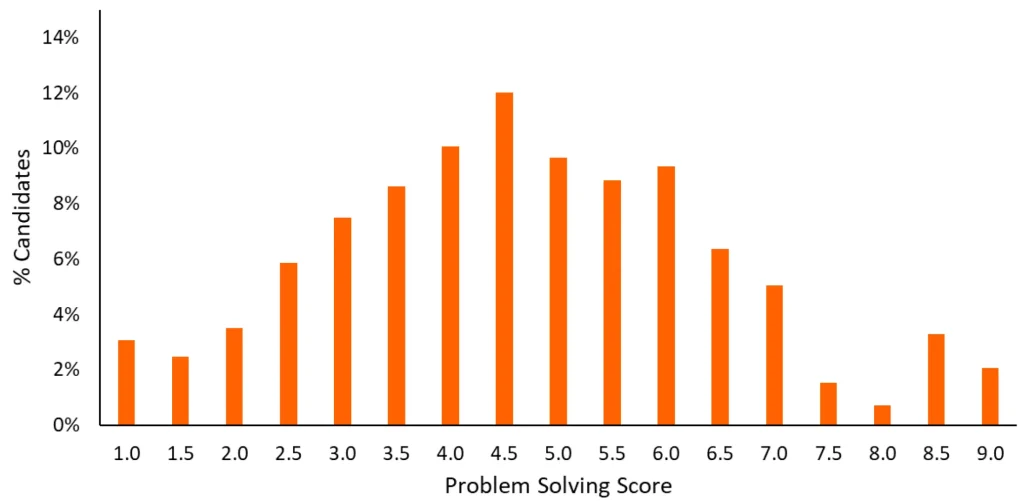
    Competitiveness ReferenceCambridge typically requires Grade 1 or S; other institutions may require Grade 2 or above.Generally, 6.5+ considered competitive; 7.0+ strong; 8.0+ highly competitive.Oxford offer-holders often average around 70; recent trend suggests rising scores, mainland Chinese students may need higher for interview.

    5. Comparison of Knowledge, Difficulty, and Style

    DimensionCambridge STEPTMUAOxford MAT
    Knowledge RequirementSTEP 2: A Level Maths + AS Further Maths
    STEP 3: A Level Maths + A Level Further Maths
    Primarily based on A Level Maths + some GCSE MathsPrimarily based on A Level Maths
    Further MathematicsRequiredNot requiredNot required
    Question StyleDepth & Rigour: Assesses deep understanding and complex application of knowledge, emphasising rigorous, multi-step proof processes. Structured, progressive questions, akin to mini mathematical research.Speed & Application: Assesses fluent mastery and rapid, accurate application of foundational knowledge, plus agility in logical reasoning. Short, fast-paced questions focused on reaction speed and calculation/judgment precision.Flexibility & Creativity: Assesses profound understanding of basic concepts and flexible application in novel contexts, emphasising logical analysis and creative problem-solving. Cleverly designed questions, sometimes like mathematical puzzles, prioritising insightful approaches.
    Source of DifficultyDepth and breadth of knowledge (esp. Further Maths); high standard for proof rigour; question length and computational complexity; requires problem-solving stamina.Extreme time pressure (avg. 3.5 mins/question); demands exceptional speed and accuracy in calculation/judgment; requires swift judgement in logical reasoning questions.Novelty/’non-routine’ nature of questions; demands depth and rigour in logical thinking; requires creative application of basic knowledge to unfamiliar scenarios.
    Difficulty Rating★★★★★★★★★★★☆
    Comparison with A-LevelFar exceeds A-Level, particularly in depth of thought, proof requirements, and breadth of knowledge (incl. Further Maths).Significantly exceeds A-Level, mainly in demands for speed, precision, and logical application.Far exceeds A-Level, especially in depth of logical reasoning, creativity in problem-solving, and flexibility of thought.

    Summary Points

    • Knowledge Threshold: STEP has mandatory Further Mathematics requirements, the highest amongst the three. The knowledge base for TMUA and MAT is relatively closer to standard A Level.
    • Core Challenge: STEP’s difficulty lies in depth and proof; TMUA’s in speed and efficiency; MAT’s in thinking and novelty.
    • Difficulty Consensus: All three examinations are considerably more challenging than A Level examinations, requiring a higher level of mathematical proficiency and ability.

    III. How to Choose: Selecting the Most Suitable Examination for You

    Having understood the detailed differences between the three examinations, the question now is: which examination(s) do you need to prepare for? The following steps will guide you in making an initial determination:

    1. Step 1: Identify Mandatory Requirements

    This is the decisive starting point for choosing an examination, overriding all other factors.

    Clarify Targets: Clearly identify all the universities and specific courses you plan to apply for.

    Verify Official Websites: Visit the official admissions pages for each of these university courses one by one. First, find and confirm the latest, most accurate entrance examination requirements for your intended year of entry (e.g., 2026). Crucially, pay attention to keywords such as ‘Required,’ ‘Recommended,’ ‘Accepted Alternative,’ etc..

    Determine Mandatory Exams: Based on the official information, determine which examinations you must take.

    • Applying to Oxford Mathematics/Computer Science etc. → MAT is mandatory.
    • Applying to Cambridge Mathematics → STEP is mandatory.
    • Applying to Cambridge Computer Science/Economics → TMUA is mandatory.
    • Applying to Imperial/LSE/UCL/Warwick etc. for Mathematics, Computer Science, Economics → Check specific requirements; TMUA is often mandatory, but note if alternatives are accepted.

    Completing this step clarifies the examination hurdles you must overcome. Consequently, for some students, the result might be needing to prepare for only one examination; in contrast, for others, it might mean facing the challenge of two or even three examinations simultaneously.

    2. Step 2: When Options Exist, Match with Personal Attributes

    You only need to consider this second step under the following circumstances:

    • University Offers Multiple Options: Your desired university/course accepts more than one examination result (e.g., Warwick accepts TMUA/STEP/AEA).
    • Saving Preparation Time and Effort: You are required to take multiple examinations and need to judge which one better aligns with your natural strengths to allocate preparation effort more reasonably.
    • Considering Optional Exams for Enhancement: You are considering taking a non-mandatory examination (e.g., Oxford encourages STEP) to strengthen your application competitiveness.

    In such cases, consider the following personal factors to determine which examination allows you to best leverage your strengths:

    Academic Background and Strengths

    • Is Further Mathematics your comfort zone, and do you enjoy rigorous proofs? → STEP might be a good fit.
    • Is your foundational mathematics exceptionally solid, are you fast and accurate in calculations, and is your logic clear? → TMUA’s requirements might highly match your abilities.
    • Can you demonstrate profound understanding without relying on Further Mathematics, are you flexible in thinking, and adept at clever solutions? → MAT’s style might suit you better.

    Learning and Examination Preferences

    • Prefer immersive problem-solving on a few challenging questions? → STEP’s format (choose 6 from 12).
    • Prefer fast-paced responses to a variety of questions (multiple-choice)? → TMUA’s format.
    • Prefer logical puzzles and showcasing thought processes (multiple-choice + extended answers)? → MAT’s format.

    Available Preparation Time

    • Ample time, able to commit long-term (9-12 months+)? → Better equipped to handle STEP’s depth requirements.
    • Relatively limited preparation time, needing efficient improvement? → Preparation for TMUA or MAT (especially a TMUA+MAT combination) might offer higher time efficiency.

    3. Summary

    The primary basis for choosing an entrance examination is the undeniable mandatory requirement set by the target university. Beyond that, personal academic strengths, learning preferences, and time planning are important considerations for making a choice (when options exist) or optimising your preparation strategy.

    IV. Addressing Multiple Challenges: Common Examination Combinations and Preparation Strategies

    If you plan to apply simultaneously to several top universities (e.g., Oxbridge, Imperial, LSE) for mathematics, computer science, or economics courses, you will likely need to prepare for multiple entrance examinations. Below are suggestions for preparation timelines and strategies for common combinations of these three examinations.

    1. STEP + TMUA Combination

    Applicable Universities and Courses: Simultaneously applying to Cambridge University and other G5 universities for mathematics-related courses.

    Suggested Preparation Period: 12 months or more. Sufficient time is needed to separately hone the depth required for STEP and the speed for TMUA.

    Core Preparation Strategy:

    • Specialised Training: Independent, high-intensity specialised practice sessions must be arranged to address STEP’s depth of proof and Further Mathematics, alongside TMUA’s timed multiple-choice answering, speed, and precision.
    • Style Switching: Focus on adaptability training to switch between two vastly different problem-solving styles and thinking modes.

    2. TMUA + MAT Combination

    Applicable Universities and Courses: Simultaneously applying to Oxford University and other G5 universities for mathematics or computer science related courses.

    Suggested Preparation Period: Preparation time varies depending on mathematical foundation, generally 5-10 months is recommended.

    Core Preparation Strategy:

    • Integrated Foundation: Leverage the high degree of knowledge overlap to consolidate foundational review and core competency training.
    • Differentiated Training: Specifically strengthen TMUA’s timed multiple-choice speed and techniques, alongside MAT’s logical depth and extended answer argumentation.
    • Resource Utilisation: Consider using resources specifically targeting this combination (e.g., the UEIE TMUA+MAT series) to maximise preparation efficiency.

    3. STEP + TMUA + MAT Combination

    Applicable Universities and Courses: Uncertain initially whether applying for Cambridge or Oxford mathematics, or wishing to enhance mathematical proficiency through STEP preparation, ultimately deciding to apply for Oxford and other G5 universities for mathematics or computer science related courses.

    Suggested Preparation Period: 18 months or more. An extreme challenge to time, ability, and perseverance.

    Core Preparation Strategy:

    • Realistic Assessment: Prudently evaluate your own abilities and goals, setting feasible expectations.
    • Intensive Planning: Develop an extremely detailed plan integrating the requirements of all three, potentially requiring trade-offs in some areas.
    • Seek Support: Strongly recommended to seek guidance from experienced professionals and efficiently utilise all available resources.
    • Focus on Core: Within extremely limited time, prioritise ensuring absolute solidity in core knowledge and common competencies before undertaking the most efficient training for specialised skills.

    V. Conclusion and Action Recommendations

    Through the comprehensive comparison in this article, it is hoped you now have a clearer understanding of the three entrance examinations: STEP, TMUA, and MAT. Let us summarise the core points:

    • Cambridge STEP: Characterised by its depth, rigour, and requirement for Further Mathematics, it focuses on assessing students’ ability to undertake complex mathematical proofs and deep thinking, serving as a hallmark threshold for courses like Cambridge Mathematics.
    • TMUA: With its high demands on speed, accuracy, and logical reasoning, it focuses on assessing students’ ability to fluently apply core mathematical knowledge under time pressure, having the broadest range of applications.
    • Oxford MAT: By examining flexibility of thought, logical depth, and creative application of foundational knowledge, it focuses on assessing students’ mathematical potential and ability to solve novel problems, serving as Oxford University’s distinctive selection tool.

    So, having clarified these differences, what should you do next?

    First Priority

    Verify Official Requirements! To reiterate, the final decision on which examination(s) to take rests with the universities and courses you are applying to. You need to log onto the official admissions websites of your target institutions to understand the latest, most accurate entrance requirements. Any non-official information (including this article) can only serve as a reference.

    Gain In-depth Understanding of Relevant Exams

    After determining the examination(s) you need to take, it is recommended you read my detailed guides and preparation guides for the relevant examinations to obtain more in-depth information:

    Focus on Specific Combinations

    If you find you need to take both TMUA and MAT, you can further read my analysis on preparation strategies for this combination:

    Understand the Registration Process

    Once you have decided on the examination(s), familiarise yourself with and prepare for the registration procedures in a timely manner:

    Plan and Prepare Early

    Regardless of which examination you choose, thorough preparation is key to success. Utilise the relevant preparation guides, formulate a detailed preparation plan early on, and put it into action. If needed, consider leveraging high-quality preparation resources, such as:

    Choosing the correct entrance examination is a significant step towards your dream university. I hope the comparative analysis in this article illuminates the path ahead, helping you make the decision best suited to you. Wishing you smooth preparation and successful applications!

  • How to Register for TMUA

    How to Register for TMUA

    For students aspiring to read mathematics, computer science, or economics-related degrees at leading UK universities, such as the University of Cambridge, the University of Oxford and Imperial College London, the Test of Mathematics for University Admission (TMUA) is a vital part of the application process. The TMUA result is a significant factor influencing offers of admission. However, many students and their parents are unacquainted with the particulars of TMUA registration, including the procedures, timelines, and appropriate test session. This article offers a thorough guide to the TMUA registration process, aiming to clarify common uncertainties.

    I. TMUA Organisation and Administration

    Since 2024, the TMUA has been centrally managed by UAT-UK (University Admissions Tests – UK), a not-for-profit organisation. UAT-UK focuses on university admissions tests in the United Kingdom and currently oversees three computer-based testing programmes: ESAT, TMUA and TARA. Pearson VUE delivers these tests. It is the certification and licensure arm of Pearson, an internationally recognized learning company. With a vast network of over 5,500 test centres across more than 180 countries and territories, Pearson VUE provides professional assessment services to academic and admissions bodies globally.

    II. Key Dates for the Upcoming TMUA Sittings

    The TMUA has two test sittings, scheduled for October 2026 and January 2027. The pertinent dates are outlined below:

    1. October 2026 TMUA Sitting

    1st June 2026 Account Creation Opens
    20th July 2026 TMUA Registration Opens
    28th September 2026 TMUA Registration Closes
    12th-16th October 2026 TMUA Test Dates*
    16th November 2026 TMUA Results Released

    * Only on 15-16th October 2026 for candidates sitting in China, Hong Kong and Macau.

    2. January 2027 TMUA Sitting

    Not applicable for Cambridge or Oxford applicants unless you are applying to a mature college with a January admissions deadline at Cambridge, or an Oxford Foundation Year programme also with a January deadline.

    5th October 2026 Account Creation Opens
    26th October 2026 TMUA Registration Opens
    21st December 2026 TMUA Registration Closes
    4th-8th January 2027 TMUA Test Dates*
    8th February 2027 TMUA Results Released

    * Only on 8th January 2027 for candidates sitting in China, Hong Kong and Macau.

    III. TMUA Registration Procedure

    1. Create a UAT-UK Account

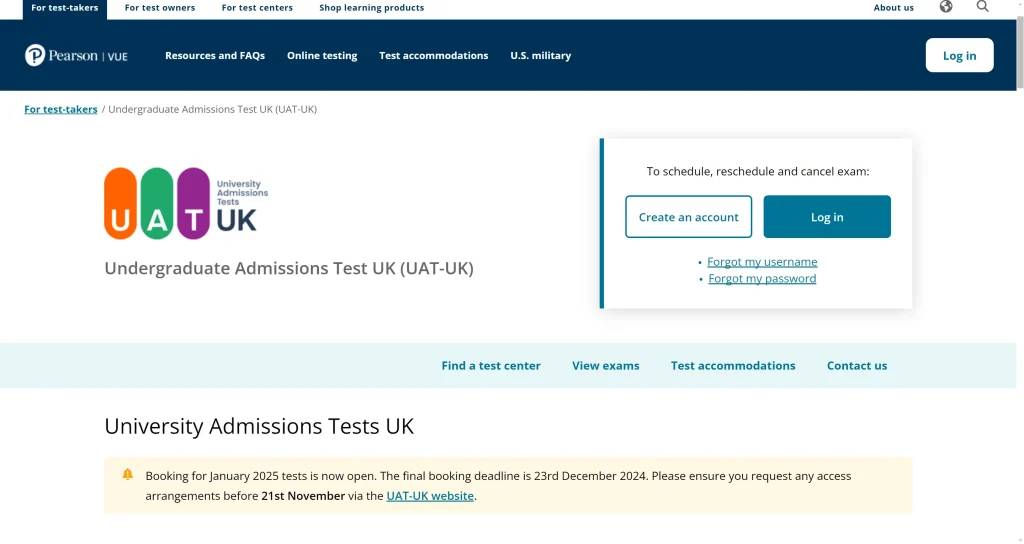
    • Candidates must create a UAT-UK account on the official Pearson VUE website. (It is prudent to consult the official UAT-UK website for the latest registration guidance).
      ESAT & TMUA Registration Guide - Creat your account - 1
    • It is imperative that the name used for UAT-UK account registration precisely matches the name on the candidate’s identification document. Discrepancies may prevent the candidate from sitting the examination. Candidates should also ensure their name matches their UCAS application name.
    • After creating an account, Pearson VUE will email candidates. This email enables them to confirm details and account settings. Candidates should receive it within 24 hours. This email will also include a temporary password for the candidate’s account.

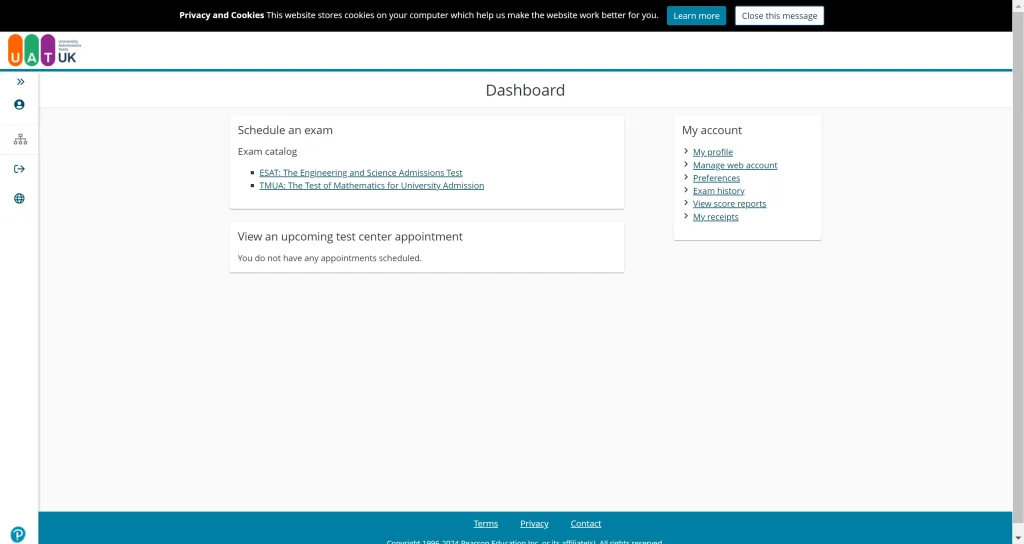
    • Upon receipt of the account confirmation email, candidates may log in using the temporary password, subsequently change their password, and locate their UAT-UK ID (format: UATUK######) in the top left-hand corner of the page navigation bar.

    2. Test Booking

    • Log in to your UAT-UK account on the official Pearson VUE website and select the option to book the TMUA examination.
      ESAT & TMUA Registration Guide - Book a test - 2
    • Provide personal information pertinent to the examination. The system denotes compulsory fields with an asterisk (*).
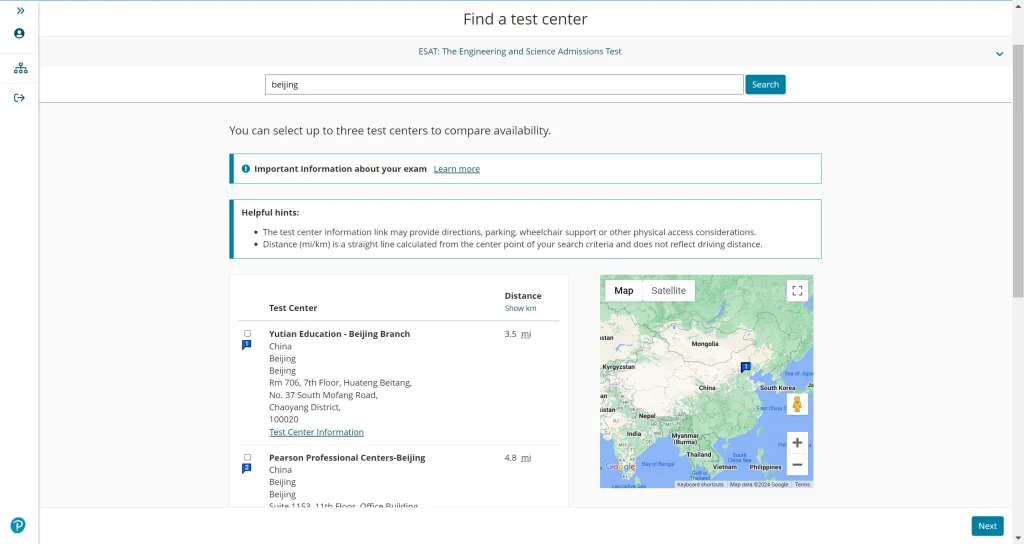
    • Candidates can locate their nearest test centre via the Pearson VUE website to complete their TMUA registration. Please note that sought-after test centres have limited places, especially as the registration deadline approaches. We strongly advise booking well in advance.
      ESAT & TMUA Registration Guide - Choose the test centre - 5

    3. Post-Registration and Pre-Examination Steps

    • Retain Confirmation Letter: It is strongly recommended that candidates save or print the examination confirmation letter issued by Pearson VUE once registration and payment are complete. This document usually serves as proof of entry for the examination.
    • Familiarise Yourself with Test Centre Regulations: Candidates are advised to visit the Pearson VUE website or contact their test centre before the examination to apprise themselves of specific test centre rules and regulations.
    • Official Contact Details: For any queries, candidates may contact the Pearson VUE candidate services helpline on 866 892 4788 (toll-free) or liaise with official customer service through the customer service centre on the Pearson VUE website.

    4. Test Fees

    • For candidates sitting the TMUA examination outside the UK and the Republic of Ireland (including mainland China), the fee is generally £133.
    • For candidates sitting the examination within the UK and the Republic of Ireland, the fee is £78.

    IV. Access Arrangements

    Candidates requiring access arrangements are advised to register for the examination at the earliest opportunity. Registering later may diminish the likelihood of securing arrangements at the preferred date and test centre. UAT-UK may take up to ten working days to process applications for access arrangements. Furthermore, the deadline for applying for access arrangements is typically in advance of the standard registration deadline. It is essential to check and submit such applications with ample time.

    All applications for access arrangements must be substantiated by evidence from a medical practitioner or specialist teacher, clearly detailing the candidate’s disability, medical condition, or other relevant circumstances.

    Types of access arrangements that necessitate application and approval include:

    • 25% extra time
    • Supervised rest breaks
    • Separate invigilation (rooming)
    • Use of a coloured reading overlay or bookmark
    • A reader or scribe
    • Other (please supply specific details of any aids or modifications required)

    V. Cancelling TMUA Registration

    1. Candidates may cancel or amend their examination booking up to 48 hours prior to the scheduled test without penalty.
    2. Cancellations or amendments must be effected by logging into the Pearson VUE website account or by contacting customer services for assistance.
    3. Should a candidate fail to cancel or amend their booking in good time, or fail to attend the examination, the examination fee will be forfeit.
    4. It is important to appreciate that the TMUA is conducted over only 1-2 days for candidates sitting in China, Hong Kong and Macau. The feasibility of successfully rescheduling a test date is dependent upon availability at the selected test centre.
    5. The precise cancellation and amendment policy will be as per the terms and conditions stipulated by Pearson VUE at the point of booking.

    VI. Concluding Thoughts

    In the competitive arena of applications for mathematics, computer science, and economics-related courses at Cambridge, Oxford and other UK universities, a thorough grasp not only of TMUA test content and preparatory techniques but also of the nuances of the registration procedure is essential for a trouble-free application process.

    You may also find it beneficial to peruse our related articles, which offer a comprehensive analysis of the TMUA examination and a study guide designed to augment your preparation and effectively enhance your TMUA score. Please click the link below.

  • How to Register for ESAT

    How to Register for ESAT

    For students aspiring to read engineering or natural sciences at the University of Cambridge, the University of Oxford or Imperial College London, the Engineering and Science Admissions Test (ESAT) result is a key determinant of their ultimate success in gaining admission. However, many students and their parents are unacquainted with the particulars of ESAT registration, such as the procedures for enrolment, the pertinent timelines, and the appropriate examination session for which to register. This article will, therefore, provide a detailed exposition and guidance on the various processes and facets of ESAT registration, aiming to elucidate these matters and resolve any uncertainties.

    I. ESAT Organisation and Administration

    Since 2024, the ESAT has been centrally managed by UAT-UK (University Admissions Tests – UK), a not-for-profit organisation. UAT-UK focuses on university admissions tests in the United Kingdom and currently oversees three computer-based testing programmes: ESAT, TMUA and TARA. Pearson VUE delivers these tests. It is the certification and licensure arm of Pearson, an internationally recognized learning company. With a vast network of over 5,500 test centres across more than 180 countries and territories, Pearson VUE provides professional assessment services to academic and admissions bodies globally.

    II. Key Dates for the Upcoming ESAT Sittings

    The ESAT has two test sittings, scheduled for October 2026 and January 2027. The pertinent dates are outlined below:

    1. October 2026 ESAT Sitting

    1st June 2026 Account Creation Opens
    20th July 2026 ESAT Registration Opens
    28th September 2026 ESAT Registration Closes
    12th-16th October 2026 ESAT Test Dates*
    16th November 2026 ESAT Results Released

    * Only on 12-13th October 2026 for candidates sitting in China, Hong Kong and Macau.

    2. January 2027 ESAT Sitting

    Not applicable for Cambridge or Oxford applicants unless you are applying to a mature college with a January admissions deadline at Cambridge, or an Oxford Foundation Year programme also with a January deadline.

    5th October 2026 Account Creation Opens
    26th October 2026 ESAT Registration Opens
    21st December 2026 ESAT Registration Closes
    4th-8th January 2027 ESAT Test Dates*
    8th February 2027 ESAT Results Released

    * Only on 6th January 2027 for candidates sitting in China, Hong Kong and Macau.

    III. ESAT Registration Procedure

    1. Create a UAT-UK Account

    ESAT & TMUA Registration Guide - Creat your account - 1

    • It is imperative that the name used for UAT-UK account registration precisely matches the name on the candidate’s identification document. Discrepancies may prevent the candidate from sitting the examination. Candidates should also ensure their name matches their UCAS application name.
    • After creating an account, Pearson VUE will email candidates. This email enables them to confirm details and account settings. Candidates should receive it within 24 hours. This email will also include a temporary password for the candidate’s account.
    • Upon receipt of the account confirmation email, candidates may log in using the temporary password, subsequently change their password, and locate their UAT-UK ID (format: UATUK######) in the top left-hand corner of the page navigation bar.

    2. Test Booking

    • Log in to your UAT-UK account on the official Pearson VUE website and select the option to book the ESAT examination.

    ESAT & TMUA Registration Guide - Book a test - 2

    • The ESAT comprises of five sections. Typically, all candidates are required to sit the Mathematics 1 module. In addition to this, candidates will generally need to select two further modules from Mathematics 2, Physics, Chemistry, and Biology, in accordance with the requirements of their chosen university and specific programme of study. It is imperative that candidates meticulously consult the official admissions webpage of their prospective institution to confirm the precise subject combination stipulated for their intended course. Selecting an appropriate combination of subjects is likely to strengthen your university application.

    ESAT Registration Guide - Select the tests - 3

    • Provide personal information pertinent to the examination. The system denotes compulsory fields with an asterisk (*).
    • Candidates can locate their nearest test centre via the Pearson VUE website to complete their ESAT registration. Please note that sought-after test centres have limited places, especially as the registration deadline approaches. We strongly advise booking well in advance.

    ESAT & TMUA Registration Guide - Choose the test centre - 5

    3. Post-Registration and Pre-Examination Steps

    • Retain Confirmation Letter:
      It is strongly recommended that candidates save or print the examination confirmation letter issued by Pearson VUE once registration and payment are complete. This document usually serves as proof of entry for the examination.
    • Familiarise Yourself with Test Centre Regulations:
      Candidates are advised to visit the Pearson VUE website or contact their test centre before the examination to apprise themselves of specific test centre rules and regulations.
    • Official Contact Details: For any queries, candidates may contact the Pearson VUE candidate services helpline on 866 892 4788 (toll-free) or liaise with official customer service through the customer service centre on the Pearson VUE website.

    4. Test Fees

    • For candidates sitting the ESAT examination outside the UK and the Republic of Ireland (including mainland China), the fee is generally £133.
    • For candidates sitting the examination within the UK and the Republic of Ireland, the fee is £78.

    IV. Access Arrangements

    Candidates requiring access arrangements are advised to register for the examination at the earliest opportunity. Registering later may diminish the likelihood of securing arrangements at the preferred date and test centre. UAT-UK may take up to ten working days to process applications for access arrangements. Furthermore, the deadline for applying for access arrangements is typically in advance of the standard registration deadline. It is essential to check and submit such applications with ample time.

    All applications for access arrangements must be substantiated by evidence from a medical practitioner or specialist teacher, clearly detailing the candidate’s disability, medical condition, or other relevant circumstances.

    Types of access arrangements that necessitate application and approval include:

    • 25% extra time
    • Supervised rest breaks
    • Separate invigilation (rooming)
    • Use of a coloured reading overlay or bookmark
    • A reader or scribe
    • Other (please supply specific details of any aids or modifications required)

    V. Cancelling ESAT Registration

    1. Candidates may cancel or amend their examination booking up to 48 hours prior to the scheduled test without penalty.
    2. Cancellations or amendments must be effected by logging into the Pearson VUE website account or by contacting customer services for assistance.
    3. Should a candidate fail to cancel or amend their booking in good time, or fail to attend the examination, the examination fee will be forfeit.
    4. It is important to appreciate that the ESAT is conducted over only 1-2 days for candidates sitting in China, Hong Kong and Macau. The feasibility of successfully rescheduling a test date is dependent upon availability at the selected test centre.
    5. The precise cancellation and amendment policy will be as per the terms and conditions stipulated by Pearson VUE at the point of booking.

    VI. Concluding Thoughts

    As the 2026 ESAT draw nearer, it remains of paramount importance for all students intending to apply for engineering and natural sciences programmes at the University of Cambridge, the University of Oxford and Imperial College London to acquaint themselves promptly with the latest test updates and to familiarise themselves thoroughly with the complete ESAT registration procedure. Kindly make full use of this guide to prepare effectively for successful matriculation at your chosen institution.

    Should you wish to explore further aspects of the ESAT, such as a comprehensive overview of test information, guidance on structuring your preparation timeline, and effective study strategies, you may also consult our other articles by clicking the link provided below.

  • Choose Oxford College Wisely

    Choose Oxford College Wisely

    Choose Oxford College Wisely - Poster

    “Your journey to Oxford begins with choosing the right college – the key to unlocking a world of opportunities.”

    I. Understanding the Operations of the Oxford College System

    The Oxford College gadget is unique, comprising 39 impartial and numerous colleges. Each university has its traditions, facilities, and atmosphere. Here’s what you want to know:

    • Colleges provide accommodation, dining, and academic support.
    • Students belong to both their college and their academic department.
    • Tutors oversee academic progress and offer personalized guidance.
    • Inter-college events and competitions foster a sense of community.

    II. Exploring Oxford’s 32 Colleges: Finding Your Perfect Match

    Choosing the proper university at Oxford can be like locating the appropriate treasure in a big, mysterious cave! But worry not, adventurers! Let’s have a quick understanding and familiarity with the 32 colleges of Oxford University that enroll undergraduate students:

    • Balliol College
    • Brasenose College
    • Christ Church
    • Corpus Christi College
    • Exeter College
    • Harris Manchester College
    • Hertford College
    • Jesus College
    • Keble College
    • Lady Margaret Hall
    • Lincoln College
    • Magdalen College
    • Mansfield College
    • Merton College
    • New College
    • Oriel College
    • Pembroke College
    • The Queen’s College
    • Regent’s Park College
    • St John’s College
    • St Anne’s College
    • St Catherine’s College
    • St Edmund Hall
    • St Hilda’s College
    • St Hugh’s College
    • St Peter’s College
    • Somerville College
    • Trinity College
    • University of Oxford College
    • Wadham College
    • Worcester College
    • Wycliffe Hall

    There are remarkable variations among the colleges at Oxford University. Each college has its specific history, architecture, size, culture, and traditions. Some colleges are massive and bustling with activity, at the same time as others are smaller and provide an extra intimate network atmosphere. Additionally, a few colleges are housed in anciental homes relationship returned centuries, at the same time as others are extra cutting-edge in design.

    Certain colleges may have strengths in specific subjects or offer specialized facilities or programs. The availability of resources, such as libraries, research centers, and extracurricular activities, may also vary among colleges.

    In terms of extracurricular activities, each college has unique or specialized traditional activities that enhance students’ sense of belonging and closeness, and influence their satisfaction and identification with the college.

    Overall, at the same time as all colleges at Oxford provide a world-magnificence education, the variations amongst them permit college students to discover a college that exceptionally suits their character preferences, interests, and educational goals.

    III. Determining Your College Preferences: What Factors Do I Need to Consider?

    1. Check the academic strength of each college through the Norrington Table

    The Norrington score, developed by Sir Arthur Norrington, former President of Trinity, in the 1960s, provides a way of measuring the performance of students at each college in finals. The Norrington score is based on the classifications of undergraduate degrees awarded and expressed as a percentage. lt is calculated by attaching a score of 5 to a 1st class degree, 3 to a 2:1 degree, 2 to a 2:2 degree, 1 to a 3rd class degree and 0 to a pass and Honours Pass. The percentage expressed is calculated by dividing the total college score by the total possible score the college could attain (ie number of degrees awarded per college x score of 5).

    The Norrington rankings do not fully represent college teaching standards. However, they do provide some indication of student qualifications, resident professors, and the learning atmosphere at each college.

    The following table shows the Norrington scores and rankings of each college in 2021/22:

    Choose Oxford College Wisely - 1

    More detailed information can be found on the official website of the University of Oxford.

    2. Which Oxford colleges offer my course?

    The colleges of the University of Oxford do not specialize in specific courses, and most of them can meet the needs of different students. But some colleges do perform strongly in certain courses:

    For example, Balliol College is strong in social science; Brasenose College is famous for PPE and law; Corpus Christi College is excellent in medicine, English, and other courses; and Jesus College has overall academic strength, especially outstanding in physics, chemistry, and engineering.

    To explore more course information, you can also check the official website of the University of Oxford.

    3. Student Composition and Admission Data

    Oxford University has seen an increase in the number of international students admitted in recent years. However, it still primarily admits students from the United Kingdom and European countries. It is essential to understand the admission status of each college in advance when making a college choice.

    The table below displays the countries and regions with the highest number of applicants to Oxford University and the data on students admitted to the university between 2020 and 2022.

    For more detailed information, please refer to the ANNUAL ADMISSIONS STATISTICAL REPORT (2023 Edition).

    Choose Oxford College Wisely - 2

    4. What kind of clubs and activities does each college offer?

    Life in Oxford is exciting and fun. In addition to each college community, you can explore your interests in more than 400 clubs and societies.

    Each college has a wide range of activities, from news broadcasting, music, drama, art, sports, and voluntary activities, ensuring that every student can have fun.

    Participating in club activities is not only fun. It enriches social life, improves students’ various skills, and maintains a positive and good state in life and study, thereby achieving their academic goals.

    5. Location of the college and distance between facilities

    Each college is scattered throughout the city. Some are closer to the school’s science area and exam boards, making it more convenient for classes and exams; some are closer to the city center, making it easier for students to explore outside of the classroom and navigate the city; and some are a little farther out of the town, but much larger, with quiet, beautiful gardens to view.

    If you want to view each college’s specific location and surrounding facilities in detail, please check the map on each college website on the official website of the University of Oxford.

    IV. Which is the best college under Oxford?

    If you’re seeking an enriching academic environment steeped in history, personalized guidance from esteemed faculty, access to world-renowned libraries, and an esteemed collegiate experience, then adding Oxford to your wish list is a must. The university’s rich legacy as the oldest English-speaking institution has seen it nurture countless Nobel laureates, influential political figures, and prominent historical personalities.

    Oxford’s tutorial teaching approach is renowned for its effectiveness. Large lecture halls are a rarity, as students engage in small-group discussions or one-on-one sessions with experts in their chosen fields, fostering an unparalleled learning experience.

    At Oxford, selecting a college is not about finding the ‘best’ one, but rather discovering the unique characteristics that suit you best! Each college has its own distinct features, such as the grandeur of its historic buildings, the intimacy of its smaller community, or the innovative programs it offers.

    V. Which college should I choose if I want a higher possibility of getting an offer?

    All colleges are equal when it comes to getting an offer. Don’t worry too much about that! Focus on finding a college where you’ll be happy and thrive.

    What if I get rejected from my preferred college? Do I still have any opportunity to get an offer from other colleges?

    No worries! If you don’t get an offer from your first-choice college but you are a strong candidate, other colleges might still welcome you with open arms. They’re all part of the big Oxford family and want the best for you!

    VI. Choosing the Right Fit for Your Application Journey—UEIE’s Advantages

    UEIE focuses on Oxbridge Planning, Oxbridge-Prep, and Olympiad-Prep and has gradually accumulated more than 40 exclusive quality courses, more than 500 video lectures, 100+ students admitted to Oxbridge G5 Ivy League schools, and 8000+ registered users.

    At UEIE, we provide personalized guidance, extensive experience, and complete assistance with overseas applications. We’ll help you craft a perfect Personal Statement, deliver a highly competitive Admissions Test score, and teach you how to interview effectively. Our services cater to every aspect of your application to Oxford University, from History to Medicine.

    Choosing the perfect college at Oxford University feels like finding the missing puzzle piece. But fear not! With some guidance, you’ll discover the ideal fit for your academic adventure.

    Unlock the potential of our Oxbridge Premium Programs by scheduling your free consultation or enrolling now to triple your chances of success.

    VII. What advice is offered to students exploring Oxford’s colleges?

    Choosing your Oxford college is like selecting your Hogwarts house – it’s about finding where you belong! Remember to explore the magic and wonder of each college in Oxford. Take your time to explore your options, trust your instincts, and find the college that feels like home to you.

    With UEIE supporting you, no matter which college you choose, your experience at Oxford University could be magical and extraordinary!

  • Beyond the Offer: 8 Oxbridge Successes and Reflections on the Journey 2025

    Beyond the Offer: 8 Oxbridge Successes and Reflections on the Journey 2025

    Eight students I mentored for their Oxbridge admissions tests triumphed in the fiercely competitive 2025 application round, winning places at these world-leading universities. Coming from diverse academic backgrounds, their strengths lay in mathematics, the sciences, economics, and engineering. But their shared traits were dedication and a touch of good fortune. This article traces their success journeys. It explores their key strategies. Lessons learned are also reflected. This aims to guide future applicants.

    I. Case Studies and Analysis

    1. Oxford Mathematics – Two Offers

    Student A was from Beijing, while Student B attended a private school in the UK.

    Unlike most math applicants I mentored, A and B had average profiles. They skipped systematic math competition prep. Their STEP results were only grades 1-2. Such achievements seem less impressive. Many top candidates win multiple competitions. They also achieve double S grades in STEP.

    When it came to preparing for the TMUA and the Oxford MAT, Student A showed exceptional aptitude. He mastered the material in just 20 hours—others need 40-60 hours. His scores proved excellent: 8.9 on TMUA and 91 on Oxford MAT.

    Student B, on the other hand, was incredibly diligent, full of ideas, and a highly effective independent learner. After my initial guidance, she could work independently. She used my test prep materials effectively on her own. My observation, however, was that B wasn’t a natural test-taker, although she was very articulate. Though her TMUA/MAT scores weren’t strong, she excelled in the interview. She impressed Oxford’s interviewers and won a math offer.

    2. Oxford Physics – One Offer

    Student C hailed from Nanjing.

    C’s physics passion and academic strength were notable. But their mother’s commitment amazed me most. Long-term follower of my public account, she had previously purchased my BPhO materials. After thorough research on my PAT resources, she even pre-booked private lessons—six months before the updated course release.This was before I released the updated PAT course.

    My advice for highly motivated and independent learners like C is that a combination of video lessons and interactive support offers the best value. This approach was ideally suited to C. After diligently working through the PAT video course, I provided ten hours of targeted one-to-one tuition, specifically addressing their mathematical and physics weaknesses. Thanks to C’s effective learning with the video material and their excellent preparation for our sessions, our lessons were incredibly productive. In fact, we covered all the necessary content, and a few tutorial hours remained.

    Much to my surprise, C’s mother opted to use these remaining hours for mock exam papers rather than requesting a refund. At this point, I hadn’t even announced the mock exams, so this vote of confidence put me under pressure. I knew the quality of these practice papers simply had to be top-notch to justify her trust. Once the mock papers were finalised and released, C diligently worked through each one before the exam, regularly discussing any tricky questions with me.

    In the end, C achieved ESAT scores of 9, 8.6, and 8.3, and a PAT score of 87, consistent with their performance on the mock exams. Their interview was also strong and steady, resulting in a well-deserved offer to study Physics at Oxford.

    3. Oxford Engineering – One Offer

    Student D came from Beijing.

    To other students, D’s talent seemed unattainable: he learned quickly and effortlessly, racking up awards in various international competitions. I began working with D as he prepared for the Cambridge STEP. He had already qualified for the AIME and had a dedicated mathematics competition coach, so I was initially puzzled as to why he needed my STEP tutoring. His father, however, was extremely modest, explaining that he simply wanted his son to benefit from the guidance of more experienced teachers. I subsequently worked with D right through to the ESAT and PAT exams, culminating in all-English coaching for his engineering interview.

    Two years previously, I had tutored a British student for the PAT and their engineering interview, which resulted in an Oxford Engineering offer. This prior experience provided a useful benchmark when conducting D’s all-English mock interviews. D surpassed the British student I had previously coached in every way: reaction speed, fluency in English, and the depth of his thinking were all on another level.

    D’s PAT score of 95 (putting him in the top 5% globally) was entirely expected, and the interview proved to be a mere formality. His offer to study Engineering at Oxford was richly deserved.

    4. Cambridge Economics – One Offer

    Student E came from Guangdong province.

    Another exceptionally bright student, he was applying a year early. From our very first session, I realised E was different. His logical reasoning and speed of calculation were in the top 0.1%, on par with Student A, but he was also more prone to errors. This meant his exam scores didn’t always reflect his true ability. The biggest challenge for E, therefore, wasn’t mastering new mathematical concepts or exam technique in a short time frame, but ensuring he could perform consistently under pressure.

    Through our tutoring sessions, and in discussions with his parents and teachers, it became clear that E’s performance was easily affected by his emotional state. Once I was confident he had the knowledge and exam skills, I shifted the focus of our sessions towards managing emotions and building resilience.

    Although E’s TMUA score was slightly lower than A’s, it was more than sufficient for Economics. I had no doubt that once he reached the interview stage, he would make a strong impression. Sure enough, he secured an offer from Cambridge to study Economics.

    5. Cambridge Natural Sciences – Three Offers

    Students F, G, and H were all from the same school and applied for Natural Sciences (Biological).

    Two of them had already started attending my classes the previous winter. At that point, the ESAT syllabus had just been released, and nobody was quite sure how difficult each section would be. What we did know was that they would need to maintain their strength in one or two of the sciences (physics, chemistry, or biology) while also improving their mathematical thinking and exam technique to ensure a strong score in Mathematics 1 – high enough not to jeopardise their overall application.

    In the early stages of the course, they studied core mathematical concepts alongside students applying for Mathematics, Computer Science, Engineering, and Economics. Their marks on the regular maths assignments tended to be in the mid-to-lower range. I regularly offered them encouragement, acknowledging the progress they were making in maths. However, within that high-achieving group, everyone was improving so rapidly that they sometimes felt their own progress was less significant.

    It wasn’t until the intensive revision period, when some new students joined the class, that they truly appreciated the progress they’d made and the advantages gained from their earlier hard work, as their mock exam scores started to reflect it.

    I don’t teach chemistry or biology myself. According to feedback from Gong Jin, the teacher responsible for those subjects, all three students showed real talent in their chosen scientific fields. In general, they were diligent and dedicated, with clear strengths in their respective sciences, but slightly weaker in mathematics. Their success, perhaps, makes their achievements even more relatable to other students.

    II. Success Factors and Reflections

    These eight students, despite their diverse academic backgrounds and application journeys, did not achieve success by chance. Their accomplishments were the culmination of a multitude of factors working in harmony.

    1. Student-Specific Factors

    • A Solid Academic Foundation is Essential
      The selection criteria at Oxbridge are incredibly demanding. A strong academic foundation is the first key to unlocking the door. All eight students demonstrated a solid grasp of their chosen subjects and a high level of academic ability.
    • A Proactive Approach to Learning is Crucial
      These students didn’t rely solely on my guidance. They actively engaged with their studies, independently explored topics, readily sought clarification when needed, and maintained a thirst for knowledge and a spirit of intellectual curiosity.
    • A Positive Mindset is Vital
      The application process is long and challenging, making a positive mindset essential. Throughout their preparation and application, these students effectively managed stress, maintained confidence and optimism, and ultimately performed consistently well in both the written tests and interviews.
    • Excellent Exam Technique is Key
      Top marks in the admissions tests are a prerequisite for Oxbridge applications. All eight students possessed outstanding exam technique, enabling them to consistently perform well and achieve excellent scores.

    2. Teacher Guidance

    • Targeted Tuition for Admissions Tests
      I tailor my approach to each student’s individual needs and academic background, creating personalised preparation plans. This involves systematically explaining key concepts, providing in-depth analysis of past papers, and strengthening exam technique, ultimately helping students achieve high scores in the admissions tests. For instance, with students A, D, and E, who possess natural talent and learn quickly, I focus on encouraging deeper understanding and challenging them with more advanced concepts. For students B, C, F, and G, I emphasise consolidating foundational knowledge and honing exam skills, helping them address areas of weakness.
    • Comprehensive Interview Preparation
      The interview is a crucial element of the Oxbridge selection process. Through mock interviews, question analysis, and coaching on effective communication, I familiarise students with the format, equip them with effective strategies, and enhance their interview performance. For example, I conducted all-English mock interviews with Student D and provided tailored feedback on his strengths and areas for improvement.
    • Supportive Teacher-Student Relationships
      The application journey is fraught with stress and anxiety. I strive to be not only a teacher but also a supportive mentor, offering a listening ear, encouragement, and strategies for maintaining a positive outlook.

    3. Family and School

    • Family Support
      Understanding, support, and encouragement from parents are vital motivating factors in students’ Oxbridge applications. All eight students benefited from the unwavering trust and support of their parents, who created conducive learning environments.
    • School Resources
      A school’s provision of high-quality academic resources and all-round support plays a significant role in successful Oxbridge applications. While my primary role was to provide admissions test tuition for students at a partner school, I also witnessed the school’s considerable investment in application guidance, interview practice, and extracurricular enrichment. The school’s impressive track record of Oxbridge offers in recent years, garnering national attention, is testament to this commitment.

    4. Reflection and Future Development

    • Collaboration with Other Teachers
      When it comes to university guidance and interview preparation, I recognise the importance of collaboration. Several students with top admissions test scores either failed to secure interviews or were unsuccessful after interview. Analysis suggests the issues may lie in the personal statement or the interview performance itself. In the future, beyond maintaining my rigorous focus on admissions test preparation, I will strengthen communication and collaboration with teachers involved in other areas of the application process, striving to provide more holistic support to students, and ultimately increase their chances of success.
    • Emphasis on Wellbeing
      The application process is highly pressurised, and it’s common for students, and sometimes even parents, to experience anxiety. It’s important to remember that parental anxiety can subtly influence students. Going forward, I will place greater emphasis on the wellbeing of both students and parents. Alongside encouraging students, I will prioritise communication with parents, offering support and strategies for managing stress, thus fostering a positive and healthy environment for preparing applications.
    • Developing Future-Focused Resources
      During the intensive revision period, the quantity and quality of practice resources are paramount. While my students have access to ample resources, to better cater to their individual needs, I will continue to explore, develop, and refine targeted practice materials and maintain their high quality.
    III. Advice for Students and Parents

    1. Plan Early and Set Clear Goals
      The competition for Oxbridge places is fierce, so early planning and preparation are crucial. Students should identify their areas of interest and academic strengths as soon as possible and create a detailed study plan.
    2. Build a Strong Foundation and Develop Holistically
      Academic excellence is fundamental to Oxbridge applications, but a well-rounded profile is equally important. Students should focus on building a strong foundation of knowledge while actively participating in extracurricular activities, cultivating hobbies, and developing their all-round abilities.
    3. Prioritise Admissions Tests and Exam Technique
      The admissions tests are a critical component of the Oxbridge application process and require dedicated preparation. Students should familiarise themselves with the test format and content, master problem-solving techniques, and develop effective strategies.
    4. Craft Compelling Personal Statements that Showcase Individuality
      The personal statement is a vital platform for students to express their unique personality, strengths, and aspirations. They should reflect deeply on their experiences and talents to produce authentic, engaging, and impactful statements.
    5. Prepare Thoroughly for Interviews and Shine
      Interviews are a key part of the Oxbridge selection process. Students should research the interview format and potential questions, prepare answers, and participate in mock interviews to enhance their communication and problem-solving skills.
    6. Maintain a Positive Mindset and Embrace Challenges
      The application journey is demanding, and maintaining a positive mindset is crucial. Students should believe in themselves and proactively address any challenges they encounter.
    7. Parental Support: A Catalyst for Growth
      Parental support and encouragement are invaluable to students aspiring to Oxbridge. Parents should provide unwavering trust and support, fostering a positive learning environment and offering emotional support.

    IV. Conclusion

    The success of these eight students is a testament to their own hard work, the guidance of their teachers, the support of their families, and the resources provided by their schools. Their experiences offer valuable insights and inspiration for others. I hope this analysis will serve as a guide for aspiring Oxbridge applicants, helping them to realise their academic ambitions. 

    Explore more preparation resources and posts: